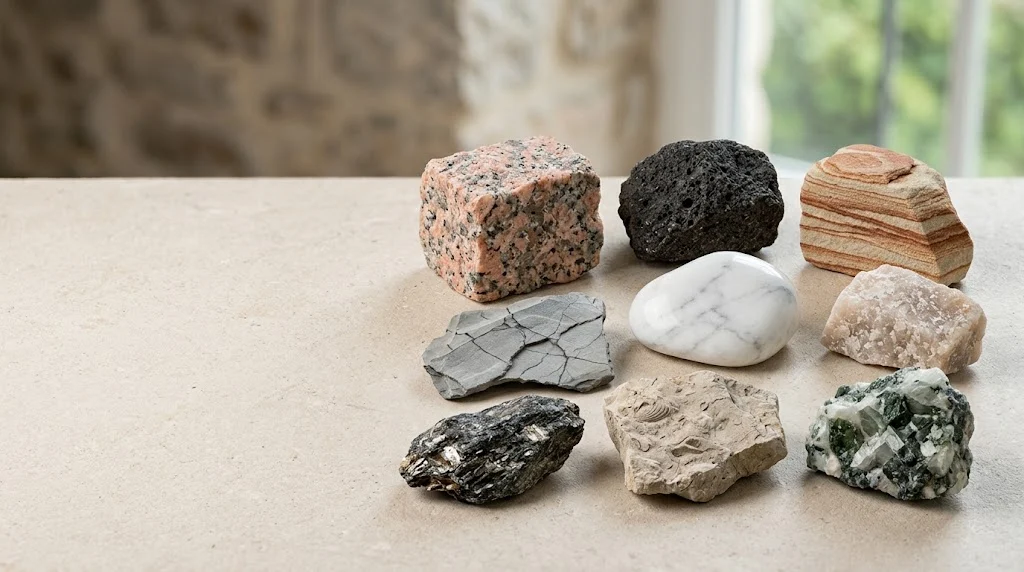
Popular rock names include granite, basalt, limestone, sandstone, marble, slate, obsidian, quartzite, and pumice. These rocks have different colors, textures, origins, and uses, making each one interesting to explore.
Some rocks look like ordinary pieces of stone until you discover the incredible story behind them. A dark piece of obsidian can resemble black glass, while rose-colored granite may contain a beautiful mix of pink, white, and black minerals. Others, such as marble and sandstone, have shaped famous buildings, sculptures, and landscapes for centuries.
Exploring rock names opens the door to a fascinating world of natural colors, textures, geological history, and unusual formations. you are a student learning geology, a nature lover collecting stones, a writer searching for a powerful character name, or someone who simply enjoys beautiful minerals, there is something here for you.
Some names sound bold and rugged, like Basalt and Flint. Others feel elegant and mysterious, like Onyx and Obsidian. You will also discover familiar stones, rare geological materials, and famous natural landmarks.
1. Granite | A Classic Rock Name with Strength
Meaning
Granite is a coarse-grained igneous rock known for its durability and visible mineral crystals.
Origin
The word comes through French and Italian from Latin granum, meaning “grain,” referring to its grainy texture.
Personality
Granite suggests strength, stability, reliability, and endurance.
Style
Classic, rugged, natural, and powerful.
Best For
Geology projects, rock collections, fictional characters, landscape designs, and strong-sounding pet names.
Popularity
Granite is a widely recognized rock name because of its use in buildings, monuments, countertops, and outdoor spaces.
Emotional Appeal
Its solid appearance makes it a natural symbol of resilience and permanence.
Pop Culture Reference
Granite is familiar in architecture and design rather than being tied to one defining fictional character.
Similar Names
Basalt, Flint, Slate, Quartz, Stone.
Why It Still Works Today
Granite combines scientific importance with everyday familiarity. Its distinctive texture and practical uses make it an excellent starting point for anyone exploring rock names.
2. Basalt | A Dark and Powerful Stone
Meaning
Basalt is a dark, fine-grained volcanic rock formed when lava cools at or near Earth’s surface.
Origin
The English name comes through Latin basaltes, with an uncertain earlier origin.
Personality
Basalt suggests confidence, mystery, resilience, and raw natural power.
Style
Bold, dark, modern, and rugged.
Best For
Geology assignments, creative writing, dramatic character names, and collections of volcanic rocks.
Popularity
Basalt is a well-known geological term, particularly in discussions of volcanoes and oceanic crust.
Emotional Appeal
Its dark appearance and volcanic origin create an association with strength and intense natural forces.
Pop Culture Reference
Basalt is often discussed in documentaries about volcanoes, lava flows, and planetary geology.
Similar Names
Obsidian, Granite, Andesite, Gabbro, Flint.
Why It Still Works Today
Basalt has scientific value and a memorable sound. It is especially appealing to readers interested in volcanic landscapes and dark, powerful names.
3. Limestone | A Rock Shaped by Ancient Life
Meaning
Limestone is a sedimentary rock composed mainly of calcium carbonate.
Origin
The name combines “lime,” referring to lime-producing material, and “stone.”
Personality
Limestone suggests history, calmness, natural beauty, and quiet strength.
Style
Earthy, classic, pale, and understated.
Best For
School projects, geology collections, architecture topics, and nature-inspired naming ideas.
Popularity
Limestone is a familiar rock because it is widely used in construction and occurs in many natural landscapes.
Emotional Appeal
Some limestone deposits contain fossils, offering a glimpse into ancient marine environments.
Pop Culture Reference
Limestone is associated with historic buildings, caves, cliffs, and archaeological sites around the world.
Similar Names
Chalk, Marble, Travertine, Sandstone, Dolostone.
Why It Still Works Today
Limestone connects geology with history, architecture, and the natural world. It is an excellent example of how a common rock can reveal a remarkable story about Earth’s past.
4. Sandstone | A Beautiful Rock with Layers
Meaning
Sandstone is a sedimentary rock made primarily of sand-sized mineral or rock grains cemented together.
Origin
The English name combines “sand” and “stone,” directly describing its composition.
Personality
Sandstone suggests warmth, creativity, patience, and a connection to nature.
Style
Earthy, textured, rustic, and timeless.
Best For
Geology students, landscape enthusiasts, nature-inspired artwork, and creative naming projects.
Popularity
Sandstone is well known for its use in buildings, monuments, cliffs, and decorative stonework.
Emotional Appeal
Its colors can range from cream and yellow to red, brown, and gray, giving it a warm visual character.
Pop Culture Reference
Sandstone formations appear in famous desert landscapes and natural arches, particularly in the American Southwest.
Similar Names
Siltstone, Shale, Conglomerate, Limestone, Quartzite.
Why It Still Works Today
Sandstone offers a direct connection to landscapes shaped by wind, water, and time. Its layered appearance and natural colors make it a beautiful subject for photography and collecting.
5. Marble | An Elegant Rock Name
Meaning
Marble is a metamorphic rock formed when limestone or dolostone recrystallizes under heat and pressure.
Origin
The word comes through Latin and Greek from a term associated with shining or gleaming stone.
Personality
Marble suggests elegance, refinement, creativity, and lasting beauty.
Style
Luxurious, artistic, classic, and sophisticated.
Best For
Art and architecture projects, creative characters, interior design, and aesthetic naming inspiration.
Popularity
Marble is a familiar material in sculpture, flooring, monuments, and decorative design.
Emotional Appeal
Its flowing veins and varied colors make each piece visually distinctive.
Pop Culture Reference
Marble is closely associated with classical Greek and Roman sculpture and historic architecture.
Similar Names
Onyx, Quartzite, Alabaster, Granite, Travertine.
Why It Still Works Today
Marble brings together geological transformation and artistic expression. It is a strong choice for anyone seeking a rock name associated with beauty, craftsmanship, and timeless style.
6. Slate | A Simple Name with Modern Appeal
Meaning
Slate is a fine-grained metamorphic rock that commonly forms from shale or mudstone under relatively low-grade metamorphism.
Origin
The English word developed through older French forms associated with slate or thin stone sheets.
Personality
Slate suggests calmness, focus, simplicity, and dependability.
Style
Minimalist, modern, understated, and cool.
Best For
Design projects, educational collections, fictional characters, and nature-inspired names.
Popularity
Slate is familiar because it is used in roofing, flooring, paving, and traditional writing surfaces.
Emotional Appeal
Its smooth cleavage allows it to split into relatively thin sheets, creating a distinctive practical quality.
Pop Culture Reference
The phrase “clean slate” uses slate as a metaphor for a fresh start.
Similar Names
Flint, Shale, Basalt, Graphite, Stone.
Why It Still Works Today
Slate has a clean, strong sound and a recognizable natural identity. It works well for people who prefer short names with a subtle geological connection.
7. Obsidian | A Mysterious Volcanic Glass
Meaning
Obsidian is natural volcanic glass formed when lava cools rapidly enough to prevent substantial crystal growth.
Origin
The English name comes from Latin obsidianus, associated with a Roman account of the discovery of a similar stone.
Personality
Obsidian suggests mystery, intensity, elegance, and protection in some modern symbolic traditions.
Style
Dark, dramatic, striking, and contemporary.
Best For
Fantasy characters, gaming usernames, mineral collections, and creative projects.
Popularity
Obsidian is widely recognized among mineral enthusiasts and fans of fantasy and gaming.
Emotional Appeal
Its glossy black surface gives it an appearance unlike most ordinary rocks.
Pop Culture Reference
Obsidian appears frequently in fantasy settings and games as a dark, powerful material.
Similar Names
Onyx, Basalt, Jet, Raven, Flint.
Why It Still Works Today
Obsidian combines a fascinating geological origin with a distinctive name. It is particularly appealing to anyone looking for something dark, elegant, and memorable.
8. Quartzite | A Strong and Attractive Stone
Meaning
Quartzite is a hard metamorphic rock formed when quartz-rich sandstone is transformed by heat and pressure.
Origin
The name derives from quartz, a mineral composed of silicon dioxide, with the suffix referring to the rock material.
Personality
Quartzite suggests resilience, clarity, and understated beauty.
Style
Natural, elegant, strong, and versatile.
Best For
Geology projects, mineral collections, architectural inspiration, and creative names.
Popularity
Quartzite is familiar in geology and stone design, especially for its hardness and decorative appearance.
Emotional Appeal
Depending on its mineral impurities and geological history, quartzite can display white, pink, gray, green, or other colors.
Pop Culture Reference
Quartzite is better known for its geological and decorative roles than for one specific pop culture reference.
Similar Names
Quartz, Granite, Marble, Sandstone, Jasper.
Why It Still Works Today
Quartzite illustrates how ordinary minerals can become striking rocks through geological change. Its combination of durability and beauty makes it an interesting choice for science and creative inspiration.
9. Pumice | The Lightweight Volcanic Rock
Meaning
Pumice is a highly vesicular volcanic rock containing many holes formed by gas bubbles in cooling lava.
Origin
The English word comes from Latin pumex, meaning pumice stone.
Personality
Pumice suggests lightness, unusual texture, and adaptability.
Style
Distinctive, natural, quirky, and scientific.
Best For
School demonstrations, volcanic rock collections, educational activities, and unusual naming ideas.
Popularity
Pumice is a familiar rock in geology, gardening, and personal-care products.
Emotional Appeal
Unlike most rocks, some pumice can float on water because of its abundance of gas-filled spaces and low bulk density.
Pop Culture Reference
Pumice is commonly discussed in demonstrations of volcanic eruptions and floating rocks.
Similar Names
Scoria, Basalt, Tuff, Lava, Cinder.
Why It Still Works Today
Pumice is a reminder that rocks do not always behave as we expect. Its unusual texture and light weight make it one of the most memorable volcanic materials.
10. Gneiss | A Rock with Striking Bands
Meaning
Gneiss is a metamorphic rock with visible bands or layers of different mineral compositions.
Origin
The English geological term comes from German Gneis, a traditional mining term.
Personality
Gneiss suggests individuality, complexity, and strength.
Style
Scientific, distinctive, natural, and unusual.
Best For
Geology collections, science projects, educational activities, and creative wordplay.
Popularity
Gneiss is a standard term in geology, though it is less familiar to the general public than granite or marble.
Emotional Appeal
Its alternating light and dark mineral bands can create striking patterns that resemble abstract artwork.
Pop Culture Reference
The word is often used in geology humor because it sounds like “nice” when pronounced in English.
Similar Names
Schist, Slate, Marble, Migmatite, Granite.
Why It Still Works Today
Gneiss is a great example of how geological vocabulary can be both educational and playful. Its distinctive appearance and unusual spelling make it memorable.
Quick Comparison Table
| Rock Name | Meaning or Feature | Style | Best For |
|---|---|---|---|
| Granite | Coarse-grained igneous rock | Strong, classic | Collections and projects |
| Basalt | Fine-grained volcanic rock | Dark, bold | Volcanic geology |
| Limestone | Calcium-carbonate-rich rock | Natural, historic | Fossils and architecture |
| Sandstone | Cemented sand-sized grains | Earthy, rustic | Landscapes and art |
| Marble | Recrystallized carbonate rock | Elegant, artistic | Sculpture and design |
| Slate | Fine-grained metamorphic rock | Minimalist, cool | Roofing and projects |
| Obsidian | Natural volcanic glass | Dark, mysterious | Fantasy and collections |
| Quartzite | Metamorphosed quartz-rich sandstone | Strong, refined | Design and geology |
| Pumice | Porous volcanic rock | Unusual, light | Science demonstrations |
| Gneiss | Banded metamorphic rock | Distinctive, scientific | Geology education |
More Rock Names to Explore
The following names expand your options beyond the ten featured examples. Remember that rock names and mineral names are not always interchangeable: a rock usually consists of one or more minerals, while a mineral has a defined chemical composition and crystal structure.
Igneous Rock Names
Igneous rocks form when magma or lava cools and solidifies.
- Diorite
- Gabbro
- Andesite
- Rhyolite
- Dacite
- Peridotite
- Scoria
- Tuff
- Pegmatite
- Obsidian
- Pumice
- Komatiite
- Anorthosite
- Syenite
- Granodiorite
Sedimentary Rock Names
Sedimentary rocks form from deposited particles, chemical precipitates, or accumulated biological material.
- Shale
- Siltstone
- Conglomerate
- Breccia
- Chalk
- Coquina
- Chert
- Rock Salt
- Rock Gypsum
- Travertine
- Dolostone
- Mudstone
- Coal
- Ironstone
- Arkose
Metamorphic Rock Names
Metamorphic rocks develop when existing rocks change under heat, pressure, or chemically active fluids without completely melting.
- Schist
- Phyllite
- Migmatite
- Amphibolite
- Hornfels
- Serpentinite
- Eclogite
- Marble
- Quartzite
- Gneiss
- Soapstone
- Metaconglomerate
- Blueschist
- Greenstone
- Mylonite
Beautiful Gemstone and Mineral Names
These names are useful if you want colorful stone inspiration. Some are minerals, while others may refer to gemstones or mineral varieties rather than rocks.
- Amethyst
- Agate
- Jasper
- Onyx
- Malachite
- Fluorite
- Labradorite
- Moonstone
- Sunstone
- Turquoise
- Garnet
- Citrine
- Peridot
- Aquamarine
- Lapis Lazuli
Cool Rock Names for Pets, Characters, and Projects
Rock names can work surprisingly well outside geology. Their strong sounds, natural colors, and textures make them useful for creative projects.
Strong Rock Names
- Granite
- Basalt
- Flint
- Titan
- Boulder
- Atlas
- Onyx
- Stone
- Iron
- Grit
Cute Rock Names
- Pebble
- Rocky
- Pebbles
- Chip
- Nugget
- Coco
- Marble
- Button
- Tiny
- Dusty
Aesthetic Rock Names
- Opal
- Jasper
- Moonstone
- Quartz
- Jade
- Amethyst
- Onyx
- Riverstone
- Slate
- Crystal
Funny Rock Names
- Sir Rocks-a-Lot
- Dwayne the Rock
- Rocky Balboa
- Pebble Trouble
- Stone Cold
- Rocktopus
- The Rolling Stone
- Boulder Dash
- Sedimentary, My Dear
- The Great Cobalder
These are creative naming suggestions rather than geological classifications. For a real rock collection, use the scientifically correct name whenever you know the specimen’s identity.
How to Choose the Perfect Rock Name
Choosing a rock name becomes easier when you consider the reason you need it.
1. Start with your purpose. A school assignment may require a scientifically recognized rock name, while a pet or fictional character gives you more creative freedom.
2. Consider the appearance. Dark specimens may remind you of Obsidian or Basalt, while banded stones may bring Gneiss to mind. Appearance alone, however, cannot confirm a rock’s identity.
3. Learn its geological origin. Decide you are interested in igneous, sedimentary, or metamorphic rocks. Understanding how a rock forms makes its name more meaningful.
4. Think about the sound. Short names such as Flint, Slate, and Onyx can work well for characters or pets. Longer names such as Labradorite and Granodiorite may suit collections or educational projects.
5. Check the spelling. Some geological names are unfamiliar, so verify their spelling before using them in a school report or article.
6. Separate symbolism from science. People may associate crystals and stones with strength, calmness, or protection. These are personal or cultural associations, not proven scientific effects.
7. Use reliable references. If you are identifying a real specimen, compare its appearance and properties with trusted geological resources instead of relying on color alone.
A good name should fit your purpose while respecting the difference between creative inspiration and scientific accuracy.
Most Recognizable Rock Names
These names are useful starting points for beginners because they are commonly encountered in geology, construction, landscapes, and mineral collections.
- Granite
- Basalt
- Limestone
- Sandstone
- Marble
- Slate
- Obsidian
- Pumice
- Gneiss
- Quartzite
- Shale
- Conglomerate
They represent different geological properties and origins. For example, granite and basalt are igneous rocks, limestone and sandstone are sedimentary rocks, and marble and gneiss are metamorphic rocks.
Unusual and Fascinating Rock Names
Some geological names stand out because of their sound, appearance, or unusual formation.
- Komatiite: An uncommon ultramafic volcanic rock associated with very hot ancient lavas.
- Migmatite: A rock with characteristics of both metamorphic rock and partial melting.
- Eclogite: A distinctive metamorphic rock commonly containing garnet and omphacite.
- Mylonite: A rock formed through intense deformation and grain-size reduction in a shear zone.
- Anorthosite: An intrusive igneous rock composed predominantly of plagioclase feldspar.
- Serpentinite: A rock rich in minerals from the serpentine group.
- Coquina: A sedimentary rock made largely of cemented shell fragments.
- Tuff: A rock formed from volcanic ash and other pyroclastic material.
These names may be less familiar outside geology, but they demonstrate the remarkable variety of materials found in Earth’s crust.
Famous Rocks and Geological Formations Around the World
Some of the world’s best-known natural landmarks are giant rock formations rather than individual rock specimens.
Uluru, Australia
Uluru is a massive sandstone formation in Australia’s Northern Territory. It is a deeply significant cultural place for the Anangu Traditional Owners.
Half Dome, United States
Half Dome is a famous granite landform in Yosemite National Park, California. Its distinctive shape attracts hikers, climbers, and photographers.
Giant’s Causeway, Northern Ireland
The Giant’s Causeway is known for its many interlocking basalt columns, formed through ancient volcanic activity and subsequent geological processes.
The White Cliffs of Dover, England
These cliffs are famous for their pale appearance and are composed largely of chalk, a soft limestone made mainly from microscopic marine remains.
Monument Valley, United States
Monument Valley contains striking sandstone buttes and mesas shaped by erosion over long periods.
These places show how rock names connect scientific ideas with landscapes, history, and cultural heritage. When discussing sacred or culturally significant sites, use respectful language and reliable local sources.
FAQs
Q1. What are the most common rock names?
Granite, basalt, limestone, sandstone, marble, slate, shale, and gneiss are familiar examples. They represent different rock types and form through different geological processes.
Q2. What are the three main types of rocks?
The three main groups are igneous, sedimentary, and metamorphic. Igneous rocks form from cooled magma or lava, sedimentary rocks develop from deposited material, and metamorphic rocks change under heat, pressure, or fluids.
Q3. What are some beautiful rock names?
Marble, Obsidian, Quartzite, Jasper, and Amethyst are attractive names for different reasons. Note that Amethyst and Jasper are mineral or gemstone names rather than formal names for major rock groups.
Q4. Which rock names are best for a school project?
Granite, Basalt, Limestone, Sandstone, Marble, and Slate are good starting points because their origins and characteristics are relatively easy to explain. Choose examples from all three rock groups if your assignment requires comparison.
Q5. What are rare rock names?
Komatiite, Eclogite, Migmatite, and Anorthosite are less familiar names outside geology. Their rarity in everyday conversation does not necessarily mean that every specimen is rare or valuable.
Q6. Are rocks and minerals the same thing?
No. A mineral has a defined chemical composition and crystal structure, while a rock is an aggregate of one or more minerals or other geological materials. Granite is a rock, while quartz is a mineral.
Q7. Can I use rock names for pets or fictional characters?
Yes. Names such as Pebble, Rocky, Onyx, Flint, and Jasper can work well for pets, game characters, stories, and creative projects. Match the name to your character’s personality or appearance.
Q8. How can I identify a rock correctly?
Examine properties such as texture, grain size, hardness, cleavage, and mineral composition, using a reliable field guide or geological reference. Color alone is not enough, and a photograph may not provide enough evidence for a confident identification.
Conclusion
Exploring rock names reveals much more than a list of geological terms. Each name can tell a story about Earth’s history, the forces that shape landscapes, and the materials people have used in buildings, art, and everyday life. From the strength of granite to the glossy beauty of obsidian, every rock has distinctive characteristics worth discovering.
you are studying geology, building a stone collection, naming a fictional character, or searching for creative inspiration, begin with the names that capture your attention. Learn what each one means, how the material forms, and what makes it different from other rocks or minerals.
Choose your favorite name, share this guide with fellow nature lovers, and leave a comment telling us which rock or stone fascinates you most. Your favorite might inspire someone else to explore the natural world more closely.
Discover More Related Articles:
- 101 Country Dog Names | For a Rustic, Charming & Southern Pup In 2026
- 100 Badass Dog Names | For Tough, Cool & Fearless Dogs In 2026
- 300 French Dog Names | Elegant, Cute & Unique Ideas for Your Pup In 2026