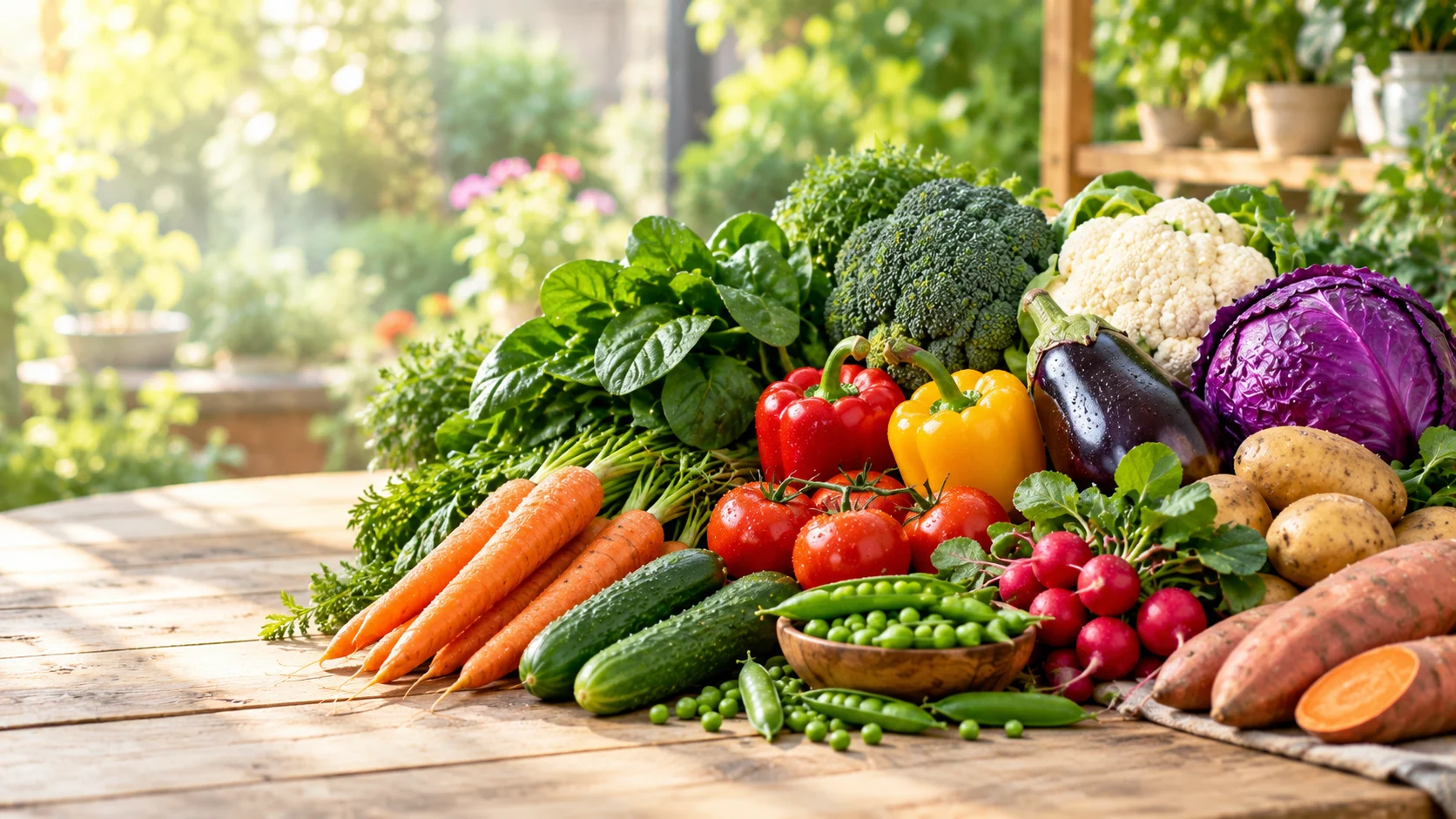
Common vegetable names in English include potato, carrot, onion, tomato, spinach, cabbage, cauliflower, broccoli, cucumber, eggplant, radish, pumpkin, peas, and sweet potato. Vegetables come in many colors and edible forms, including leaves, roots, stems, flowers, and fruits used as vegetables.
Have you ever walked through a colorful vegetable market and wondered how many different vegetables there are? From bright orange carrots to deep green spinach and purple eggplants, vegetables bring color, flavor, and variety to our daily meals.
Learning vegetables names is useful for children, students, English learners, home cooks, and anyone who wants to understand food better. It helps you recognize ingredients at the grocery store, follow recipes, build your vocabulary, and make more varied meals.
Some vegetables grow underground, such as potatoes and radishes. Others grow above the ground, including cabbage, broccoli, and lettuce. Many foods we call vegetables in the kitchen are botanically fruits, such as tomatoes, cucumbers, and bell peppers.
In this guide, you will discover more than 100 vegetable names in English, organized into easy categories. You will also learn about their colors, edible parts, common uses, and nutritional qualities. you are preparing a school assignment, teaching a child, or looking for new ingredients to try, this practical list will help you explore the wonderful world of vegetables.
100+ Vegetables Names in English
Here is a quick list of familiar vegetables from around the world.
| No. | Vegetable Name | No. | Vegetable Name |
|---|---|---|---|
| 1 | Potato | 51 | Turnip |
| 2 | Tomato | 52 | Rutabaga |
| 3 | Onion | 53 | Parsnip |
| 4 | Carrot | 54 | Celeriac |
| 5 | Cucumber | 55 | Jerusalem artichoke |
| 6 | Spinach | 56 | Cassava |
| 7 | Cabbage | 57 | Taro |
| 8 | Cauliflower | 58 | Yam |
| 9 | Broccoli | 59 | Jicama |
| 10 | Eggplant | 60 | Lotus root |
| 11 | Bell pepper | 61 | Water spinach |
| 12 | Green chili | 62 | Bok choy |
| 13 | Pumpkin | 63 | Napa cabbage |
| 14 | Bottle gourd | 64 | Swiss chard |
| 15 | Bitter gourd | 65 | Arugula |
| 16 | Ridge gourd | 66 | Endive |
| 17 | Sponge gourd | 67 | Radicchio |
| 18 | Okra | 68 | Watercress |
| 19 | Green peas | 69 | Sorrel |
| 20 | Green beans | 70 | Mustard greens |
| 21 | Sweet corn | 71 | Collard greens |
| 22 | Lettuce | 72 | Dandelion greens |
| 23 | Celery | 73 | Fennel |
| 24 | Asparagus | 74 | Leek |
| 25 | Radish | 75 | Shallot |
| 26 | Beetroot | 76 | Scallion |
| 27 | Sweet potato | 77 | Chives |
| 28 | Turnip greens | 78 | Garlic scapes |
| 29 | Brussels sprouts | 79 | Kohlrabi |
| 30 | Artichoke | 80 | Romanesco |
| 31 | Zucchini | 81 | Daikon |
| 32 | Butternut squash | 82 | Chinese broccoli |
| 33 | Acorn squash | 83 | Chinese mustard greens |
| 34 | Spaghetti squash | 84 | Tatsoi |
| 35 | Chayote | 85 | Mizuna |
| 36 | Drumstick pods | 86 | Purslane |
| 37 | Moringa leaves | 87 | Malabar spinach |
| 38 | Bamboo shoots | 88 | Amaranth leaves |
| 39 | Bean sprouts | 89 | Pumpkin leaves |
| 40 | Snow peas | 90 | Sweet potato leaves |
| 41 | Sugar snap peas | 91 | Cassava leaves |
| 42 | Lima beans | 92 | Winged beans |
| 43 | Fava beans | 93 | Yardlong beans |
| 44 | Chickpeas | 94 | Edamame |
| 45 | Lentils | 95 | Water chestnut |
| 46 | Parsley root | 96 | Burdock root |
| 47 | Celeriac root | 97 | Salsify |
| 48 | Horseradish | 98 | Oca |
| 49 | Rutabaga greens | 99 | Yacon |
| 50 | Kohlrabi greens | 100 | Chayote shoots |
| 101 | Sea kale | 102 | Samphire |
Note: Some items in this list, such as chickpeas, lentils, and sweet corn, are botanically classified differently from typical vegetables. They are included because they are commonly used in savory dishes or vegetable-based meals.
1. Root Vegetables Names
Root vegetables are edible plant roots that often grow underground. Many are known for their earthy flavors, satisfying texture, and useful role in everyday cooking.
Common Root Vegetables
- Carrot: A crunchy orange root often eaten raw, roasted, or cooked in soups.
- Potato: A starchy tuber used in fries, curries, mashed dishes, and baked meals.
- Sweet potato: A naturally sweet root with orange, white, or purple flesh.
- Radish: A crisp root with a peppery flavor, commonly used in salads.
- Beetroot: A deep red or golden root used in salads, juices, and roasted dishes.
- Turnip: A round root with a mild, slightly peppery taste.
- Parsnip: A pale root with a sweet, earthy flavor.
- Cassava: A starchy tropical root that must be properly processed and cooked before eating.
- Taro: A starchy corm used in many Asian, African, and Pacific Island dishes; it must be cooked properly.
- Daikon: A large white radish common in East Asian cooking.
Why are root vegetables useful?
Many root vegetables provide carbohydrates, fiber, vitamins, or minerals. Their exact nutritional content varies by variety and preparation. Carrots provide beta-carotene, while potatoes supply potassium and vitamin C.
3. Green Vegetables Names
Green vegetables are popular because they add fresh flavors, colors, and textures to meals. They include leafy greens, pods, stems, and flower buds.
Some common examples are:
- Spinach
- Broccoli
- Green cabbage
- Green bell pepper
- Cucumber
- Green beans
- Green peas
- Okra
- Asparagus
- Celery
- Zucchini
- Brussels sprouts
- Lettuce
- Green chili
- Bottle gourd
- Ridge gourd
- Bitter gourd
- Snow peas
- Bok choy
- Watercress
Benefits of Green Vegetables
Green vegetables provide different nutrients depending on the plant. Broccoli contains vitamin C and fiber, spinach provides folate and vitamin K, and green peas offer plant-based protein and fiber.
A useful tip is to mix raw and cooked vegetables throughout the week. Wash fresh produce under running water before preparing it, and cook vegetables as needed for safety, taste, and texture.
4. Flower Vegetables Names
Some vegetables are actually the edible flowers or flower buds of plants. These ingredients often have interesting shapes and textures.
Examples of Flower Vegetables
- Broccoli: The edible part is made up of immature flower buds and stems.
- Cauliflower: Its compact white head consists of undeveloped flower structures.
- Artichoke: The edible portion is mainly the flower bud, including its fleshy base and leaves.
- Romanesco: A striking green vegetable related to cauliflower and broccoli.
- Broccoli rabe: A leafy vegetable with small flower buds and a slightly bitter taste.
How to Use Flower Vegetables
Broccoli and cauliflower work well in curries, roasted dishes, soups, and stir-fries. Artichokes can be steamed or roasted, while Romanesco makes an attractive side dish.
These vegetables can add variety to meals while supplying fiber, vitamins, and other plant nutrients.
5. Stem Vegetables Names
Stem vegetables are plants whose edible stems or shoots are commonly eaten. Some are crunchy and mild, while others have a more pronounced flavor.
Common Stem Vegetables
- Celery: Crisp stalks used in salads, soups, and stews.
- Asparagus: Tender shoots often steamed, grilled, or roasted.
- Bamboo shoots: Young shoots used in many Asian dishes.
- Kohlrabi: A swollen stem with a crisp texture and mild taste.
- Leek: A member of the onion family with a mild flavor.
- Rhubarb: Technically a vegetable, though its tart stalks are often used in desserts; its leaves should not be eaten.
- Garlic scapes: Curled flower stalks of hardneck garlic, used in pesto and stir-fries.
- Chayote shoots: Tender shoots used in some regional cuisines.
Why Stem Vegetables Matter
Stem vegetables add crunch, flavor, and variety. Asparagus provides folate, while celery contributes water and a crisp texture. Their uses depend on the variety and how they are prepared.
6. Fruit Vegetables Names
Some foods are botanically fruits because they develop from flowers and contain seeds, but cooks treat them as vegetables because of their savory flavor and culinary use.
Common Fruit Vegetables
- Tomato: Used in sauces, soups, salads, and curries.
- Cucumber: A refreshing ingredient for salads, sandwiches, and pickles.
- Eggplant: Also called aubergine, it has a soft texture when cooked.
- Bell pepper: Available in green, red, yellow, and orange varieties.
- Pumpkin: Used in soups, curries, baked dishes, and savory stews.
- Zucchini: A mild summer squash suitable for grilling and roasting.
- Bitter gourd: A bitter-tasting vegetable popular in South Asian and other regional cuisines.
- Bottle gourd: A mild gourd used in curries, soups, and stews.
- Chayote: A crisp, mild vegetable used in salads and cooked dishes.
- Okra: A seed-bearing pod often used in curries, stews, and fried dishes.
Are tomatoes and cucumbers vegetables?
In everyday cooking, yes. Botanically, both are fruits because they develop from flowers and contain seeds. This difference reflects the distinction between culinary and botanical classifications.
7. Legume Vegetables Names
Legumes are plants in the bean and pea family. Their edible seeds and pods are used in meals around the world.
Examples of Legumes
- Green peas: Sweet, tender seeds used in rice, soups, and curries.
- Green beans: Edible pods often steamed, boiled, or stir-fried.
- Snow peas: Flat pods with small, tender peas.
- Sugar snap peas: Crunchy pods with plump peas inside.
- Lima beans: Large, creamy beans used in stews and side dishes.
- Fava beans: Also known as broad beans, commonly eaten cooked.
- Edamame: Young soybeans usually boiled or steamed.
- Chickpeas: Seeds used in hummus, curries, and salads.
- Lentils: Small edible seeds used in soups and dals.
- Yardlong beans: Long pods popular in several Asian cuisines.
Green peas and green beans are often prepared as vegetables. Dried chickpeas and lentils are generally grouped with pulses or legumes in nutrition and food guidance.
Legumes can be useful sources of plant protein, fiber, and minerals.
8. Bizarre and Unusual Vegetables Names
If you want to try something different, many vegetables from regional cuisines offer new flavors and textures.
| Vegetable | Main Feature | Common Use |
|---|---|---|
| Romanesco | Fractal-like green head | Roasting |
| Kohlrabi | Round, swollen stem | Salads and stir-fries |
| Jicama | Crisp, juicy root | Raw snacks and salads |
| Lotus root | Decorative holes when sliced | Soups and stir-fries |
| Salsify | Long root with mild flavor | Soups and side dishes |
| Burdock root | Earthy, firm root | Japanese-style simmered dishes |
| Oca | Small, colorful tuber | Roasting and boiling |
| Yacon | Crisp, mildly sweet root | Salads and fresh dishes |
| Samphire | Salty, succulent stems | Seafood sides and salads |
| Tatsoi | Dark green spoon-shaped leaves | Salads and stir-fries |
Availability depends on the region, season, and local markets. Some unusual vegetables may need special preparation, so check reliable cooking instructions before eating them.
9. Seasonal Vegetables Names
Seasonal vegetables are those harvested during particular times of the year. Eating seasonally can help you find fresher produce and explore different ingredients throughout the year.
Seasonality depends on local weather, growing conditions, and farming methods. The following examples are general rather than universal.
Cool-Season Vegetables
- Cabbage
- Cauliflower
- Broccoli
- Spinach
- Radish
- Carrot
- Peas
- Lettuce
- Turnip
- Beetroot
Warm-Season Vegetables
- Tomato
- Cucumber
- Eggplant
- Okra
- Bell pepper
- Pumpkin
- Zucchini
- Sweet corn
- Bitter gourd
- Bottle gourd
Seasonal Shopping Tips
Choose vegetables that look fresh, feel firm when appropriate, and show no signs of extensive decay. Local produce may be more affordable during peak harvest periods, although prices vary.
Try asking a local farmer or market seller which vegetables are currently in season. This is especially useful when buying produce in regions with distinct rainy, dry, summer, or winter growing periods.
10. Common Vegetables Names and Their Everyday Uses
Knowing a vegetable’s name is useful, but knowing how to cook it makes the information even more practical.
| Vegetable | Flavor or Texture | Everyday Use |
|---|---|---|
| Potato | Starchy and mild | Fries, curries, mash |
| Carrot | Sweet and crunchy | Salads, soups |
| Onion | Savory and pungent | Cooking base, salads |
| Tomato | Juicy and tangy | Sauces, curries |
| Spinach | Tender and earthy | Curries, omelets |
| Cabbage | Crisp and mild | Slaws, stir-fries |
| Cauliflower | Mild and firm | Roasting, curries |
| Broccoli | Earthy and crisp | Steaming, roasting |
| Eggplant | Soft when cooked | Grilling, curries |
| Cucumber | Fresh and watery | Salads, raita |
| Okra | Tender pods | Curries, stews |
| Pumpkin | Mild and sweet | Soups, roasting |
| Bell pepper | Sweet and crisp | Stir-fries, stuffing |
| Green peas | Sweet and tender | Rice, soups |
| Sweet potato | Sweet and creamy | Baking, roasting |
Cooking methods can change the flavor and texture of vegetables. Roasting often brings out sweetness, steaming helps retain a firm texture, and simmering allows vegetables to absorb the flavors of soups and curries.
Quick Comparison Table: Vegetable Types at a Glance
| Vegetable Type | Examples | Main Edible Part | Typical Use |
|---|---|---|---|
| Root | Carrot, radish | Root | Soups, salads |
| Leafy | Spinach, lettuce | Leaves | Salads, curries |
| Flower | Broccoli, cauliflower | Flower buds | Roasting, steaming |
| Stem | Celery, asparagus | Stem or shoot | Stir-fries, sides |
| Fruit | Tomato, cucumber | Fruit | Salads, sauces |
| Legume | Green peas, beans | Seeds or pods | Curries, soups |
| Tuber or corm | Potato, taro | Underground storage organ | Boiling, baking |
How to Learn Vegetables Names Easily
Learning a long list can feel difficult at first. A few simple methods can make it easier for children, students, and English learners.
1. Learn by color. Start with green vegetables, orange vegetables, red vegetables, and purple vegetables. This creates easy visual groups.
2. Learn by plant part. Group vegetables into roots, leaves, stems, flowers, pods, and fruits used as vegetables.
3. Use picture cards. Match each vegetable’s picture with its English name. Pictures are particularly helpful for young learners.
4. Practice in the kitchen. Name each vegetable as you wash, chop, or cook it. Real objects make vocabulary easier to remember.
5. Make an A-to-Z notebook. Write one or two vegetable names for each letter where possible. Add a picture, color, or example dish.
6. Use short sentences. For example, “A carrot is orange,” “Spinach has green leaves,” and “Potatoes grow underground.”
7. Review regularly. Practice five to ten names each day instead of trying to memorize the entire list at once.
Most Common Vegetables Names for Kids
Children can begin with familiar vegetables that are easy to recognize.
- Potato
- Tomato
- Carrot
- Onion
- Cucumber
- Spinach
- Cabbage
- Peas
- Corn
- Pumpkin
- Radish
- Eggplant
- Broccoli
- Cauliflower
- Lettuce
- Bell pepper
- Green beans
- Sweet potato
- Garlic
- Ginger
Easy Vegetable Vocabulary Sentences
- A carrot is usually orange.
- Spinach has edible green leaves.
- A potato is a starchy underground tuber.
- A cucumber is often eaten raw.
- Broccoli has green flower buds.
- Onions add flavor to many dishes.
- Peas grow inside pods.
- Pumpkin can be used in soups and curries.
These short sentences help children connect a word with its appearance or use.
Vegetable Colors and Their Examples
Vegetables come in many colors. Color can make food more appealing and can provide clues about some of its plant compounds, although color alone does not tell you everything about nutritional value.
| Color | Examples |
|---|---|
| Green | Spinach, broccoli, peas, cucumber |
| Orange | Carrot, pumpkin, orange sweet potato |
| Red | Tomato, red bell pepper, red beetroot varieties |
| Purple | Purple cabbage, purple eggplant, purple carrots |
| White | Cauliflower, onion, white radish |
| Yellow | Yellow bell pepper, yellow squash, sweet corn |
| Brown | Potato skin, burdock root, some mushrooms often used as vegetables |
Eating a variety of colorful vegetables can help you enjoy different flavors and obtain a wider range of nutrients.
FAQs
Q1. What are the 10 most common vegetable names in English?
Potato, tomato, onion, carrot, cucumber, spinach, cabbage, cauliflower, broccoli, and eggplant are familiar vegetable names. The most common choices vary by country and local food traditions.
Q2. What are the names of green vegetables?
Common green vegetables include spinach, broccoli, cabbage, cucumber, lettuce, peas, green beans, okra, asparagus, celery, and zucchini. Their nutritional content varies, so eating a range of vegetables is helpful.
Q3. Which vegetables grow underground?
Potatoes, carrots, radishes, beetroots, turnips, parsnips, cassava, and sweet potatoes grow underground. Botanically, some are roots while others are tubers or other underground storage organs.
Q4. What are leafy vegetables?
Leafy vegetables are plants whose leaves are eaten as food. Examples include spinach, lettuce, cabbage, bok choy, Swiss chard, mustard greens, watercress, and arugula.
Q5. Are tomatoes and cucumbers fruits or vegetables?
Botanically, tomatoes and cucumbers are fruits because they develop from flowers and contain seeds. In cooking, people usually treat them as vegetables because of their savory flavor and common culinary uses.
Q6. Which vegetables are rich in fiber?
Peas, green beans, broccoli, carrots, Brussels sprouts, and artichokes are useful sources of dietary fiber. The amount depends on the serving size and preparation method.
Q7. How can children memorize vegetables names?
Use picture cards, color groups, short sentences, and real vegetables during cooking. Practicing a few names daily is often easier than memorizing a long list in one sitting.
Q8. What is the best way to keep vegetables fresh?
Store vegetables according to their type and recommended temperature. Refrigerate many leafy greens and tender vegetables, keep potatoes in a cool, dark place, and remove spoiled produce promptly.
Conclusion
Learning vegetables names is a simple way to build English vocabulary, understand food categories, and discover new ingredients for everyday meals. From familiar choices such as potatoes, carrots, and tomatoes to less common options such as Romanesco, lotus root, and samphire, the world of vegetables offers a wide range of flavors, textures, colors, and cooking possibilities.
You can use this guide for school projects, English practice, grocery shopping, meal planning, or teaching children about healthy food. Start with a few familiar vegetables, then explore new varieties as you become more confident.
If you found this list useful, share it with friends, parents, teachers, or students. Leave a comment with your favorite vegetable or suggest one we should add to the list.
Discover More Related Articles:
- 101 Country Dog Names | For a Rustic, Charming & Southern Pup In 2026
- 100 Badass Dog Names | For Tough, Cool & Fearless Dogs In 2026
- 300 French Dog Names | Elegant, Cute & Unique Ideas for Your Pup In 2026