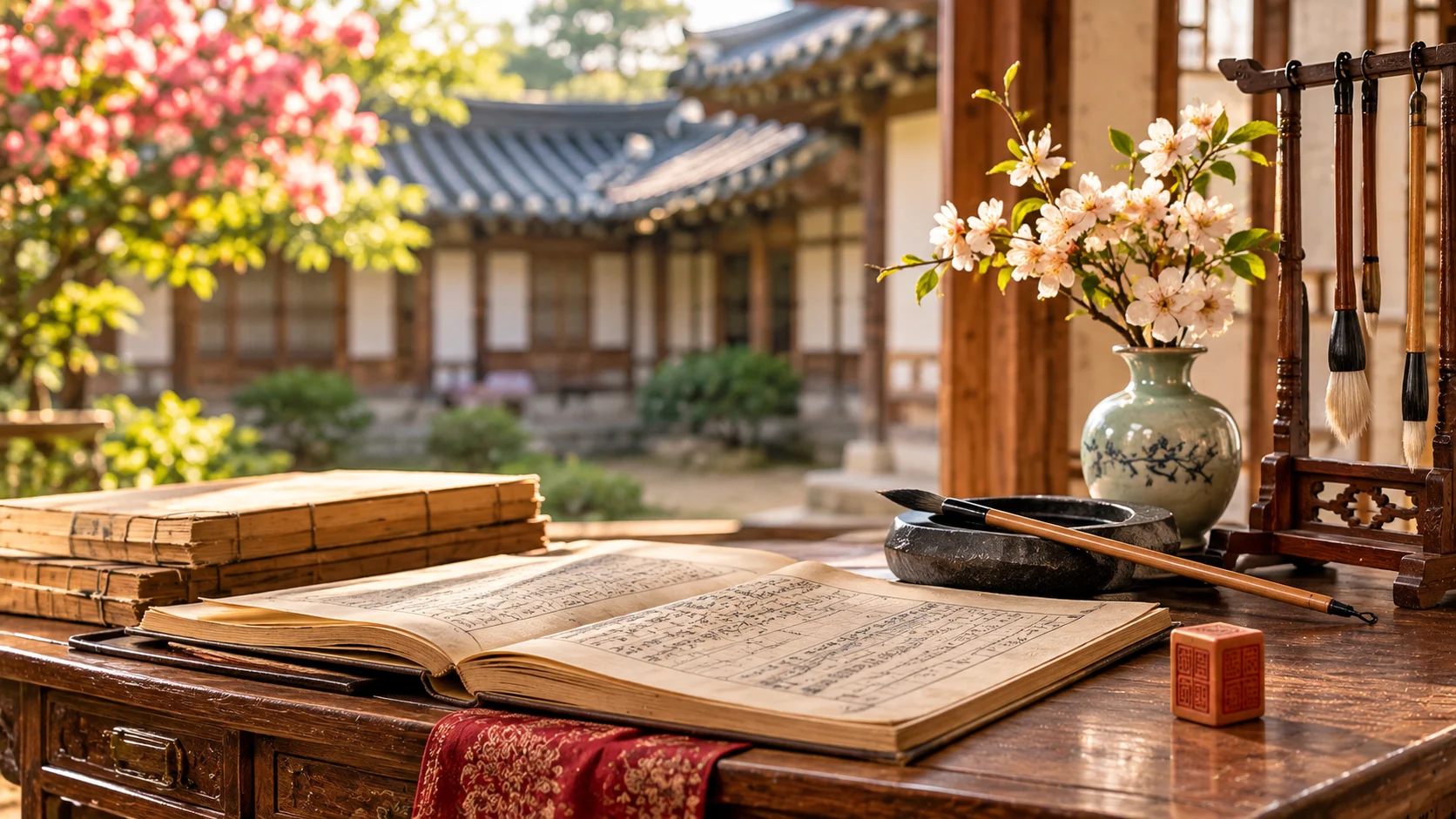
The most common Korean last names include Kim (김), Lee (이), Park (박), Choi (최), and Jung (정). Korean surnames often have Hanja roots and connect families to historical clans and ancestral places.
A family name can tell a fascinating story. It may connect someone to an ancient kingdom, a historic region, or generations of family traditions. Korean last names are especially interesting because they carry deep cultural and historical connections.
Names like Kim, Lee, and Park are recognized around the world, thanks to Korean dramas, K-pop, films, and famous Korean personalities. However, there is much more to Korean surnames than these familiar names. Some have beautiful meanings connected to nature, while others are linked to historic kingdoms, noble families, and ancestral locations.
One interesting feature of Korean naming culture is that a surname can have different Chinese characters, known as Hanja. These characters can change its meaning and historical background.
you are researching your Korean heritage, creating a Korean character, exploring family history, or simply curious about beautiful names, this guide to korean last names will help you discover more than 100 traditional, popular, and rare surnames.
Let’s explore their meanings, Hangul spellings, origins, and cultural significance.
1. Kim (김) | One of the Most Famous Korean Last Names
Hangul: 김
Hanja: 金
Meaning: Gold or metal.
Origin: Korean family name with a long historical connection to the ancient kingdoms of Korea.
Personality and Style: Kim is often associated with traditional identity, heritage, and familiarity. These are cultural impressions rather than personality traits determined by a surname.
Popularity: Kim is the most common surname in South Korea. According to the 2015 census, approximately 10.69 million people had this surname, representing about 21.5% of the population counted.
Cultural Significance: The surname has important historical connections to the Silla Kingdom and the Gimhae and Gyeongju family clans.
Famous Reference: Kim Soo-hyun, Kim Taehyung (V), and Kim Yuna are well-known people with this surname.
Similar Korean Surnames: Gim, Ghim, Lee, Park, Choi.
Why It Still Works Today: Kim is short, recognizable, and deeply connected to Korean history. Its international familiarity also makes it one of the first Korean surnames many people encounter.
2. Lee (이) | A Classic Korean Family Name
Hangul: 이
Hanja: 李
Meaning: Plum tree.
Origin: A traditional East Asian surname used in Korea and other countries with Chinese-character naming traditions.
Personality and Style: Lee has a simple, elegant, and timeless appearance. It is also easy to pronounce in many languages.
Popularity: Lee is the second most common Korean surname in South Korea, with approximately 7.3 million people recorded in the 2015 census.
Cultural Significance: The Jeonju Lee clan is particularly significant in Korean history. The Joseon royal family belonged to this clan.
Famous Reference: Lee Min-ho, Lee Jong-suk, and Lee Ji-eun (IU) are familiar examples.
Similar Korean Surnames: Yi, Rhee, Ri, Lim, Han.
Why It Still Works Today: Lee combines historical importance with a clean, international spelling. Its association with the plum tree also gives it a lovely connection to nature.
3. Park (박) | A Historic Korean Surname
Hangul: 박
Hanja: 朴
Meaning: Commonly associated with simplicity or plainness; the character also has an older meaning related to something unadorned.
Origin: Korean surname with a particularly famous connection to the ancient Silla Kingdom.
Personality and Style: Park has a strong, classic, and straightforward style. Its short spelling makes it memorable.
Popularity: Park is the third most common Korean surname, representing approximately 8.4% of the population in the 2015 census.
Cultural Significance: The Miryang Park clan is one of the largest Korean family clans. The surname also has important historical associations with the founding traditions of Silla.
Famous Reference: Park Seo-joon, Park Bo-gum, and Park Shin-hye are well-known examples.
Similar Korean Surnames: Bak, Pak, Kim, Choi, Kang.
Why It Still Works Today: Park is easy to recognize and has a long historical background. It is a great example of a Korean surname that connects ancient traditions with modern popular culture.
4. Choi (최) | An Elegant and Recognizable Surname
Hangul: 최
Hanja: 崔
Meaning: High, lofty, or towering.
Origin: A traditional Korean surname with historical connections to prominent families and ancient Korean kingdoms.
Personality and Style: Choi has a refined, confident, and sophisticated sound. Its meaning also creates an impression of height and distinction.
Popularity: Choi is among the five most common Korean surnames. More than 2.3 million people carried it in the 2015 census.
Cultural Significance: The Gyeongju Choi clan is one of the historically important branches associated with this surname.
Famous Reference: Choi Si-won, Choi Woo-shik, and Choi Min-ho are recognizable Korean entertainers.
Similar Korean Surnames: Choe, Choei, Kim, Jung, Seo.
Why It Still Works Today: Choi is stylish without losing its traditional identity. Its recognizable sound and historical roots make it popular in Korean entertainment and beyond.
5. Jung (정) | A Traditional Korean Family Name
Hangul: 정
Hanja: 鄭, 丁, and others.
Meaning: Depends on the Hanja. 鄭 is associated with the ancient state of Zheng, while 丁 has different historical and character meanings.
Origin: Korean surname with roots in older East Asian family-name traditions.
Personality and Style: Jung feels classic, balanced, and familiar. Its simple appearance makes it suitable for both traditional and modern naming styles.
Popularity: Jung is one of South Korea’s most common surnames. Its exact census ranking depends on different Hanja characters are counted separately.
Cultural Significance: Korean families with the surname Jung may belong to different ancestral clans, each with its own historical background.
Famous Reference: Jung Hae-in, Jungkook (Jeon Jung-kook), and Jung So-min are familiar names in Korean entertainment. Note that Jungkook’s family surname is Jeon, not Jung.
Similar Korean Surnames: Jeong, Chung, Jeon, Han, Shin.
Why It Still Works Today: Jung is a recognizable surname with several romanized spellings. Its history and flexibility make it an interesting choice for anyone exploring Korean family names.
6. Kang (강) | A Strong and Memorable Surname
Hangul: 강
Hanja: 姜, 康, 江, and others.
Meaning: Depends on the character. 姜 is a traditional family-name character, 康 can mean health or well-being, and 江 means river.
Origin: A historical Korean surname with multiple ancestral branches.
Personality and Style: Kang has a bold, confident, and distinctive sound. Its short spelling makes it easy to remember.
Popularity: Kang is among South Korea’s most common surnames, with more than one million people recorded under the surname in the 2015 census.
Cultural Significance: Several Korean clans carry the surname Kang, and their histories differ according to their ancestral origins and Hanja.
Famous Reference: Kang Daniel, Kang Ha-neul, and Kang Seul-gi are familiar examples.
Similar Korean Surnames: Gang, Khang, Kim, Kwon, Han.
Why It Still Works Today: Kang has a strong sound and a rich cultural background. Its different Hanja forms also show why understanding the written characters matters when researching Korean surnames.
7. Cho (조) | A Short and Timeless Korean Surname
Hangul: 조
Hanja: 趙, 曺, and others.
Meaning: Depends on the Hanja. 趙 is associated with the ancient Chinese state of Zhao.
Origin: A traditional Korean family name with several historical ancestral branches.
Personality and Style: Cho feels simple, polished, and classic. Its short structure makes it easy to combine with many Korean given names.
Popularity: Cho is one of the frequently encountered Korean surnames. Different Hanja forms may be counted separately in official surname records.
Cultural Significance: Families with this surname belong to different bon-gwan, or ancestral clan origins.
Famous Reference: Cho Seung-woo, Cho Gue-sung, and Cho Mi-yeon are recognizable people with this surname.
Similar Korean Surnames: Jo, Zhao, Jung, Choi, Seo.
Why It Still Works Today: Cho has a clean appearance and a traditional background. It is also a useful example of how Korean surnames can have multiple romanized forms.
8. Yoon (윤) | A Graceful Korean Family Name
Hangul: 윤
Hanja: 尹, 允, 潤, and others.
Meaning: Depends on the character. 尹 historically relates to an official or administrator, 允 can mean to permit or be sincere, and 潤 can mean moist or prosperous.
Origin: A traditional Korean surname with different ancestral branches.
Personality and Style: Yoon has a soft, graceful, and elegant sound. It is frequently appreciated for its smooth pronunciation.
Popularity: Yoon is one of South Korea’s ten most common surnames, according to the 2015 census.
Cultural Significance: The surname has a long presence in Korean family history, with different clans connected to distinct ancestral places.
Famous Reference: Yoon Shi-yoon, YoonA (Im Yoon-ah), and Yoon Chan-young are familiar examples. YoonA’s family surname is Im, not Yoon.
Similar Korean Surnames: Yun, Youn, Lim, Seo, Han.
Why It Still Works Today: Yoon offers a beautiful balance of traditional identity and modern appeal. Its different English spellings also make it interesting for surname research.
9. Jang (장) | A Distinctive Traditional Surname
Hangul: 장
Hanja: 張, 蔣, 章, and others.
Meaning: Depends on the Hanja. 張 can mean to stretch, extend, or open.
Origin: A traditional Korean surname with roots in historical East Asian family-name traditions.
Personality and Style: Jang has a confident, memorable, and slightly bold sound.
Popularity: Jang is among South Korea’s ten most common surnames. It had nearly one million holders in the 2015 census.
Cultural Significance: Different Jang families belong to different ancestral clans. Their histories should not be assumed to be identical simply because they share a surname.
Famous Reference: Jang Dong-gun, Jang Won-young, and Jang Keun-suk are well-known examples.
Similar Korean Surnames: Chang, Zhang, Kang, Shin, Kwon.
Why It Still Works Today: Jang is short and distinctive. Its familiar sound and historical roots make it a memorable choice for Korean names.
10. Lim (임) | A Nature-Inspired Korean Surname
Hangul: 임
Hanja: 林, 任, and others.
Meaning: Depends on the Hanja. 林 means forest or grove, while 任 can mean to entrust or take responsibility.
Origin: Traditional Korean surname with multiple ancestral branches.
Personality and Style: Lim has a calm, natural, and understated style. The forest meaning of 林 gives it a particularly beautiful association.
Popularity: Lim is one of South Korea’s most common family names, with more than 800,000 people recorded in the 2015 census under the corresponding surname category.
Cultural Significance: Korean families with this surname may use different Hanja and belong to different ancestral clans.
Famous Reference: Im Si-wan, Lim Ji-yeon, and Im Yoon-ah are familiar entertainers. The surname is also frequently written as Im.
Similar Korean Surnames: Im, Rim, Lee, Seo, Han.
Why It Still Works Today: Lim is a lovely example of a Korean surname with a connection to nature. Its alternate spellings also make it useful to understand Korean romanization.
Quick Comparison Table of Korean Last Names
| Korean Last Name | Hangul | Common Hanja | Meaning or Association |
|---|---|---|---|
| Kim | 김 | 金 | Gold |
| Lee | 이 | 李 | Plum tree |
| Park | 박 | 朴 | Simple, unadorned |
| Choi | 최 | 崔 | High, lofty |
| Jung | 정 | 鄭 | Ancient state of Zheng |
| Kang | 강 | 姜 | Traditional family-name character |
| Cho | 조 | 趙 | Ancient state of Zhao |
| Yoon | 윤 | 尹 | Historical official title |
| Jang | 장 | 張 | Stretch or extend |
| Lim | 임 | 林 | Forest |
Note: These meanings describe common Hanja forms, not every family carrying the same Korean pronunciation.
100+ Korean Last Names to Explore
Beyond the ten familiar surnames, Korea has many other family names. Some are common, while others are much less frequently encountered.
Here is a broader list with Hangul spellings and common romanizations.
| No. | Korean Last Name | Hangul |
|---|---|---|
| 1 | Kim | 김 |
| 2 | Lee | 이 |
| 3 | Park | 박 |
| 4 | Choi | 최 |
| 5 | Jung | 정 |
| 6 | Kang | 강 |
| 7 | Cho | 조 |
| 8 | Yoon | 윤 |
| 9 | Jang | 장 |
| 10 | Lim | 임 |
| 11 | Han | 한 |
| 12 | Oh | 오 |
| 13 | Seo | 서 |
| 14 | Shin | 신 |
| 15 | Kwon | 권 |
| 16 | Hwang | 황 |
| 17 | Ahn | 안 |
| 18 | Song | 송 |
| 19 | Jeon | 전 |
| 20 | Hong | 홍 |
| 21 | Yoo | 유 |
| 22 | Yang | 양 |
| 23 | Ko | 고 |
| 24 | Moon | 문 |
| 25 | Son | 손 |
| 26 | Bae | 배 |
| 27 | Baek | 백 |
| 28 | Heo | 허 |
| 29 | Noh | 노 |
| 30 | Nam | 남 |
| 31 | Sim | 심 |
| 32 | Ha | 하 |
| 33 | Kwak | 곽 |
| 34 | Sung | 성 |
| 35 | Cha | 차 |
| 36 | Joo | 주 |
| 37 | Woo | 우 |
| 38 | Gu | 구 |
| 39 | Min | 민 |
| 40 | Jin | 진 |
| 41 | Ji | 지 |
| 42 | Eom | 엄 |
| 43 | Won | 원 |
| 44 | Cheon | 천 |
| 45 | Bang | 방 |
| 46 | Gong | 공 |
| 47 | Hwangbo | 황보 |
| 48 | Namgung | 남궁 |
| 49 | Jegal | 제갈 |
| 50 | Seonwoo | 선우 |
| 51 | Dokgo | 독고 |
| 52 | Sagong | 사공 |
| 53 | Gye | 계 |
| 54 | Ma | 마 |
| 55 | Tak | 탁 |
| 56 | Pyo | 표 |
| 57 | Yeom | 염 |
| 58 | Byeon | 변 |
| 59 | Gwak | 곽 |
| 60 | Gil | 길 |
| 61 | Seok | 석 |
| 62 | Gwon | 권 |
| 63 | Ryu | 류 |
| 64 | Ra | 라 |
| 65 | No | 노 |
| 66 | Mok | 목 |
| 67 | Ok | 옥 |
| 68 | Chu | 추 |
| 69 | Wi | 위 |
| 70 | Bae | 배 |
| 71 | Ye | 예 |
| 72 | So | 소 |
| 73 | Pi | 피 |
| 74 | Do | 도 |
| 75 | Seol | 설 |
| 76 | Yeon | 연 |
| 77 | Guk | 국 |
| 78 | Jeong | 정 |
| 79 | Byeon | 변 |
| 80 | Seong | 성 |
| 81 | Jang | 장 |
| 82 | Im | 임 |
| 83 | Ryang | 량 |
| 84 | Hyeon | 현 |
| 85 | Eo | 어 |
| 86 | Jeom | 점 |
| 87 | Pan | 판 |
| 88 | Dam | 담 |
| 89 | Seop | 섭 |
| 90 | Gae | 개 |
| 91 | Jeong | 정 |
| 92 | Bin | 빈 |
| 93 | Gyeong | 경 |
| 94 | On | 온 |
| 95 | Myeong | 명 |
| 96 | Gyo | 교 |
| 97 | Yong | 용 |
| 98 | Jo | 조 |
| 99 | Hae | 해 |
| 100 | Gwon | 권 |
Some entries have alternative romanizations or duplicate pronunciations. This is a broad inspiration list, not a ranking of 100 distinct, equally common surnames. For historical or family research, verify the Hangul and Hanja together.
Rare Korean Last Names With Unique Historical Backgrounds
Not every Korean family name is as familiar as Kim, Lee, or Park. Some surnames have unusual sounds, multiple syllables, or relatively small numbers of holders.
Here are six interesting examples.
1. Namgung (남궁)
Namgung is a two-syllable Korean surname. It is one of the most recognizable examples of a compound-style Korean family name.
2. Hwangbo (황보)
Hwangbo is another traditional two-syllable surname. It has a distinctive appearance and is relatively uncommon compared with Kim or Lee.
3. Jegal (제갈)
Jegal is a two-syllable surname associated with an older Chinese-character family-name tradition.
4. Seonwoo (선우)
Seonwoo is a recognizable compound surname with a traditional historical background.
5. Dokgo (독고)
Dokgo is an uncommon surname that stands out because of its two-syllable structure.
6. Sagong (사공)
Sagong is another relatively rare compound surname found in Korean naming traditions.
These surnames are particularly interesting for readers looking for less familiar Korean family names or developing fictional characters with distinctive identities.
Korean Last Names and Their Cultural Origins
Korean surnames are closely connected to family history, ancestral identity, and traditional naming customs.
One important concept is bon-gwan (본관).
Bon-gwan refers to a family’s ancestral place of origin. It helps distinguish different family branches that share the same surname.
For example, two people named Kim may belong to different clans, such as Gimhae Kim and Gyeongju Kim. Sharing the surname does not automatically mean they belong to the same immediate family or ancestral branch.
Historically, Hanja characters also played an important role in Korean family names. These characters helped record the written form and historical identity of a surname.
Korean family traditions developed over many centuries. During earlier periods, surnames were closely associated with elite and established families. Their use later became much more widespread.
This history explains why a relatively small number of surnames are shared by such a large part of South Korea’s population.
Why Are Kim, Lee, and Park So Common in Korea?
Kim, Lee, and Park are the three most common Korean surnames.
According to South Korea’s 2015 Population and Housing Census:
- Kim accounted for approximately 21.5% of the counted population.
- Lee accounted for approximately 14.7%.
- Park accounted for approximately 8.4%.
Together, these three surnames represented approximately 44.6% of the population counted. The official census also recorded 5,582 family names and 36,744 family origins.
Their popularity is connected to long historical traditions, established family clans, and the gradual spread of surnames across Korean society.
However, sharing one of these surnames does not mean that everyone is related. Bon-gwan and family records provide more detailed information about ancestral connections.
How Korean Names Are Written and Pronounced
Korean names follow a different structure from many Western names.
A traditional Korean full name usually places the family name first, followed by the given name.
For example:
- Kim Min-jun
- Lee Ji-eun
- Park Seo-joon
- Choi Soo-bin
- Kang Daniel
In Hangul, these names can be written as:
- 김민준
- 이지은
- 박서준
- 최수빈
- 강다니엘
Korean surnames are commonly one syllable, although two-syllable surnames also exist.
Romanization can create confusion because the same Korean surname may have several English spellings.
For example:
- 김: Kim or Gim
- 이: Lee, Yi, or I
- 박: Park, Bak, or Pak
- 최: Choi or Choe
- 정: Jung or Jeong
- 윤: Yoon or Yun
When writing about a real person, use the spelling they personally use rather than changing it to match a different romanization system.
Korean Naming Traditions: Do Women Change Their Last Names After Marriage?
One interesting feature of traditional Korean naming culture is that women generally keep their birth surnames after marriage.
For example, a woman named Kim Ji-eun generally continues using Kim after marrying someone named Park Min-ho.
This differs from naming customs in some Western countries, where women commonly adopt their husband’s surname.
Children traditionally receive their father’s surname, although Korean law allows parents to agree to give children the mother’s surname when registering their marriage.
This tradition reflects the importance of family identity and ancestral lineage in Korean society.
Most Popular Korean Last Names Today
The following names are among the most familiar Korean surnames based on the 2015 South Korean census.
- Kim (김)
- Lee (이)
- Park (박)
- Choi (최)
- Jung (정)
- Kang (강)
- Cho (조)
- Yoon (윤)
- Jang (장)
- Lim (임)
- Han (한)
- Oh (오)
- Seo (서)
- Shin (신)
- Kwon (권)
The list is based on the latest full official surname count identified for this article, not a real-time popularity ranking.
Traditional Korean Last Names With Historical Appeal
Some Korean surnames have especially interesting historical associations.
- Kim: Connected to important historical families of the Silla period.
- Lee: Associated with the Jeonju Lee royal family of the Joseon dynasty.
- Park: Linked to traditional Silla founding history.
- Choi: Associated with several influential historical clans.
- Jung: Connected to different ancestral branches and historical family traditions.
- Kang: Found in several established Korean family clans.
- Yoon: A surname with a long presence in Korean historical records.
- Jang: Connected to different traditional family branches.
These names are excellent starting points for exploring Korean history and genealogy.
Modern Korean Last Name Trends
Korean surnames have remained remarkably stable, even as Korean given names and popular culture have changed.
Today, international audiences encounter Korean family names through K-pop, Korean television, cinema, sports, and social media.
Names such as Kim, Lee, Park, and Choi are now widely recognized outside Korea.
For people creating fictional characters, Korean surnames can also provide a meaningful way to establish cultural background. However, it is important to choose a name that fits the character’s story and avoid using a surname simply because it sounds attractive.
Another modern trend is increased interest in family history. People are researching their ancestral clans, Hanja characters, and regional family origins to understand their heritage more deeply.
Korean surnames are not fashion trends that change every season. They are part of a cultural naming system that has developed over generations.
How to Choose the Right Korean Last Name
Choosing a Korean surname for a story, character, or personal research project requires more than picking a name that sounds beautiful.
Here are some useful tips.
1. Understand the meaning.
Check the Hanja associated with the surname. Different characters can give the same pronunciation different meanings.
2. Check the Hangul spelling.
Always verify the Korean writing rather than relying only on an English spelling.
3. Explore the historical background.
Some surnames have connections to ancient kingdoms, royal families, or well-known clans.
4. Consider how common the surname is.
Kim, Lee, and Park are very common, while Namgung, Hwangbo, and Jegal are much less familiar.
5. Learn about bon-gwan.
If you are researching a real family, the ancestral clan can be more informative than the surname alone.
6. Use authentic romanization.
A person’s preferred spelling should take priority when writing their name in English.
7. Respect cultural identity.
If you are naming a fictional Korean character, consider the character’s family background, generation, and cultural setting.
A little research can make a big difference between a name that simply sounds Korean and one that fits Korean naming traditions.
FAQs
Q1. What is the most common Korean last name?
Kim (김) is the most common Korean surname. It represented approximately 21.5% of South Korea’s counted population in the 2015 census.
Q2. What are the three most common Korean surnames?
The three most common Korean surnames are Kim (김), Lee (이), and Park (박). Together, they represented approximately 44.6% of the population in the 2015 census.
Q3. Why do so many Koreans have the last name Kim?
Kim has a long historical presence in Korea and is associated with several major ancestral clans. The spread of surnames over Korean history contributed to its widespread use.
Q4. What are some rare Korean last names?
Namgung, Hwangbo, Jegal, Seonwoo, Dokgo, and Sagong are examples of relatively uncommon two-syllable Korean surnames.
Q5. Do Korean last names have meanings?
Yes. Many Korean surnames use Hanja characters that carry meanings. However, the meaning can differ when the same Hangul pronunciation represents different Chinese characters.
Q6. Do Korean women change their surnames after marriage?
Generally, no. Korean women traditionally keep their birth surnames after marriage, preserving their original family-name identity.
Q7. Why do Korean surnames have different English spellings?
Romanization systems and personal naming preferences create different spellings. For example, 이 may appear as Lee, Yi, or I in English.
Q8. What are two-syllable Korean last names?
Examples include Namgung, Hwangbo, Jegal, Seonwoo, Dokgo, and Sagong. They are less common than the traditional one-syllable Korean surnames.
Conclusion
Korean family names offer a fascinating look into history, culture, and ancestral identity. From the familiar Kim, Lee, and Park to distinctive surnames like Namgung, Hwangbo, and Jegal, each name can reveal something interesting about Korean naming traditions.
The most important thing to remember is that a surname’s pronunciation does not always tell its complete story. Hanja characters and bon-gwan provide deeper information about its meaning and family origins.
you are researching your heritage, choosing a name for a fictional character, or simply exploring beautiful korean last names, there is plenty to discover.
Choose your favorite surname, explore its history, and share this guide with someone interested in Korean culture. Which Korean family name do you find most beautiful? Leave a comment and tell us!
Discover More Related Articles:
- 345 Sesame Street Characters Names | A Colorful Journey Through Childhood Favorites In 2026
- 345 Sanderson Sisters Names | Meet the Three Bewitching Witches of Hocus Pocus In 2026
- 378 Hocus Pocus Witches Names | For Magical Souls In 2026