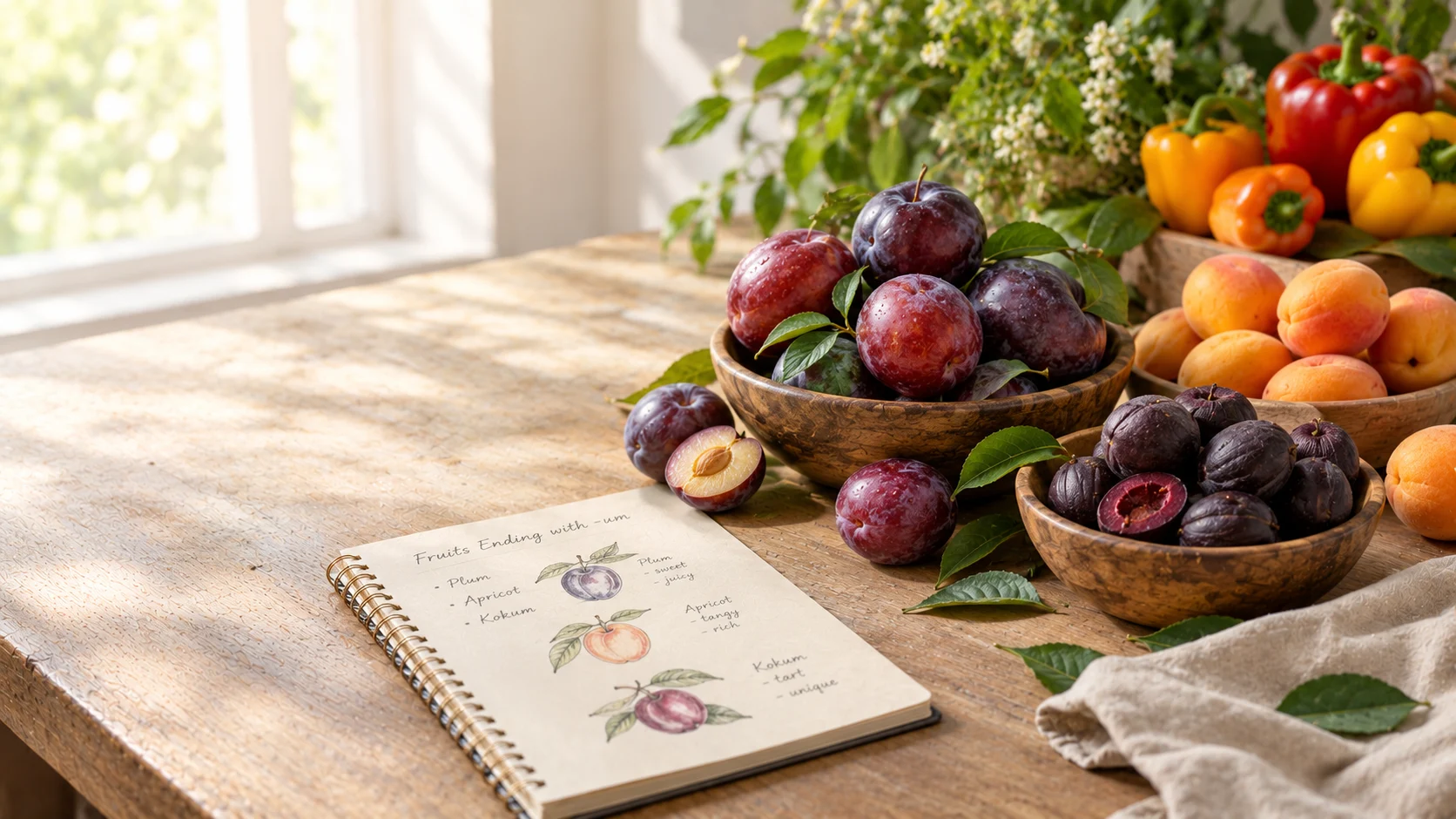
Fruit names ending in “um” include plum, kokum, aprium, and capsicum. Compound names such as beach plum, coco plum, and pigeon plum also end in “um” because their final word is plum.
Have you ever tried to name a fruit that ends with the letters “um”? It sounds like an easy word challenge, but the answer is more interesting than you might expect. Most familiar fruit names end in sounds such as “y,” “e,” or “o,” making the “um” ending unusual.
If you are searching for fruit names that end with um, you have probably come across plum. It is the clearest everyday example. However, the list can grow when you include lesser-known fruits, hybrid varieties, regional names, and botanical terms.
For example, kokum is a sour tropical fruit used in Indian cooking, while aprium is a hybrid developed from apricot and plum. Capsicum also ends in “um,” although many English speakers call its edible fruit a pepper rather than a fruit in everyday conversation.
This guide explores real fruit names, their meanings, origins, flavors, uses, and interesting features. It also separates established names from scientific terms and made-up words, so you can use the list confidently in a school project, quiz, or word game.
1. Plum: The Classic Fruit Ending in Um
Meaning: A small, fleshy fruit with a stone inside.
Origin: The English word comes through Old English and ultimately traces back to Latin prunum.
Appearance and flavor: Plums come in purple, red, yellow, and other colors. Their flesh can taste sweet, tart, or a mix of both.
Style: Common, classic, and familiar.
Best for: School assignments, vocabulary lists, fruit quizzes, and everyday conversations.
Popularity: Plum is a widely recognized fruit name and the strongest starting point for this word pattern.
Interesting fact: Plums belong to the genus Prunus, which also includes cherries, peaches, and apricots.
Related names: Beach plum, Japanese plum, coco plum, pigeon plum.
Why it matters: Plum is a straightforward example because its spelling ends exactly in “um.” It is also a useful reminder that a fruit’s everyday name does not always match its scientific name. Dried plums are commonly known as prunes.
2. Kokum: A Sour Tropical Fruit
Meaning: The common name of a tropical fruit from the species Garcinia indica.
Origin: Kokum is associated with western India, especially the Konkan region.
Appearance and flavor: The fruit develops a deep purple to reddish color. Its sour taste makes it useful in regional foods and drinks.
Style: Tropical, regional, and distinctive.
Best for: Indian food discussions, botanical studies, and lists of unusual fruit names.
Popularity: Kokum is familiar in parts of India but less widely known in many other countries.
Interesting fact: Dried kokum rind is used in some Indian dishes to add sourness. It is also used to prepare refreshing drinks.
Related names: Garcinia fruit, plum, tamarind, amla.
Why it matters: Kokum is a useful example of a fruit name that ends in “um” without relying on a compound name. Its culinary uses also show how regional fruits can be important even when they are unfamiliar to international audiences.
3. Aprium: A Hybrid of Apricot and Plum
Meaning: A hybrid fruit combining characteristics of apricot and plum.
Origin: The name is a blend of “apricot” and “plum.” Aprium varieties were developed through fruit breeding.
Appearance and flavor: Apriums often have orange-toned skin or flesh and a sweet, aromatic flavor, though qualities vary by variety.
Style: Modern, horticultural, and unusual.
Best for: Fruit research, gardening articles, food vocabulary, and word games.
Popularity: Aprium is less common than ordinary plums and apricots and may be available mainly through specialty growers or seasonal markets.
Interesting fact: Apriums are hybrids with a stronger apricot influence than some other apricot-plum hybrids.
Related names: Pluot, plumcot, apricot, plum.
Why it matters: Aprium adds variety to a list of fruit names ending in “um.” It is a real horticultural name rather than a joke created by changing the spelling of a familiar fruit.
4. Capsicum: A Botanical Fruit Name
Meaning: A plant genus that includes peppers, such as bell peppers and chili peppers.
Origin: Capsicum is the botanical name used for a group of plants in the nightshade family.
Appearance and flavor: Capsicum fruits vary in shape, size, color, heat, and sweetness. Bell peppers are mild, while many chili peppers are hot.
Style: Botanical, scientific, and culinary.
Best for: Science projects, botanical vocabulary, and discussions of the difference between culinary and botanical fruits.
Popularity: The word is widely used in some countries, including Australia and New Zealand, where “capsicum” commonly means bell pepper.
Interesting fact: Botanically, peppers are fruits because they develop from a flower’s ovary and contain seeds. In cooking, people usually treat them as vegetables.
Related names: Bell pepper, chili pepper, paprika pepper, sweet pepper.
Why it matters: Capsicum ends in “um,” but it requires a little context. It is a botanical genus name and a common food term in some regions, not the standard everyday name for every individual pepper fruit.
5. Beach Plum: A Small Coastal Fruit
Meaning: A plum species known as Prunus maritima.
Origin: The name reflects the plant’s coastal habitat in parts of eastern North America.
Appearance and flavor: Beach plums are small fruits that can be purple, blue, red, or yellow. Their flavor ranges from tart to sweet.
Style: Regional, wild, and traditional.
Best for: Native plant studies, regional food histories, and lists of lesser-known fruits.
Popularity: Beach plum is not as widely sold as common supermarket plums, but it has regional importance.
Interesting fact: The fruit has been used in preserves, jellies, and other preparations.
Related names: Plum, Japanese plum, coco plum, pigeon plum.
Why it matters: Beach plum qualifies because the full name ends with the word “plum.” It is a useful example when a word puzzle accepts multiword fruit names rather than single-word names only.
6. Coco Plum: A Tropical Fruit
Meaning: The edible fruit of the plant commonly known as coco plum, Chrysobalanus icaco.
Origin: Coco plum is native to tropical and subtropical regions of the Americas and the Caribbean.
Appearance and flavor: The fruit may be white, pink, purple, or dark-colored, depending on the variety. Its flavor is generally mild and sweet.
Style: Tropical, regional, and botanical.
Best for: Tropical fruit guides, plant identification, and biodiversity projects.
Popularity: Coco plum is best known in areas where the plant grows naturally or is cultivated as a landscape plant.
Interesting fact: Coco plum plants can grow in coastal environments and are sometimes used in hedges and landscaping.
Related names: Beach plum, pigeon plum, sea grape, common plum.
Why it matters: Coco plum is another genuine compound name that ends in “um.” It also shows why a broad search for fruit names can uncover plants and foods that are not familiar to everyone.
7. Ground Plum: A Name Used for a Native Plant
Meaning: A common name associated with Astragalus crassicarpus, a North American plant that produces inflated pods.
Origin: The name is associated with the plant’s low-growing habit and its rounded fruiting pods.
Appearance and flavor: Its inflated pods resemble small plums in shape, but the plant is not the same as a typical edible plum tree.
Style: Botanical, regional, and unusual.
Best for: Plant identification, native flora research, and advanced vocabulary lists.
Popularity: Ground plum is a relatively obscure name outside botanical and native-plant contexts.
Interesting fact: Common names can be misleading. A plant with “plum” in its name is not automatically a conventional edible fruit crop.
Related names: Plum, beach plum, coco plum, pigeon plum.
Why it matters: Ground plum ends in “um” because its final word is plum. However, if your assignment asks only for commonly eaten fruits, clarify the botanical context before including it.
8. Pigeon Plum: A Fruit of Tropical Regions
Meaning: A common name used for certain tropical trees in the genus Coccoloba, including Coccoloba diversifolia.
Origin: The name is used in parts of the Caribbean and the Americas.
Appearance and flavor: The tree produces small fruits, with characteristics that vary by species. Some related fruits are eaten by birds and other wildlife.
Style: Tropical, botanical, and regional.
Best for: Tree identification, tropical plant lists, and biodiversity studies.
Popularity: Pigeon plum is not a standard supermarket fruit name, so it is more useful in regional and botanical contexts.
Interesting fact: Common plant names can refer to different species in different places. Checking the scientific name helps avoid confusion.
Related names: Coco plum, beach plum, sea grape, common plum.
Why it matters: Pigeon plum ends in “um” and is a useful example of a regional compound name. Use the scientific name when precision matters, especially in educational writing.
9. Nonda Plum: An Australian Native Fruit
Meaning: The common name for the fruit of Parinari nonda, a tree native to parts of northern Australia and nearby regions.
Origin: Nonda plum is associated with Australian native plant knowledge and regional food traditions.
Appearance and flavor: The fruit is round to oval, with a firm outer layer and edible portions used in traditional contexts.
Style: Native, regional, and distinctive.
Best for: Australian plant studies, native food research, and lists of unusual fruits.
Popularity: Nonda plum is far less familiar internationally than common European or Asian plums.
Interesting fact: Native fruits can have cultural and ecological importance beyond their commercial availability.
Related names: Plum, beach plum, coco plum, pigeon plum.
Why it matters: Nonda plum qualifies because the complete common name ends in “plum.” As with other regional foods, check a reliable botanical reference before making detailed claims about preparation or traditional use.
10. Japanese Plum: A Familiar Name for a Different Plum Species
Meaning: A common name often used for Prunus salicina, a plum species associated with East Asia.
Origin: The species originated in China and became widely cultivated in Japan and elsewhere.
Appearance and flavor: Japanese plums are often round, juicy, and available in red, yellow, or other skin colors. Their flavor varies by cultivar.
Style: Familiar, horticultural, and internationally cultivated.
Best for: Fruit guides, gardening content, and comparisons of plum varieties.
Popularity: Japanese plums are commercially grown in many parts of the world.
Interesting fact: Common names can emphasize a place where a crop became prominent even when its deeper origin is elsewhere.
Related names: Plum, beach plum, aprium, plumcot.
Why it matters: Japanese plum is another valid compound name ending in “um.” It is particularly useful for a list that includes fruit varieties and horticultural names, rather than only single-word fruit names.
Quick Comparison Table
| Fruit name | Meaning or identity | Style | Best use |
|---|---|---|---|
| Plum | Common stone fruit | Everyday | Word games and general lists |
| Kokum | Sour tropical fruit | Regional | Indian food and fruit guides |
| Aprium | Apricot-plum hybrid | Horticultural | Fruit research |
| Capsicum | Botanical genus of peppers | Scientific | School science projects |
| Beach plum | Coastal plum species | Regional | Native plant studies |
| Coco plum | Tropical fruit | Botanical | Tropical fruit guides |
| Ground plum | Common name of a native plant | Botanical | Plant identification |
| Pigeon plum | Regional name for tropical trees and fruits | Botanical | Biodiversity research |
| Nonda plum | Australian native fruit | Regional | Native food studies |
| Japanese plum | Cultivated plum species | Horticultural | Fruit variety guides |
How to Identify Genuine Fruit Names Ending in Um
A good list should follow the exact spelling rule rather than rely on words that merely sound similar.
1. Check the final letters. The word must end with the letters “u” and “m” in that order. Plum and kokum qualify; persimmon does not.
2. Separate common names from scientific names. Capsicum is a botanical genus and a common pepper name in some countries. A scientific name ending in “um” does not automatically mean the word is the everyday name of an edible fruit.
3. Confirm unusual regional names. Some fruits are known by different names in different countries. Use a botanical reference when the name is unfamiliar.
4. Watch out for invented spellings. Words such as “bananum,” “applum,” and “strawberrum” are playful inventions, not standard fruit names.
5. Check your word game’s rules. A classroom activity may accept compound names such as beach plum, while a word puzzle may allow only single words. The correct list depends on the rules.
More Fruit Names and Varieties Ending in Um
If you need additional examples, compound names ending in “plum” are a useful place to look. These include:
- Burdekin plum: A fruit associated with the Australian native tree Pleiogynium timoriense.
- Davidson’s plum: A native Australian fruit from trees in the genus Davidsonia.
- Illawarra plum: A common name for the edible seed-bearing structures of Podocarpus elatus.
- Native plum: A broad common-name category used for different plants in different regions.
- Sweet plum: A descriptive name that may refer to different plum varieties or regional fruits.
These names should be checked against a botanical or horticultural source before publication, since common names can vary by region and may refer to different plants. Their final word, “plum,” does end in “um,” but that does not mean all are closely related botanically.
Most Recognizable Fruit Names Ending in Um
For a short quiz answer, prioritize the names that are easiest to explain:
- Plum: The clearest everyday fruit example.
- Kokum: A tropical fruit used in regional Indian cooking.
- Aprium: A named apricot-plum hybrid.
- Capsicum: A botanical fruit term and a common name for peppers in some regions.
- Beach plum: A recognized name for a coastal plum species.
If you only need common, single-word fruit names, plum and kokum are particularly useful examples. Aprium is also a valid horticultural fruit name, while capsicum needs the botanical or regional-language explanation.
Modern Uses of Fruit Names Ending in Um
Fruit names are useful far beyond grocery shopping. They appear in language lessons, science projects, gardening guides, quizzes, recipes, and word games.
For school projects: Use a clear example such as plum, then explain why kokum and aprium are less familiar.
For word games: Confirm compound names count. “Beach plum” ends in “um,” but it is two words.
For food writing: Explain how kokum is used in regional cooking or how apriums differ from ordinary plums.
For botanical research: Include scientific names alongside common names to help readers identify the correct species.
For SEO articles: Answer the main question early, provide an accurate table, and explain the difference between everyday fruit names and botanical terms.
The best lists do more than provide words. They show readers why each entry qualifies and help them understand the context behind the name.
FAQs
Q1. What fruit names end with um?
Plum, kokum, and aprium are examples of fruit names ending in “um.” Capsicum also qualifies as a botanical fruit term and a regional common name for peppers.
Q2. Does plum end with um?
Yes. The word plum ends with the letters “u” and “m,” making it the clearest common English example.
Q3. Is kokum a real fruit?
Yes. Kokum is the fruit of Garcinia indica, a tropical plant associated with India and used in regional foods and drinks.
Q4. Is aprium a real fruit?
Yes. Aprium is a named hybrid of apricot and plum, developed through horticultural breeding.
Q5. Does capsicum count as a fruit ending in um?
Yes, in botanical and regional usage. Capsicum is a genus that includes peppers, whose edible structures are botanically fruits.
Q6. Does persimmon end with um?
No. Persimmon ends in “on,” not “um,” so it does not meet the exact spelling requirement.
Q7. Are bananum and applum real fruits?
No. These are playful invented words rather than established fruit names. Use recognized names when completing a school assignment or factual list.
Q8. Can compound fruit names count?
Usually, if the task asks for fruit names rather than single-word names. Beach plum and coco plum end in “um,” but check your assignment’s rules first.
Conclusion
Finding fruit names that end with um is a fun way to explore the relationship between language, food, and botany. Plum is the clearest everyday example, while kokum and aprium add less familiar but genuine fruit names to the list. Capsicum offers another interesting case because it is a botanical term and a common name for peppers in some regions.
Compound names such as beach plum, coco plum, and Japanese plum also fit the spelling pattern. However, it is important to distinguish real fruit names from scientific classifications and invented words.
If you are making a school list, preparing a quiz, or writing a fruit guide, choose examples that fit your rules and verify unfamiliar names before using them. Share this article with someone who enjoys word challenges, and leave a comment with another verified fruit name ending in “um.”
Discover More Related Articles:
- 345 Sesame Street Characters Names | A Colorful Journey Through Childhood Favorites In 2026
- 345 Sanderson Sisters Names | Meet the Three Bewitching Witches of Hocus Pocus In 2026
- 378 Hocus Pocus Witches Names | For Magical Souls In 2026