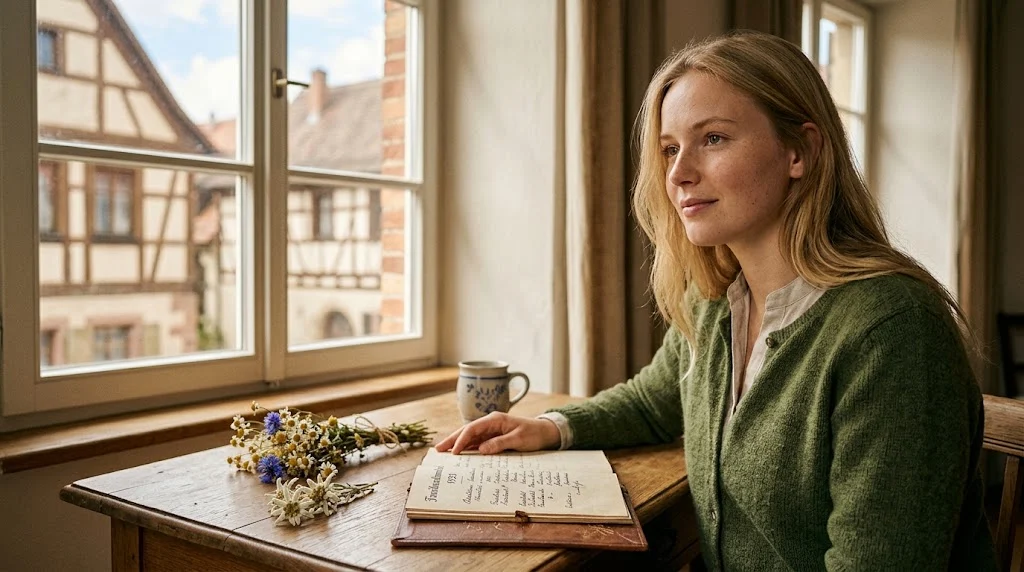
Female German names include classic choices such as Emma, Klara, Charlotte, and Johanna, along with distinctive names such as Frieda, Luise, Ida and Mathilda. They range from traditional and elegant to modern and playful.
Choosing a name for a baby girl can feel like choosing a little piece of her story. A beautiful name can carry family memories, cultural roots, strength, grace, or simply a sound that feels special. That is why female German names continue to attract parents looking for names with character and history.
German naming traditions offer a wonderful mix of classic, vintage, soft, and modern choices. Some names have deep Germanic roots, while others became firmly established in German-speaking communities through European history and tradition. Below, you’ll find carefully selected names with their meanings, origins, personalities, styles, and best uses.
Emma | A Timeless German Favorite
Meaning: Universal, whole, or complete.
Origin: Germanic.
Personality: Emma feels warm, confident, friendly, and intelligent. It has a gentle sound but still carries a strong sense of character.
Style: Classic, sweet, modern, elegant.
Best For: Baby girl, daughter, sister, character, or social media name.
Popularity: Emma is one of the most popular girl names in Germany. In the GfdS 2025 ranking, Emma placed second among first names given to girls.
Emotional Appeal: Emma is easy to pronounce, easy to remember, and works beautifully at every age. It sounds just as natural for a little girl as it does for an adult woman.
Pop Culture Reference: Emma is widely used internationally, giving it a familiar yet sophisticated feel.
Similar Names: Ella, Emilia, Mia, Anna, Elsa.
Why It Still Works Today: Its short spelling and timeless sound make Emma a safe choice for parents who want something traditional without feeling old-fashioned.
Emilia | Soft, Elegant and Refined
Meaning: Rival or industrious, depending on the historical interpretation of its Latin root.
Origin: Latin, though Emilia is widely established in German-speaking naming traditions.
Personality: Emilia suggests creativity, confidence, warmth, and determination. It has a graceful sound with a slightly romantic personality.
Style: Elegant, feminine, classic, modern.
Best For: Baby girl, daughter, fictional character, or elegant username.
Popularity: Emilia remains highly popular in Germany. It ranked third among girls’ first names in the GfdS 2025 list.
Emotional Appeal: The flowing sound gives Emilia a soft and sophisticated quality without making it difficult to pronounce.
Pop Culture Reference: Emilia is familiar internationally, which gives the name strong cross-cultural appeal.
Similar Names: Amelia, Emma, Emilie, Emilia, Lia.
Why It Still Works Today: Emilia balances traditional elegance with a youthful sound, making it particularly appealing to parents who want a name that feels both established and fresh.
Klara | Bright and Classic
Meaning: Clear, bright, or famous.
Origin: Latin; traditionally used throughout German-speaking Europe.
Personality: Klara feels intelligent, graceful, cheerful, and composed. The spelling with K gives it a distinctly European appearance.
Style: Classic, vintage, elegant, refined.
Best For: Baby girl, daughter, literary character, or traditional family name.
Popularity: Klara/Clara ranked eighth among girls’ first names in Germany in 2025 when the spelling variants were grouped together by GfdS.
Emotional Appeal: Klara has an old-fashioned charm without sounding dated. It feels polished while remaining approachable.
Pop Culture Reference: Clara is a familiar form internationally, including in literature and classical storytelling.
Similar Names: Clara, Lara, Klara, Leni, Lina.
Why It Still Works Today: Parents who enjoy vintage names often appreciate Klara because it feels traditional while fitting comfortably into modern naming styles.
Frieda | A Charming Vintage Choice
Meaning: Peace, protection, or beloved peace, depending on the name element and form.
Origin: Germanic.
Personality: Frieda feels independent, warm, cheerful, and quietly strong. It has a friendly personality with a distinctly vintage edge.
Style: Vintage, sweet, traditional, playful.
Best For: Baby girl, daughter, character, or family-inspired name.
Popularity: Frieda/Frida appears among the notable regional choices in Germany’s 2025 naming data, particularly in northern and eastern regional lists.
Emotional Appeal: Frieda has an old-world charm that feels cozy and personal. It is a lovely choice for parents who prefer names with history and personality.
Pop Culture Reference: The related spelling Frida is strongly associated with the internationally famous artist Frida Kahlo, although the two names have distinct cultural associations.
Similar Names: Frida, Friedel, Freya, Ida, Greta.
Why It Still Works Today: Vintage German names have experienced renewed interest, and Frieda offers a softer alternative to more common modern choices.
Ida | Short, Strong and Stylish
Meaning: The meaning varies by historical origin and interpretation; it is often associated with Germanic name elements connected with work or prosperity.
Origin: Germanic.
Personality: Ida feels independent, thoughtful, intelligent, and confident. Its short form gives it a crisp, memorable personality.
Style: Minimalist, vintage, classic, modern.
Best For: Baby girl, daughter, sister, character, or username.
Popularity: Ida appears strongly in regional German naming preferences. In the GfdS 2025 regional data, it ranked fourth in the North for girls’ first names and tenth in the East.
Emotional Appeal: Ida is simple without being ordinary. Its two-syllable structure makes it easy to say while giving it an elegant European feel.
Pop Culture Reference: Ida has appeared across European literature and historical naming traditions.
Similar Names: Ada, Ina, Ida, Lia, Leni.
Why It Still Works Today: Short names remain popular because they are easy to spell, pronounce, and remember. Ida combines that modern simplicity with vintage charm.
Mathilda | Strong With a Romantic Touch
Meaning: Strength in battle.
Origin: Germanic.
Personality: Mathilda suggests courage, intelligence, independence, and determination. Despite its strong meaning, the sound is graceful and feminine.
Style: Vintage, strong, elegant, literary.
Best For: Baby girl, daughter, historical character, or sophisticated username.
Popularity: Mathilda/Matilda has shown continued popularity in Germany. It ranked among the leading regional choices in the GfdS 2025 data, including sixth in the North and third in the East.
Emotional Appeal: The name combines strength with softness, making it appealing to parents who want a meaningful name with personality.
Pop Culture Reference: Matilda is also widely recognized through children’s literature and film, giving the name an additional cultural connection.
Similar Names: Matilda, Mathilde, Thea, Hilda, Tilda.
Why It Still Works Today: Mathilda fits the current love for vintage names while offering a strong and memorable meaning.
Charlotte | Elegant and Enduring
Meaning: Feminine form related to Charles, traditionally interpreted as free person or strong person.
Origin: Germanic through the masculine name Charles/Karl, with strong European usage.
Personality: Charlotte feels graceful, intelligent, confident, and sophisticated.
Style: Elegant, classic, royal, timeless.
Best For: Baby girl, daughter, character, professional name, or family name.
Popularity: Charlotte remains a well-established choice in Germany. It appeared among the leading girls’ names in the GfdS 2025 regional and overall data.
Emotional Appeal: Charlotte has a polished sound and several affectionate nickname possibilities, including Lottie and Charlie.
Pop Culture Reference: The name appears frequently in literature, film, history, and royal naming traditions.
Similar Names: Caroline, Clara, Louisa, Elisabeth, Josephine.
Why It Still Works Today: Charlotte bridges generations beautifully. It sounds traditional on a birth announcement but equally natural in a modern classroom or workplace.
Johanna | Graceful and Traditional
Meaning: God is gracious.
Origin: Hebrew, traditionally used across German-speaking Europe.
Personality: Johanna feels thoughtful, graceful, dependable, and strong-minded.
Style: Traditional, elegant, vintage, feminine.
Best For: Baby girl, daughter, family name, historical character, or formal name.
Popularity: Johanna continues to appear in German regional naming lists. The GfdS 2025 data places it among notable choices for girls’ names in several regional comparisons.
Emotional Appeal: Johanna has a formal beauty but can easily become more playful through nicknames such as Jo, Hanna, or Hanni.
Pop Culture Reference: Johanna has a long presence in European literature, music, history, and religious tradition.
Similar Names: Hanna, Johanne, Anna, Joanna, Janna.
Why It Still Works Today: It offers flexibility. Parents can use the full name for an elegant feel while choosing a shorter nickname for everyday life.
Luise | Soft, Noble and Vintage
Meaning: Famous warrior.
Origin: German form related to Louise/Louisa, with Germanic roots.
Personality: Luise feels gentle, intelligent, composed, and quietly confident.
Style: Vintage, elegant, traditional, refined.
Best For: Baby girl, daughter, literary character, family name, or sophisticated username.
Popularity: Luise/Louise was the fourth most common girls’ follow-up name in Germany’s 2025 GfdS data, showing that the name remains strongly established in German naming culture.
Emotional Appeal: Luise has a delicate sound while carrying a powerful historical meaning.
Pop Culture Reference: Louise and related forms have appeared widely in European literature, art, and royal history.
Similar Names: Louise, Louisa, Luisa, Liesel, Lotte.
Why It Still Works Today: Luise feels distinctive without being difficult. Its traditional spelling also gives it a strong German identity.
Greta | Simple, Warm and Memorable
Meaning: Often treated as a short form of Margareta, associated with “pearl.”
Origin: European, with strong German usage as a traditional short form.
Personality: Greta feels confident, lively, practical, and independent.
Style: Vintage, simple, chic, strong.
Best For: Baby girl, daughter, character, username, or modern vintage name.
Popularity: Greta is recognizable in German-speaking cultures and has also gained international attention.
Emotional Appeal: Greta is short and stylish while still having a traditional feel. It is especially appealing to parents who prefer names that are easy to spell and pronounce.
Pop Culture Reference: Greta has strong international recognition through notable artists, actors, and public figures.
Similar Names: Gretel, Grete, Margot, Marta, Frieda.
Why It Still Works Today: Greta has the rare ability to sound both vintage and contemporary. It feels confident without being overly formal.
Quick Comparison Table
| Name | Meaning | Style | Best For |
|---|---|---|---|
| Emma | Whole or universal | Classic | Baby girl |
| Emilia | Industrious/rival | Elegant | Baby girl |
| Klara | Clear or bright | Vintage | Daughter |
| Frieda | Peace | Vintage | Baby girl |
| Ida | Historical Germanic meaning | Minimalist | Baby girl |
| Mathilda | Strength in battle | Strong & elegant | Daughter |
| Charlotte | Free/strong person | Classic | Baby girl |
| Johanna | God is gracious | Traditional | Daughter |
| Luise | Famous warrior | Vintage | Baby girl |
| Greta | Pearl-associated | Chic & vintage | Daughter |
How to Choose the Perfect Female German Name
Start with the meaning. A name connected to strength, peace, wisdom, beauty, or grace can give your choice a deeper emotional purpose.
Next, consider the sound and spelling. Some German names have several forms, such as Klara/Clara, Luise/Louise, or Mathilda/Matilda. Choose the spelling that fits your family and the language your child will use most often.
Think about nickname potential too. Johanna can become Jo or Hanna, Charlotte can become Lottie, and Mathilda can become Tilda.
Finally, check how the first name sounds with the middle and last names. Say the complete name aloud several times. A name that feels natural in everyday conversation is often the one that lasts.
Most Popular Female German Names Today
If popularity matters to you, current German naming data provides a useful starting point. According to the GfdS 2025 first-name ranking, the leading girls’ names were Sophia/Sofia, Emma, Emilia, Mia, Lina, Ella, Hanna/Hannah, Klara/Clara, Mila, and Lia/Liah.
These names show that modern German naming preferences include short names, international names, classic choices, and soft-sounding feminine names.
Vintage Female German Names Making a Comeback
Vintage names are especially appealing when parents want something familiar but less trendy.
Some beautiful choices include:
- Frieda
- Ida
- Mathilda
- Luise
- Johanna
- Greta
- Lotte
- Else
- Hedwig
- Hilda
Names such as Frieda, Ida, Mathilda, and Johanna also appear in current German regional naming data, showing that traditional styles remain part of modern naming culture.
Modern Female German Name Trends
Current German naming trends show a strong preference for names that are short, recognizable, and easy to use internationally. Emma, Mia, Lina, Ella, and Mila are good examples of this compact style.
At the same time, vintage names are returning. Parents are increasingly drawn to names that feel old-fashioned but fresh, such as Frieda, Ida, Mathilda, and Klara.
Another trend is flexibility. A formal name such as Johanna or Charlotte can provide several shorter nickname options, allowing the name to grow naturally with the child.
FAQs
What are the most popular female German names?
The GfdS 2025 ranking lists Sophia/Sofia, Emma, Emilia, Mia, Lina, Ella, Hanna/Hannah, Klara/Clara, Mila, and Lia/Liah among Germany’s top girls’ first names. Emma and Emilia are especially strong choices for parents seeking names that are both familiar and modern.
What is a beautiful traditional German girl name?
Johanna, Luise, Frieda, Klara, and Mathilda are excellent traditional choices. They have long-standing European or German-speaking usage and offer different styles, from gentle and vintage to strong and elegant.
What is a strong female German name?
Mathilda is a particularly strong choice because its traditional Germanic meaning is connected with strength in battle. Other names such as Johanna, Charlotte, and Greta can also create a confident and independent impression.
What are some rare female German names?
If you want something less common, consider names such as Hedwig, Hilda, Else, Anneliese, or Irmgard. Popularity can vary by generation and region, so a name that feels rare in one area may be more familiar in another.
What are the cutest German girl names?
Frieda, Ida, Leni, Emma, Ella, and Greta have especially sweet and approachable sounds. Their short forms make them easy to pronounce, while their traditional connections give them more depth than a purely trendy name.
Which German girl names are vintage?
Frieda, Ida, Luise, Mathilda, Johanna, Greta, Hedwig, and Hilda all have a vintage character. Several traditional names are also appearing in modern regional naming preferences, showing that vintage styles continue to influence German naming choices.
Are German female names good for baby girls outside Germany?
Yes. Many German-associated names are easy to pronounce internationally. Emma, Emilia, Clara, Charlotte, Greta, and Mia are especially accessible because they are recognized across multiple languages and cultures.
How do I choose the best female German name?
Begin with meaning, pronunciation, cultural background, and family significance. Then consider spelling, nickname possibilities, and how the first name sounds with the surname. The best choice should feel natural to your family rather than simply following a trend.
Conclusion
The best female German names combine beauty, meaning, history, and personality. You prefer the timeless simplicity of Emma, the elegance of Emilia, the vintage charm of Frieda, or the strength of Mathilda, there is a German-associated name for almost every style.
Current German naming data also shows that parents are balancing popular modern choices with traditional and vintage favorites. Take your time, say your favorite names aloud, and think about how each one feels with your family name. Pick the name that feels right to you, then share this guide with another parent or name lover who might need inspiration. Which name is your favorite?
Discover More Related Articles:
- 300 Hispanic Male Names | With Meanings & Cultural Significance In 2026
- 300 Classic Hispanic Names | For Boys With Timeless Charm In 2026
- 300 Mexican Male Names | Meaningful, Stylish & Unique Choices In 2026