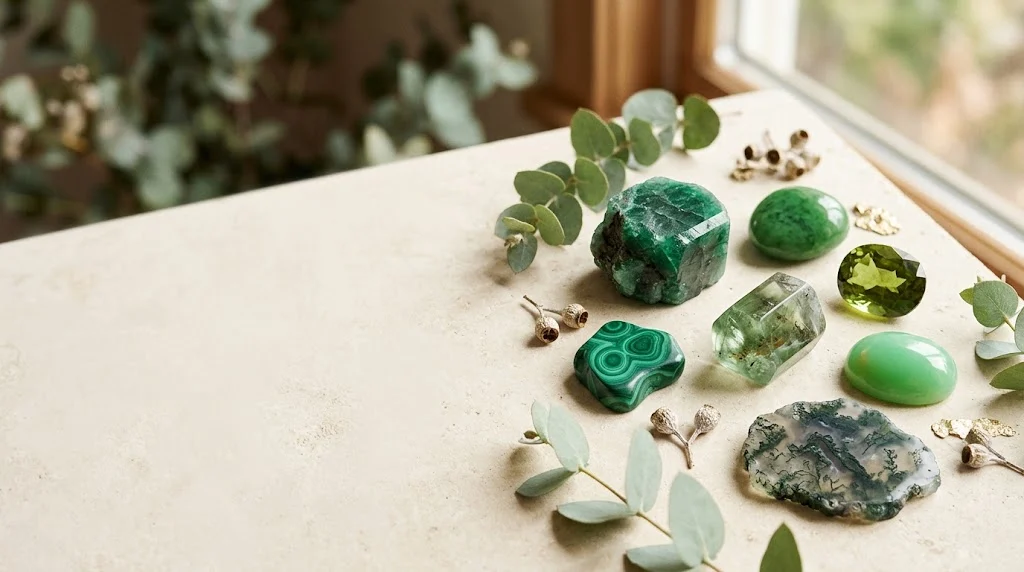
Popular green stone names include emerald, jade, peridot, malachite, green tourmaline, aventurine, chrysoprase, and moss agate. These stones vary in color, hardness, origin, rarity, and value, making each suitable for different jewelry and collecting preferences.
Green has a special way of catching the eye. It can remind us of fresh leaves, peaceful forests, sparkling oceans, and the quiet beauty of nature. Green gemstones capture these feelings in countless shades, from the deep, rich color of an emerald to the soft, apple-green glow of chrysoprase.
If you are searching for green stone names, you may be looking for a beautiful gemstone for a ring, a meaningful gift, a mineral for your collection, or simply a name for a fascinating natural stone. Whatever brought you here, there is a wonderful world of green minerals to explore.
Some green stones are famous for their beauty and value. Others stand out because of their unusual patterns, natural bands, or glowing colors. Their appearance can also offer clues about their mineral composition, although a stone’s true identity may require professional testing.
In this guide, you will discover beautiful green gemstones, their meanings, origins, distinctive features, popularity, and best uses. You will also learn how to compare green stones and choose one that suits your taste and budget.
Let’s explore the remarkable shades, stories, and natural beauty of the green gemstone world.
1. Emerald | The Classic Green Gemstone
Meaning
Renewal, love, wisdom, and growth in traditional symbolism.
Origin
Emerald is a green variety of the mineral beryl. Its color comes mainly from trace amounts of chromium and sometimes vanadium.
Personality
Emerald often symbolizes elegance, confidence, and timeless beauty.
Style
Luxurious, classic, rich, and sophisticated.
Best For
Engagement rings, necklaces, earrings, collectors, and meaningful gifts.
Popularity
Emerald is one of the best-known precious gemstones and is the traditional birthstone for May.
Emotional Appeal
Its intense green color evokes spring leaves and fresh growth. Many people choose emeralds to celebrate love, new beginnings, or important milestones.
Pop Culture Reference
Emeralds appear in royal jewelry, historic collections, and famous fictional treasures.
Similar Stones
Green tourmaline, tsavorite garnet, chrome diopside, jade, and peridot.
Why It Still Works Today
Emerald combines recognizable beauty with a long history of jewelry use. Colombia, Zambia, and Brazil are among the important emerald-producing countries. Natural inclusions are common, so clarity, treatments, color, and origin can all affect its value.
2. Jade | A Stone with Deep Cultural Significance
Meaning
Harmony, good fortune, and protection in several cultural traditions.
Origin
Jade refers to two different minerals: jadeite and nephrite. Both have a long history of use in ornaments, carvings, and jewelry.
Personality
Jade suggests balance, calmness, and understated elegance.
Style
Natural, traditional, smooth, and timeless.
Best For
Bracelets, pendants, carved ornaments, beads, and cultural gifts.
Popularity
Jade remains especially important in Chinese art and jewelry, as well as in traditions across other parts of Asia and the world.
Emotional Appeal
Its smooth texture and varied green shades give it a peaceful, natural appearance. For many people, jade also carries family or cultural meaning.
Pop Culture Reference
Jade carvings and ornaments appear in museums and historic collections across different cultures.
Similar Stones
Serpentine, aventurine, chrysoprase, and green quartz.
Why It Still Works Today
Jade suits both modern and traditional designs. Its value depends on the specific mineral, color, translucency, texture, treatment, and craftsmanship. Not every green stone sold as jade is jadeite or nephrite, so reliable identification matters.
3. Peridot | A Bright Olive-Green Gem
Meaning
Growth, positivity, and renewal in modern gemstone symbolism.
Origin
Peridot is the gem-quality variety of olivine, a mineral found in some igneous rocks and, rarely, in meteorites.
Personality
Peridot feels cheerful, lively, and fresh.
Style
Bright, youthful, sunny, and distinctive.
Best For
Summer jewelry, earrings, pendants, birthstone gifts, and colorful rings.
Popularity
Peridot is the traditional birthstone for August and is recognized for its yellowish-green to olive-green color.
Emotional Appeal
Its warm green shade looks different from the cooler tones of emerald. It can add a lively touch to everyday jewelry.
Pop Culture Reference
Peridot is the name of a character in the animated series Steven Universe, giving the gemstone name recognition among some animation fans.
Similar Stones
Green tourmaline, chrysoberyl, demantoid garnet, and emerald.
Why It Still Works Today
Peridot offers an appealing green color without requiring the deep, dark appearance of some emeralds. It is softer than emerald on the Mohs hardness scale, so protective settings and sensible care are useful for frequently worn rings.
4. Malachite | The Stone with Natural Green Waves
Meaning
Transformation and change in modern crystal symbolism.
Origin
Malachite is a copper carbonate hydroxide mineral, often formed in the oxidized zones of copper deposits.
Personality
Its dramatic patterns suggest creativity, individuality, and bold style.
Style
Artistic, striking, vintage, and decorative.
Best For
Statement necklaces, beads, pendants, carved ornaments, and display pieces.
Popularity
Malachite is well known for its rich green color and distinctive light-and-dark bands.
Emotional Appeal
Each polished piece can display different circular patterns, stripes, or flowing waves. This makes malachite especially appealing to people who love natural designs.
Pop Culture Reference
Malachite has appeared in decorative arts and historic interiors, including ornamental objects made from polished stone.
Similar Stones
Azurite, chrysocolla, green jasper, and banded agate.
Why It Still Works Today
Malachite makes a bold visual statement without needing a clear, transparent crystal. However, it is relatively soft, and copper-bearing mineral dust can be hazardous. Avoid grinding or inhaling dust, and use reputable guidance when handling or cutting specimens.
5. Green Tourmaline | A Versatile Gem for Jewelry
Meaning
Growth, balance, and vitality in contemporary gemstone symbolism.
Origin
Tourmaline is a group of complex boron-bearing minerals. Green varieties may range from pale mint to deep forest green.
Personality
Green tourmaline feels versatile, elegant, and modern.
Style
Refined, colorful, contemporary, and natural.
Best For
Rings, pendants, earrings, collectors, and personalized jewelry gifts.
Popularity
Green tourmaline is a recognized jewelry gemstone, although its exact color and quality can vary widely.
Emotional Appeal
Its broad range of greens makes it easy to find a shade that suits different skin tones and jewelry designs.
Pop Culture Reference
Tourmaline is familiar in fine jewelry and mineral collections rather than being tied to one defining pop culture reference.
Similar Stones
Emerald, peridot, tsavorite garnet, chrome diopside, and green beryl.
Why It Still Works Today
Tourmaline offers variety and a good range of jewelry styles. Buyers should compare color, clarity, cut, treatments, and any available laboratory documentation instead of assuming that all green tourmalines have the same value.
6. Aventurine | A Soft Green Stone for Everyday Style
Meaning
Opportunity and good fortune in popular crystal symbolism.
Origin
Green aventurine is a variety of quartz or quartz-rich material characterized by small mineral inclusions that can create a glittering effect known as aventurescence.
Personality
It suggests a relaxed, natural, and easygoing style.
Style
Casual, earthy, understated, and versatile.
Best For
Beaded bracelets, pendants, polished stones, decorative objects, and beginner collections.
Popularity
Green aventurine is a common choice in affordable jewelry and decorative crystal collections.
Emotional Appeal
Its soft green color and subtle sparkle create an approachable look that suits everyday accessories.
Pop Culture Reference
Aventurine is familiar in crystal collecting and decorative stonework rather than being defined by one famous fictional reference.
Similar Stones
Jade, green quartz, moss agate, serpentine, and chrysoprase.
Why It Still Works Today
Aventurine offers a natural green appearance at a range of accessible price points. Its color and shimmer depend on the material and inclusions, so individual pieces can look quite different.
7. Chrysoprase | A Fresh Apple-Green Gemstone
Meaning
Hope, joy, and new beginnings in contemporary gemstone symbolism.
Origin
Chrysoprase is a green variety of chalcedony, a microcrystalline form of quartz. Its color is commonly linked to small amounts of nickel.
Personality
Chrysoprase feels bright, cheerful, and artistic.
Style
Soft, fresh, elegant, and modern.
Best For
Cabochon rings, pendants, earrings, bracelets, and distinctive jewelry designs.
Popularity
It is a recognized ornamental gemstone, especially for people who enjoy opaque or translucent apple-green stones.
Emotional Appeal
Its fresh color can resemble spring foliage and green fruit, making it a lively alternative to darker gemstones.
Pop Culture Reference
Chrysoprase has historical associations with decorative jewelry, though it is not tied to one widely recognized modern entertainment reference.
Similar Stones
Green chalcedony, jade, aventurine, prehnite, and green agate.
Why It Still Works Today
Chrysoprase offers a distinctive green shade that stands apart from emerald. Color consistency and treatment can affect its appearance, so reputable sellers and clear product descriptions are important.
8. Green Fluorite | A Colorful Collector’s Mineral
Meaning
Clarity and focus in popular crystal symbolism.
Origin
Fluorite is calcium fluoride. It occurs in many colors, including green, purple, blue, yellow, and colorless varieties.
Personality
Green fluorite suggests a calm, curious, and thoughtful personality.
Style
Colorful, translucent, modern, and collectible.
Best For
Mineral displays, small decorative pieces, collectors, and occasional jewelry designs.
Popularity
Fluorite is popular among mineral collectors because of its colors and well-formed crystals.
Emotional Appeal
Its transparent or translucent green appearance can be striking when light passes through it.
Pop Culture Reference
Fluorite is well known in mineral collections and educational geology displays.
Similar Stones
Green calcite, prehnite, green quartz, and green tourmaline.
Why It Still Works Today
Fluorite offers beautiful color and crystal shapes, but it is relatively soft and has prominent cleavage. It is generally less suitable than harder gemstones for rings exposed to daily knocks.
9. Moss Agate | Nature Captured in Stone
Meaning
Growth, connection to nature, and renewal in popular gemstone symbolism.
Origin
Moss agate is a variety of chalcedony with branching or moss-like inclusions, often made of mineral material such as iron or manganese oxides.
Personality
It suits people who love forests, plants, gardening, and earthy designs.
Style
Organic, botanical, rustic, and artistic.
Best For
Nature-inspired pendants, rings, polished stones, and handmade jewelry.
Popularity
Moss agate is a familiar choice for botanical jewelry and nature-themed accessories.
Emotional Appeal
Its green inclusions resemble tiny branches, moss, or miniature landscapes, giving each piece a distinctive appearance.
Pop Culture Reference
The stone is commonly associated with nature-inspired jewelry rather than a specific entertainment franchise.
Similar Stones
Tree agate, dendritic agate, green jasper, and aventurine.
Why It Still Works Today
Moss agate offers natural-looking patterns without requiring a perfectly uniform green color. Its inclusions are part of the stone’s appearance, not actual growing moss or plants trapped inside it.
10. Tsavorite Garnet | A Vivid and Rare Green Gem
Meaning
Energy, renewal, and prosperity in modern gemstone symbolism.
Origin
Tsavorite is a green variety of grossular garnet. It was identified as a distinct gem variety in East Africa during the twentieth century.
Personality
Tsavorite feels vibrant, confident, and luxurious.
Style
Brilliant, refined, contemporary, and colorful.
Best For
Fine jewelry, special-occasion rings, collectors, and people seeking alternatives to emerald.
Popularity
Tsavorite is a valued green garnet, though its availability and price depend on quality, size, and market conditions.
Emotional Appeal
Its vivid green color and strong brilliance can create a lively sparkle in well-cut stones.
Pop Culture Reference
Tsavorite is better known in gemology and fine jewelry than in mainstream entertainment.
Similar Stones
Emerald, demantoid garnet, green tourmaline, and chrome diopside.
Why It Still Works Today
Tsavorite combines bright color with the durability associated with garnet. It is not as widely recognized as emerald, which can appeal to buyers who want something less familiar. Professional gem identification helps distinguish it from other green stones.
Quick Comparison Table: Green Stone Names and Meanings
| Stone | Meaning or Symbolism | Color and Style | Best For |
|---|---|---|---|
| Emerald | Love and renewal | Rich, deep green | Fine jewelry |
| Jade | Harmony and good fortune | Smooth, varied green | Carvings and bracelets |
| Peridot | Growth and positivity | Yellowish to olive green | August birthstone gifts |
| Malachite | Transformation | Banded, vivid green | Statement jewelry |
| Green tourmaline | Vitality | Wide range of greens | Rings and pendants |
| Aventurine | Opportunity | Soft green, sometimes sparkling | Everyday accessories |
| Chrysoprase | Hope and joy | Apple green | Cabochon jewelry |
| Green fluorite | Focus in popular symbolism | Translucent green | Mineral collections |
| Moss agate | Connection to nature | Moss-like inclusions | Botanical jewelry |
| Tsavorite garnet | Energy and renewal | Vivid, brilliant green | Fine jewelry |
More Green Stone Names to Explore
The green gemstone world extends far beyond ten familiar choices. These additional stones have different mineral compositions, patterns, and uses.
Dark Green Stone Names
- Chrome diopside: A chromium-colored gemstone known for its deep green hue.
- Demantoid garnet: A vivid green garnet prized for its brilliance.
- Green jasper: An opaque variety of jasper that can show earthy green patterns.
- Serpentine: A mineral group that includes many green stones, sometimes used as ornamental material.
- Uvarovite garnet: A chromium-rich garnet known for its intense green color, often appearing in small crystals.
Light Green Stone Names
- Prehnite: Usually pale green to yellowish green, sometimes with a soft translucent appearance.
- Green calcite: A relatively soft mineral found in several shades of green.
- Green beryl: A green variety of beryl that is distinct from emerald under gemological naming conventions.
- Hiddenite: A green variety of spodumene.
- Smithsonite: A zinc carbonate mineral that can occur in green and blue-green colors.
Unusual and Collector Green Stones
- Variscite: A phosphate mineral that can show attractive apple-green or blue-green colors.
- Gaspeite: A nickel carbonate mineral, often yellowish green.
- Dioptase: A vivid emerald-green copper silicate mineral.
- Atacamite: A copper chloride mineral that may form striking green crystals.
- Tremolite: An amphibole mineral that can occur in greenish forms, though it is not generally treated as a typical jewelry gemstone.
These names cover different kinds of geological material. Some are suitable for jewelry, while others are primarily collected as mineral specimens. Mineral identification should be based on reliable testing, not color alone.
How to Choose the Perfect Green Stone
Choosing a green stone becomes easier when you know what matters most to you.
1. Choose your favorite shade. Emerald offers rich green, peridot tends toward olive green, and chrysoprase is known for apple-green tones. Decide whether you prefer dark, bright, pale, or blue-green shades.
2. Think about how you will use it. Rings worn every day need more attention to hardness and toughness than display specimens or pendants. Emerald, jade, tourmaline, and garnet each have different care needs.
3. Set a budget. Price depends on color, clarity, size, origin, treatment, and quality. A small, high-quality gem can cost more than a much larger stone of lower quality.
4. Check the mineral identity. Many unrelated minerals can look green. Ask for the correct gem name and, for expensive purchases, independent laboratory documentation when appropriate.
5. Learn about treatments. Some gemstones may be oiled, dyed, heated, impregnated, or otherwise treated. Ask the seller what treatments are present and how they affect care and value.
6. Consider cultural meaning respectfully. Jade, emerald, and other green stones have different histories across cultures. Learn about the specific tradition rather than assuming every stone has one universal meaning.
7. Buy from a reputable seller. Look for clear descriptions, a transparent return policy, and honest information about natural, synthetic, and imitation materials.
Green Gemstone Meanings and Symbolism
Green gemstones are often linked with nature, growth, renewal, balance, and prosperity. These associations come from cultural traditions, jewelry practices, and modern crystal symbolism. They are not scientific evidence that a gemstone can change a person’s health, luck, or future.
- Emerald: Commonly associated with love, renewal, and wisdom.
- Jade: Connected with harmony, good fortune, and cultural traditions in several regions.
- Peridot: Often associated with positivity and fresh beginnings.
- Malachite: Used symbolically to represent change and transformation.
- Aventurine: Frequently marketed as a stone of opportunity or good luck.
- Moss agate: Often linked to nature, growth, and grounding.
- Chrysoprase: Commonly associated with hope and joy.
Meanings vary by source and culture. If you are choosing a gemstone as a gift, a personal connection to the color, occasion, or recipient can be just as meaningful as traditional symbolism.
Most Popular Green Stones for Jewelry
If you want a green gemstone for a ring, necklace, or bracelet, consider these options:
- Emerald: A classic choice for fine jewelry and special occasions.
- Jade: Excellent for carved designs, beads, and traditional ornaments.
- Green tourmaline: Available in varied shades and versatile cuts.
- Peridot: Bright and recognizable, especially for August birthstone gifts.
- Tsavorite garnet: A vivid option for brilliant, colorful jewelry.
- Chrysoprase: Attractive in cabochons and smooth polished settings.
- Aventurine: Suitable for casual jewelry and accessible decorative designs.
For everyday rings, consider hardness, toughness, cleavage, and the way the stone is mounted. No gemstone is completely immune to damage, and even relatively durable stones need suitable care.
Modern Trends in Green Gemstones
Green gemstones appeal to several design styles, from traditional fine jewelry to nature-inspired accessories.
Nature-inspired jewelry: Moss agate, green jasper, and aventurine work well in designs featuring leaves, flowers, and organic shapes.
Bold statement pieces: Malachite’s bands and patterns create visual impact in pendants, earrings, and decorative accessories.
Bright, colorful gems: Peridot, tsavorite, and green tourmaline offer lively color for contemporary rings and necklaces.
Minimalist designs: A single green stone in a simple setting can highlight its natural color without extra decoration.
Collector specimens: Dioptase, uvarovite, and unusual fluorite specimens attract people who appreciate crystal form and mineral diversity.
These are broad design directions, not measured sales rankings. The best trend to follow is the one that suits your taste and the way you plan to wear or display the stone.
FAQs
Q1. What are the most common green stone names?
Emerald, jade, peridot, malachite, green tourmaline, aventurine, chrysoprase, fluorite, and moss agate are familiar green stones. Their mineral composition, color, durability, and value vary considerably.
Q2. What is the most valuable green gemstone?
Fine emeralds can command very high prices, but there is no single answer for every stone. Value depends on color, clarity, size, origin, treatments, rarity, and current market demand.
Q3. Which green stone is best for everyday jewelry?
Green tourmaline and garnets such as tsavorite can work well in many everyday designs when properly set and cared for. The best choice also depends on the jewelry type and how roughly it will be worn.
Q4. What is the difference between jade and emerald?
Emerald is a green variety of beryl, while jade refers to jadeite or nephrite. They differ in mineral composition, appearance, physical properties, cultural uses, and typical jewelry styles.
Q5. Which green gemstones are birthstones?
Emerald is the traditional birthstone for May, while peridot is the traditional birthstone for August. Birthstone traditions can vary by culture and modern jewelry organization.
Q6. Are all green crystals natural?
No. Green-colored materials may be natural, lab-grown, dyed, treated, or imitation stones. Color alone cannot establish a stone’s identity, so ask a reputable seller for accurate disclosure.
Q7. What is the rarest green gemstone?
Rarity depends on the specific mineral, quality, size, and availability. Some collector minerals, such as certain dioptase or uvarovite specimens, can be uncommon, but no single stone is always the rarest.
Q8. How can I identify an unknown green stone?
Start by noting its color, transparency, pattern, and crystal shape, but do not rely on appearance alone. A qualified gemologist or mineral laboratory can use appropriate tests to identify the material more reliably.
Conclusion
The world of green gemstones is full of variety, from the rich elegance of emerald and the cultural heritage of jade to the bright color of peridot and the natural patterns of moss agate. Each stone has its own mineral identity, appearance, durability, and place in jewelry or collecting.
When exploring green stone names, consider more than color. Think about the stone’s origin, physical properties, price, treatment, and intended use. A gemstone chosen for an everyday ring may need different qualities from a specimen displayed in a collection or a decorative stone given as a gift.
Use this guide as a starting point, then learn more about the stones that catch your eye. Share this article with a gemstone lover, and leave a comment telling us which green stone is your favorite.
Discover More Related Articles:
- 101 Country Dog Names | For a Rustic, Charming & Southern Pup In 2026
- 100 Badass Dog Names | For Tough, Cool & Fearless Dogs In 2026
- 300 French Dog Names | Elegant, Cute & Unique Ideas for Your Pup In 2026