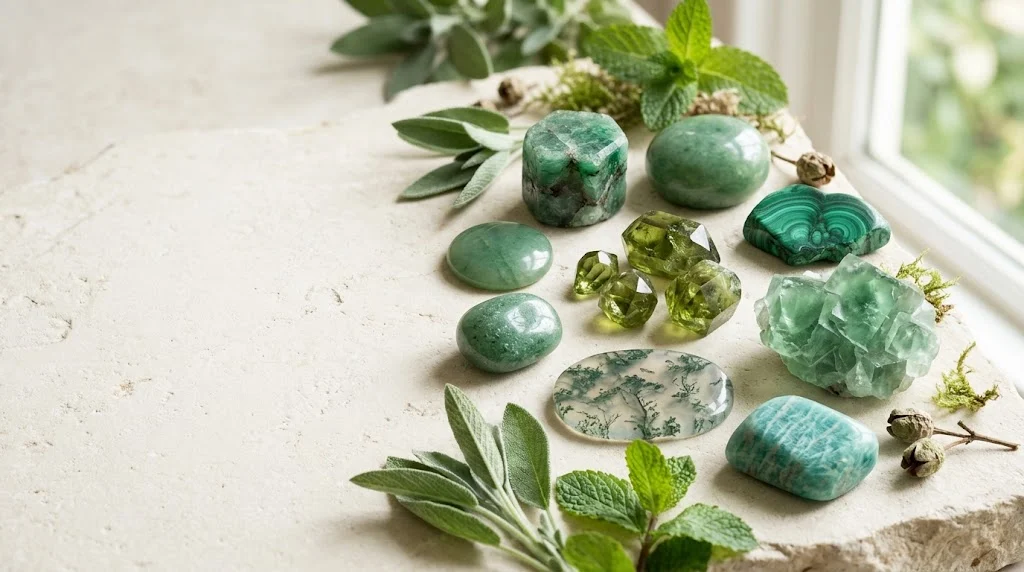
Popular green crystal names include emerald, jade, peridot, malachite, green aventurine, moss agate, green fluorite, chrysoprase, and green tourmaline. These gemstones vary in color, mineral composition, origin, appearance, and jewelry uses.
Green has a special way of bringing the beauty of nature to mind. It reminds us of fresh leaves, quiet forests, spring gardens, and the first signs of new growth. That is one reason green crystal names attract gemstone lovers, jewelry designers, collectors, and anyone who enjoys the natural world.
But not every green stone looks the same. Some sparkle with the rich color of emeralds, while others display soft mint shades, deep forest tones, delicate bands, or patterns that resemble moss and flowing water. Each stone has its own mineral structure, history, and visual charm.
You are searching for a gemstone for a necklace, choosing a meaningful gift, naming a crystal collection, or simply exploring the world of minerals, learning the names of green crystals is a wonderful place to begin.
1. Emerald | The Timeless Green Gemstone
Meaning
Emerald is commonly associated with renewal, love, wisdom, and prosperity in traditional gemstone symbolism.
Origin
Emerald is a green variety of the mineral beryl. Its color mainly comes from trace amounts of chromium and sometimes vanadium. Fine emeralds can be found in countries such as Colombia, Zambia, and Brazil.
Personality
Its rich, confident color often gives emerald a sense of elegance, depth, and luxury.
Style
Classic, sophisticated, luxurious, and timeless.
Best For
Engagement rings, pendants, statement jewelry, gemstone collections, and meaningful gifts.
Popularity
Emerald is a historically important precious gemstone and remains widely used in fine jewelry.
Emotional Appeal
Many people connect emerald with fresh beginnings and lasting affection. Its deep green shade also makes it a natural choice for people who love bold yet elegant colors.
Pop Culture Reference
Emeralds have appeared in royal jewelry, historical collections, and literature, reinforcing their association with luxury.
Similar Nicknames
Green beryl, jade, peridot, tsavorite, chrome tourmaline.
Why It Still Works Today
Emerald combines natural beauty with a long jewelry history. It is an excellent choice if you want a green gemstone that feels traditional, distinctive, and instantly recognizable.
2. Jade | A Green Stone Rich in Cultural History
Meaning
Jade is traditionally associated with harmony, protection, wisdom, and good fortune in several cultural traditions.
Origin
Jade refers to two different minerals: jadeite and nephrite. Both can appear green, although their colors also include white, gray, yellow, and other shades.
Personality
Jade often feels calm, balanced, and understated, especially when polished into smooth beads or pendants.
Style
Natural, elegant, cultural, and understated.
Best For
Bracelets, pendants, carved ornaments, beads, and collectible stones.
Popularity
Jade has a long history of use in China and other cultures, where it has been valued for ornaments, carvings, and symbolic objects.
Emotional Appeal
Its smooth surface and natural color make jade appealing to people who appreciate simplicity and traditional craftsmanship.
Pop Culture Reference
Jade objects have an important place in Chinese art and historical collections.
Similar Nicknames
Nephrite, jadeite, green aventurine, serpentine, chrysoprase.
Why It Still Works Today
Jade offers a combination of natural beauty and cultural history. When buying it, check a seller identifies the stone as jadeite or nephrite, since these are distinct minerals with different market values.
3. Peridot | A Fresh, Olive-Green Gemstone
Meaning
Peridot is often linked with renewal, positivity, and abundance in modern crystal symbolism.
Origin
Peridot is the gem-quality variety of olivine, a mineral found in volcanic rocks and some meteorites. Its green color is largely related to its iron content.
Personality
Its bright, yellowish-green color feels lively, cheerful, and youthful.
Style
Fresh, vibrant, summery, and contemporary.
Best For
Everyday rings, earrings, necklaces, birthstone jewelry, and colorful gemstone collections.
Popularity
Peridot is widely recognized as the birthstone for August and is used in jewelry across many price ranges.
Emotional Appeal
The sunny green shade stands out from the darker tones of emerald and jade. It suits people who prefer lively color over deep, dramatic green.
Pop Culture Reference
Peridot’s association with August birthstone jewelry makes it a familiar choice for birthday gifts.
Similar Nicknames
Olivine, green sapphire, emerald, chrysoberyl, green tourmaline.
Why It Still Works Today
Peridot offers a bright natural green without looking exactly like other popular gemstones. It is particularly appealing for summer-inspired jewelry and people who enjoy fresh, colorful designs.
4. Malachite | A Green Stone with Natural Patterns
Meaning
Malachite is traditionally associated with transformation, growth, and change in crystal symbolism.
Origin
Malachite is a copper carbonate hydroxide mineral. It is known for its vivid green color and distinctive curved bands, rings, and swirling patterns.
Personality
Its dramatic patterns give it a bold, artistic, and expressive appearance.
Style
Earthy, vintage, statement-making, and decorative.
Best For
Beads, pendants, decorative objects, jewelry accents, and mineral collections.
Popularity
Malachite remains popular in decorative design because its natural banding creates a striking appearance.
Emotional Appeal
No two pieces display exactly the same pattern. That makes malachite attractive to people who want a stone with a distinctive visual character.
Pop Culture Reference
Malachite appears in decorative arts, ornamental objects, and jewelry designs.
Similar Nicknames
Chrysocolla, azurite, green jasper, moss agate, serpentine.
Why It Still Works Today
Malachite makes an impression without needing a bright sparkle. Its swirling green patterns work particularly well in statement jewelry and interior decoration. Avoid grinding or inhaling its dust, as copper-bearing mineral dust can be hazardous.
5. Green Aventurine | The Familiar Stone of Opportunity
Meaning
Green aventurine is often associated with luck, optimism, and opportunity in popular crystal traditions.
Origin
Aventurine is a variety of quartz characterized by tiny mineral inclusions that create a shimmering effect known as aventurescence. Green aventurine commonly gets its color from fuchsite inclusions.
Personality
Its soft sparkle and gentle green shade feel relaxed, friendly, and approachable.
Style
Casual, natural, understated, and versatile.
Best For
Beaded bracelets, worry stones, pocket stones, decorative bowls, and beginner collections.
Popularity
Green aventurine is widely sold in crystal shops and is often chosen as an accessible decorative gemstone.
Emotional Appeal
Many people enjoy its association with new opportunities and positive intentions. These are symbolic beliefs, not scientifically established effects.
Pop Culture Reference
Green aventurine is commonly featured in modern crystal collections and wellness-inspired décor.
Similar Nicknames
Jade, green quartz, moss agate, chrysoprase, prehnite.
Why It Still Works Today
Green aventurine offers an attractive natural appearance at a generally accessible price. Its subtle shimmer and familiar symbolism make it an easy addition to a jewelry box or crystal collection.
6. Moss Agate | A Tiny Landscape in Stone
Meaning
Moss agate is often linked with nature, growth, patience, and new beginnings.
Origin
Moss agate is a form of chalcedony, a microcrystalline variety of quartz. Its green, moss-like patterns usually come from mineral inclusions rather than actual plant material.
Personality
Its organic patterns feel peaceful, creative, and closely connected to the natural world.
Style
Earthy, botanical, rustic, and artistic.
Best For
Nature-inspired jewelry, pendants, cabochons, craft projects, and decorative collections.
Popularity
Moss agate is a familiar choice for people who enjoy botanical jewelry and stones with distinctive internal patterns.
Emotional Appeal
The green markings can resemble tiny forests, branches, or gardens. Each polished piece has its own natural design.
Pop Culture Reference
Moss agate is frequently featured in nature-inspired jewelry and handcrafted accessories.
Similar Nicknames
Tree agate, dendritic agate, green jasper, bloodstone, green aventurine.
Why It Still Works Today
Moss agate looks artistic without being overly bright. It is a lovely option for anyone who prefers a natural, one-of-a-kind appearance over the uniform color of many faceted gems.
7. Green Fluorite | A Crystal in Soft Green Shades
Meaning
Green fluorite is associated with clarity, focus, and balance in popular crystal traditions.
Origin
Fluorite is a calcium fluoride mineral. It occurs in many colors, including green, purple, blue, yellow, and colorless varieties. Green fluorite can appear transparent or translucent.
Personality
Its clear or softly colored appearance feels calm, modern, and minimalist.
Style
Soft, translucent, contemporary, and decorative.
Best For
Mineral collections, display pieces, educational collections, and carefully handled jewelry.
Popularity
Fluorite is a common collector mineral because of its varied colors and crystal forms.
Emotional Appeal
The pale green shade can resemble fresh glass or clear water. People often choose it for its visual simplicity and gentle color.
Pop Culture Reference
Fluorite is familiar in mineral collecting and educational displays.
Similar Nicknames
Green calcite, prehnite, green quartz, amazonite, green beryl.
Why It Still Works Today
Green fluorite offers a distinctive look for collectors who enjoy translucent crystals. It is relatively soft compared with many jewelry gemstones, so it is better suited to display or occasional-wear pieces than hard-wearing daily rings.
8. Chrysoprase | A Beautiful Apple-Green Gemstone
Meaning
Chrysoprase is often associated with hope, joy, and emotional renewal in modern crystal symbolism.
Origin
Chrysoprase is a green variety of chalcedony. Its apple-green color is generally caused by small amounts of nickel.
Personality
Its smooth, fresh color feels gentle, cheerful, and refined.
Style
Modern, elegant, minimalist, and colorful.
Best For
Pendants, earrings, polished cabochons, bracelets, and distinctive jewelry designs.
Popularity
Chrysoprase is a recognized ornamental gemstone, although it is less familiar to many casual buyers than emerald or jade.
Emotional Appeal
The bright, soft green color offers a different look from the darker and more dramatic shades of other green gemstones.
Pop Culture Reference
Chrysoprase has appeared in ornamental jewelry and decorative gemstone collections.
Similar Nicknames
Apple-green chalcedony, green agate, prase, jade, green aventurine.
Why It Still Works Today
Chrysoprase is a good option if you want a green stone that feels fresh but less conventional. Its smooth color works beautifully in simple jewelry settings that allow the gemstone to take center stage.
9. Green Tourmaline | A Versatile Gemstone for Jewelry
Meaning
Green tourmaline is commonly associated with vitality, balance, and growth in modern crystal symbolism.
Origin
Tourmaline is a group of boron-bearing silicate minerals. Green varieties may be known by the trade name verdelite, although gemological identification depends on the specific mineral composition.
Personality
Green tourmaline can appear subtle and elegant or rich and dramatic, depending on the stone’s shade.
Style
Refined, versatile, modern, and luxurious.
Best For
Rings, earrings, pendants, gemstone collections, and custom jewelry.
Popularity
Tourmaline is valued for its wide range of colors, with green varieties used in both classic and contemporary designs.
Emotional Appeal
Its color range makes it easy to find a stone that suits different tastes, from pale green to deep forest shades.
Pop Culture Reference
Green tourmaline appears in fine jewelry and contemporary gemstone design.
Similar Nicknames
Verdelite, emerald, peridot, chrome diopside, green beryl.
Why It Still Works Today
Green tourmaline offers variety and natural beauty. It is worth considering if you want a green gemstone that can work in both understated everyday jewelry and more elaborate designs.
10. Amazonite | A Green-Blue Stone with a Relaxed Look
Meaning
Amazonite is associated with calmness, harmony, and communication in popular crystal symbolism.
Origin
Amazonite is a green to blue-green variety of microcline feldspar. Its color can range from pale mint to deeper turquoise-like shades.
Personality
Its soft color gives it a relaxed, artistic, and easygoing appearance.
Style
Bohemian, coastal, casual, and contemporary.
Best For
Beaded necklaces, bracelets, pendants, decorative objects, and handmade jewelry.
Popularity
Amazonite is a recognizable decorative stone, especially in bohemian and nature-inspired accessories.
Emotional Appeal
The mix of blue and green makes it stand out from stones that lean strongly toward forest green or olive.
Pop Culture Reference
Amazonite is frequently used in handmade jewelry and decorative mineral displays.
Similar Nicknames
Turquoise, chrysocolla, green aventurine, prehnite, green fluorite.
Why It Still Works Today
Amazonite brings a relaxed pop of color to jewelry and home décor. Its blue-green appearance is especially appealing to people who enjoy ocean-inspired shades and casual, artistic designs.
Quick Comparison Table
| Crystal Name | Typical Color | Style | Common Use |
|---|---|---|---|
| Emerald | Rich green | Classic, luxurious | Fine jewelry |
| Jade | Pale to deep green | Cultural, understated | Carvings and jewelry |
| Peridot | Yellowish green | Bright, fresh | Birthstone jewelry |
| Malachite | Banded dark green | Bold, artistic | Statement jewelry |
| Green aventurine | Medium green, sometimes shimmering | Natural, casual | Bracelets and polished stones |
| Moss agate | Clear or pale base with green inclusions | Botanical, earthy | Pendants and cabochons |
| Green fluorite | Pale to deep translucent green | Minimalist, decorative | Mineral collections |
| Chrysoprase | Apple green | Refined, modern | Cabochons and pendants |
| Green tourmaline | Light to deep green | Versatile, elegant | Rings and earrings |
| Amazonite | Blue-green | Bohemian, coastal | Beads and decorative pieces |
More Green Crystal Names Worth Exploring
The green gemstone world includes many more varieties than the ten featured above. Here are additional names to help you expand your collection or research.
- Prehnite: A pale green mineral that can have a soft, translucent appearance.
- Chrome diopside: A vivid green gemstone colored by chromium.
- Serpentine: A mineral group that includes many green and yellow-green varieties.
- Bloodstone: A dark green chalcedony traditionally marked with red spots.
- Green onyx: A trade name that can refer to differently composed green ornamental stones, so verify the material before buying.
- Green jasper: An opaque variety of quartz-rich material available in different green tones.
- Grossular garnet: A garnet species that includes green varieties such as tsavorite.
- Tsavorite: A vivid green variety of grossular garnet.
- Demantoid garnet: A green garnet valued for its brilliance and dispersion.
- Chrome chalcedony: A green chalcedony variety colored by chromium.
- Green calcite: A relatively soft mineral with pale to medium green shades.
- Uvarovite: A chromium-rich garnet species known for its green color.
- Variscite: A phosphate mineral that often appears green or blue-green.
- Hiddenite: A green variety of spodumene.
- Green sapphire: Corundum that displays green coloration.
- Prasiolite: A green variety of quartz, sometimes produced by heat treatment or irradiation.
- Gaspeite: A nickel carbonate mineral that can appear apple green.
- Seraphinite: A trade name for a patterned variety of clinochlore, often showing silvery feather-like markings.
- Maw-sit-sit: A green ornamental rock containing several minerals, traditionally associated with Myanmar.
- Verdite: A green ornamental rock made up of chromium-rich minerals.
Not every green stone sold as a crystal is a single mineral species. Some are rocks, mineral mixtures, treated materials, or commercial trade names. If you need an accurate identification, consult a qualified gemologist or mineral specialist.
How to Choose the Perfect Green Crystal
Choosing a green gemstone is easier when you focus on how you plan to use it.
1. Choose Your Favorite Shade
Light green stones such as prehnite and some fluorite varieties offer a soft look. Emerald and chrome diopside provide deeper, richer greens. Amazonite brings a blue-green tone, while peridot leans toward yellow-green.
2. Consider Your Budget
Emerald, tsavorite, and demantoid garnet can command high prices depending on quality. Green aventurine and many decorative stones are generally more accessible. Compare the quality, treatment, size, and authenticity before making a purchase.
3. Think About Durability
For everyday rings, durability matters. Emerald, tourmaline, and sapphire can be suitable with the right care and setting, while softer stones such as fluorite and calcite need more protection. Hardness alone does not tell the whole story; toughness and cleavage also matter.
4. Ask About Treatment
Some gemstones are heated, dyed, filled, irradiated, or otherwise treated. Treatments can affect appearance, value, and care requirements. Ask the seller to disclose known treatments and provide a reliable identification report for high-value purchases.
5. Decide You Prefer Symbolism or Science
Traditional crystal meanings can add personal significance to a stone. However, claims that crystals heal illnesses, attract wealth, or change energy are not established scientific facts. Choose a gemstone for its beauty, personal meaning, or cultural significance rather than as a replacement for medical or financial advice.
6. Buy from a Reputable Seller
Look for clear product descriptions, accurate mineral names, return policies, and treatment disclosures. Be cautious of claims that a stone is extremely rare or has guaranteed healing powers without credible evidence.
Most Popular Green Crystals and Their Traditional Meanings
These stones are frequently discussed in gemstone and crystal communities, though this is a curated list rather than a measured popularity ranking.
- Emerald: Love, renewal, and prosperity.
- Jade: Harmony, wisdom, and good fortune.
- Green aventurine: Luck and opportunity.
- Malachite: Change and transformation.
- Peridot: Renewal and positivity.
- Moss agate: Growth and connection with nature.
- Green fluorite: Clarity and focus.
- Chrysoprase: Hope and joy.
- Green tourmaline: Vitality and balance.
- Amazonite: Calmness and harmony.
These meanings come from cultural associations and contemporary crystal traditions. They should not be confused with the scientific properties of the minerals themselves.
Vintage Green Gemstones That Remain Beautiful
Some green stones have been used in ornaments, carvings, and jewelry for centuries. Their appeal does not depend on a modern trend.
- Jade: Known for its long cultural history and skilled carving traditions.
- Emerald: Valued in jewelry across many historical periods.
- Malachite: Used in decorative objects, inlays, and ornamental arts.
- Bloodstone: Traditionally used in seals, carvings, and jewelry.
- Serpentine: Used for carvings and ornamental objects because many varieties are workable.
- Green garnet: Certain varieties, especially demantoid and tsavorite, are valued in fine jewelry.
The exact age and significance of a particular object depend on its provenance. A stone’s traditional reputation does not automatically establish that an individual specimen is antique or historically important.
Modern Green Crystal Trends
Modern gemstone styling often focuses on natural colors, unusual patterns, and personalized jewelry.
Minimalist green jewelry: Small emerald, peridot, or green tourmaline pieces work well in clean, simple designs.
Botanical patterns: Moss agate and dendritic stones appeal to people who enjoy nature-inspired details.
Blue-green palettes: Amazonite and related stones pair naturally with silver, cream, and ocean-inspired colors.
Bold statement stones: Malachite’s distinctive bands can create a strong visual feature in rings, pendants, and earrings.
Collector specimens: Crystal enthusiasts may choose fluorite, prehnite, or other minerals for their crystal shapes and internal features rather than for jewelry.
Personal symbolism: Some buyers choose stones linked with birth months, family traditions, or personal memories.
These are broad design preferences rather than verified market statistics. The best choice is the one that suits your style, budget, and intended use.
FAQs
Q1. What are the most common green crystal names?
Emerald, jade, peridot, malachite, green aventurine, moss agate, green fluorite, chrysoprase, green tourmaline, and amazonite are familiar names. Their mineral composition, durability, color, and market value vary considerably.
Q2. Which green crystal is the most valuable?
Fine emeralds can be extremely valuable, but price depends on color, clarity, size, origin, treatments, and market demand. Some rare green garnets and other gemstones can also command high prices, so no single stone is always the most valuable.
Q3. What is the difference between jade and green aventurine?
Jade is either jadeite or nephrite, while green aventurine is a variety of quartz with mineral inclusions that can create a subtle shimmer. They differ in mineral composition, physical properties, appearance, and market value.
Q4. Which green crystals are light green?
Prehnite, some green fluorite, chrysoprase, and certain varieties of jade can appear pale green. Actual shades vary by specimen, lighting, and treatment, so examine a stone in natural light when possible.
Q5. What are dark green crystal names?
Emerald, malachite, chrome diopside, green tourmaline, tsavorite, and some varieties of jade can display deep green shades. Their patterns and transparency differ, making them suitable for different jewelry and collecting preferences.
Q6. Are green crystals associated with luck?
Green aventurine and jade are commonly linked with luck or good fortune in certain crystal traditions. These are cultural or symbolic associations, not scientifically proven effects, so they are best understood as personal meaning rather than guaranteed outcomes.
Q7. How can I identify a green crystal?
Start with its color, transparency, hardness, patterns, and crystal shape, but do not rely on appearance alone. A gemologist or mineral specialist can perform appropriate tests to distinguish similar-looking stones and identify treatments.
Q8. Are all green crystals natural?
No. Green stones may be natural, dyed, heat-treated, irradiated, synthetic, or imitations made from glass or other materials. Ask the seller for clear disclosure and independent testing when purchasing an expensive gemstone.
Conclusion
The world of green gemstones offers something for every taste, from the rich elegance of emerald to the natural patterns of moss agate and the blue-green charm of amazonite. Each stone has its own mineral composition, appearance, history, and practical uses.
Exploring green crystal names can help you discover a gemstone that suits your jewelry style, collecting interests, or personal sense of meaning. Some people prefer the cultural history of jade, while others are drawn to peridot’s bright color or malachite’s dramatic patterns.
Take time to compare shades, durability, treatment disclosures, and prices before choosing a stone. Enjoy traditional meanings as a source of inspiration, while keeping scientific claims separate from symbolism.
Which green gemstone is your favorite? Share this guide with another gemstone lover and leave a comment telling us which crystal you would choose for your collection or next piece of jewelry.
Discover More Related Articles:
- 101 Country Dog Names | For a Rustic, Charming & Southern Pup In 2026
- 100 Badass Dog Names | For Tough, Cool & Fearless Dogs In 2026
- 300 French Dog Names | Elegant, Cute & Unique Ideas for Your Pup In 2026