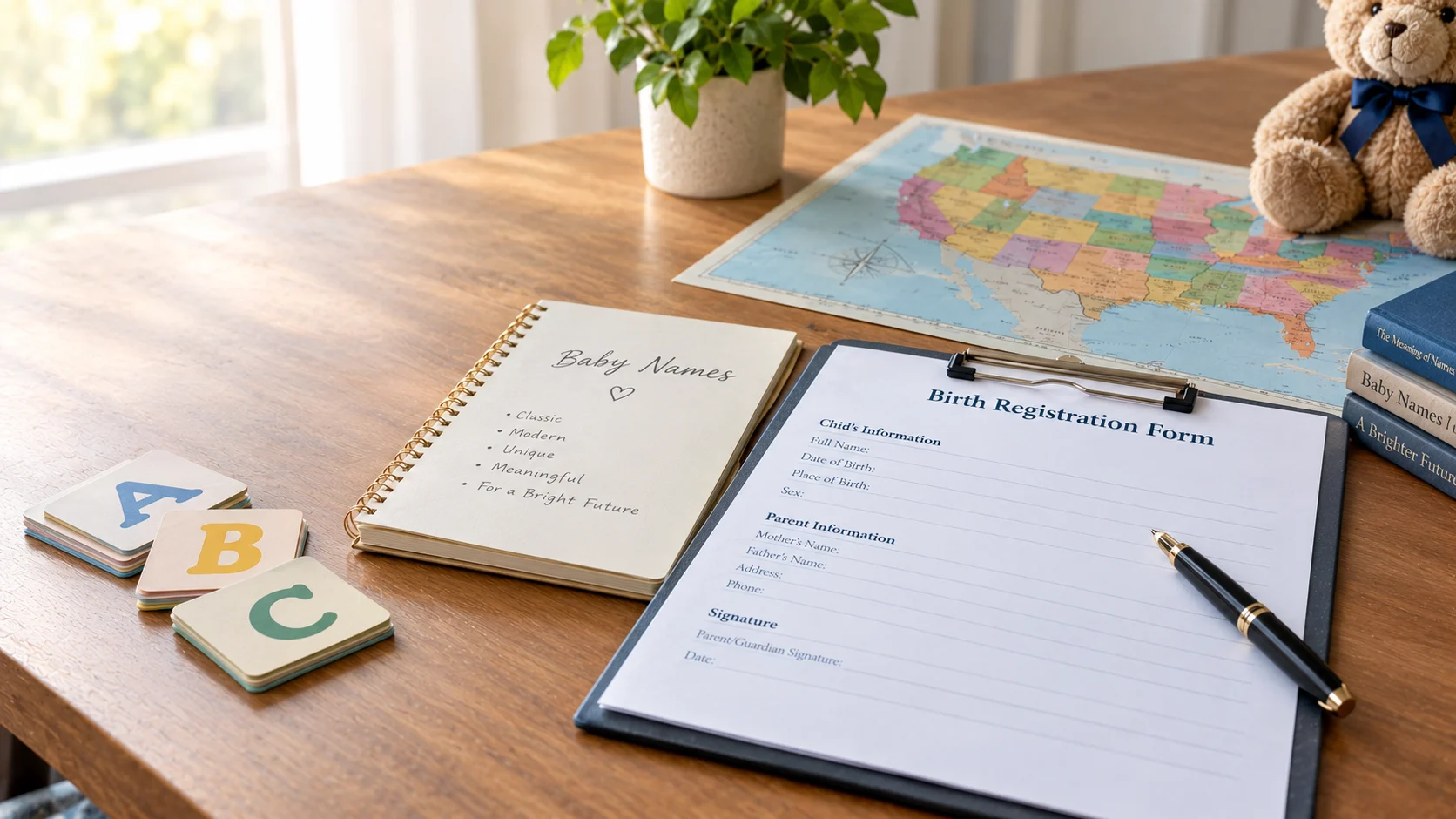
The United States has no single nationwide list of illegal baby names. Individual states set birth-registration rules, which may restrict numbers, symbols, offensive words, or excessively long names. Always check your state’s current requirements before registering a name.
Choosing a baby’s name is one of the most exciting parts of becoming a parent. Some families choose names with deep cultural roots, while others prefer creative spellings, unusual words, or names inspired by celebrities and popular culture. But what happens when a name is so unusual that officials refuse to register it?
The topic of illegal names in the US attracts attention because some names that seem perfectly acceptable to parents may not meet their state’s birth-registration rules. Stories about children named after numbers, symbols, or controversial public figures often make headlines, leaving many people wondering whether American parents can really choose any name they want.
The truth is more interesting than a simple list of banned names. The United States does not have one universal list of prohibited baby names. Instead, naming requirements vary by state, and many restrictions concern the characters used in a name rather than the name’s meaning. Some states also have rules concerning offensive language or unusually long names.
In this guide, you’ll discover ten categories of names that may face restrictions, real examples of state rules, common naming myths, and practical steps for checking your favorite name before completing a birth certificate.
1. Names Containing Numbers: Can You Name a Baby 7 or 100?
Numbers can make a name look modern, futuristic, or completely different from traditional names. However, numerical characters are restricted on many US birth certificates.
For example, parents might imagine names such as Seven, 100, K8, or 2Cool. These examples are not all legally equivalent: Seven is spelled with letters, while K8 and 2Cool contain numerical characters.
Meaning and origin: Seven is an English number word. K8 is a stylized spelling that uses the number eight to represent a sound.
Style: Modern, unconventional, symbolic, and experimental.
Popularity: Number-inspired words sometimes appear in creative naming, but a word spelled out with letters is different from a name containing digits.
Legal considerations: Alabama’s birth-registration rule permits English alphabetic characters, hyphens, and apostrophes, but not numbers. Georgia’s regulations also prohibit numbers in a child’s registered name.
Best alternative: Consider Seven, Seven-James, or another letter-based name if it fits your family’s preferences and your state’s rules.
Why it matters today: A name that works as a social media username may not be accepted as a legal name on a birth certificate. Always distinguish a creative nickname from a registered first name.
2. Names Made With Symbols: Why @, #, and Emojis Can Be a Problem
Symbols can make names look distinctive online. Imagine naming a child @lex, #Star, ♥Baby, or SmileyFace✨.
These examples may look playful on a screen, but symbols and emoji characters can create problems when a name must be entered into an official government record.
Meaning and origin: Symbols communicate ideas, sounds, or emotions rather than functioning as ordinary alphabetic name characters.
Style: Digital, futuristic, experimental, and unconventional.
Popularity: Symbol-based names are more familiar in usernames and online identities than in conventional legal records.
Legal considerations: Alabama’s regulations prohibit symbols in birth-certificate names. Georgia’s rules also exclude symbols and other non-identifying information from the child’s registered name.
That does not mean a child cannot have a playful nickname or a social media handle containing a symbol. It means that the official legal name and the name used informally are two different things.
Best alternative: Use an ordinary spelling for the legal name and reserve decorative symbols for artwork, announcements, or online profiles.
Why it matters today: Digital creativity has expanded the way people express identity, but official record systems still have technical and legal requirements.
3. Offensive Names: When Meaning Becomes a Legal Issue
Parents sometimes consider provocative names to make a statement, express humor, or attract attention. Names that contain slurs, explicit profanity, or seriously offensive language may face additional scrutiny.
Examples such as explicit profanity used as a first name, a racial slur, or a direct vulgar insult illustrate the category. These are examples of potentially problematic naming choices, not a universal nationwide faillist.
Meaning and origin: The concern is the word’s actual meaning and how it is understood in its cultural and linguistic context.
Style: Provocative, controversial, or deliberately shocking.
Popularity: These names are more likely to attract public attention than to become ordinary naming choices.
Legal considerations: New Mexico’s naming regulation says a name may not be obscene or offensive. Georgia also prohibits a word or term that constitutes an obscenity in any language. The application of these rules depends on the relevant law and circumstances.
Best alternative: Choose a bold name with a positive meaning, such as Rebel, Valor, or Phoenix, if you want a name that feels unconventional without relying on insulting language.
Why it matters today: A name becomes part of a child’s identity and appears on school, employment, and government records. Thinking about how a name may affect a child over time is an important part of responsible naming.
4. Extremely Long Names: Is There a Maximum Length?
Some parents love elaborate names with several middle names, multiple family names, or long combinations inspired by different cultures.
An unusually long name is not automatically illegal everywhere in the United States. However, some states have explicit restrictions or technical limits.
Meaning and origin: Long names may reflect family history, religious traditions, multiple cultural backgrounds, or the desire to honor relatives.
Style: Traditional, elaborate, multicultural, or highly personalized.
Popularity: Names with several components are familiar in some naming traditions, even if extremely long combinations are unusual.
Legal considerations: New Mexico’s rule prohibits names considered unduly lengthy without specifying a universal numerical threshold. Vermont’s vital records rule, meanwhile, sets a limit of 50 characters for each first, middle, and last name.
These examples show why it is important to check the exact requirements of the state where the birth is registered.
Best alternative: Keep the registered name within the applicable limit and use family names in a way that preserves the meaning you want.
Why it matters today: A name may need to fit on official forms and work across school, travel, and identity systems. Practical considerations can matter just as much as personal creativity.
5. Names With Unusual Spellings: Is a Creative Name Illegal?
Creative spellings are common in modern naming. Parents may change a letter, combine two familiar names, or invent a new spelling to make a name more personal.
Examples include Jaxsyn, Emmaleigh, Zayden, and K8. The first three use alphabetic characters; K8 includes a digit. That distinction can affect registration.
Meaning and origin: A name may come from an established name, a family variation, or a newly created spelling.
Style: Modern, individual, trendy, or unconventional.
Popularity: Creative spellings are a recognizable feature of contemporary naming, although their popularity varies.
Legal considerations: A spelling that looks unusual is not necessarily prohibited. Restrictions may depend on the characters used, not simply on whether the name appears in a dictionary. Alabama’s rule, for example, limits registered names to English alphabetic characters, hyphens, and apostrophes.
Best alternative: If you want a distinctive name, consider a creative spelling that meets the local registration requirements.
Why it matters today: Parents can often express individuality without using numbers or symbols. A name’s originality and its legal acceptability are separate questions.
6. Names With Accents and Non-English Letters: Are They Allowed?
Families may want to preserve the correct spelling of a name from Spanish, French, Arabic, or another language. Accent marks and other characters can be important to pronunciation, heritage, and cultural identity.
Examples include José, André, and Zoë. These names use ordinary letters with diacritical marks.
Meaning and origin: Such names may come from different languages and naming traditions, with accents helping represent the intended spelling or pronunciation.
Style: Cultural, traditional, international, and personal.
Popularity: Names from different linguistic backgrounds are part of everyday life in the United States.
Legal considerations: Acceptance of accent marks and non-English characters varies by state. Alabama’s published rule does not allow non-English alphabetic characters, while Vermont’s rule permits certain special characters, including commonly used accent marks and tildes.
A restriction in one state’s birth-record system does not mean the name itself is forbidden throughout the country.
Best alternative: Check whether the state can record the name in its original spelling. If it cannot, ask the vital records office what options are available.
Why it matters today: Naming rules should be understood in their legal context, particularly for multicultural families seeking to preserve a child’s linguistic heritage.
7. Names That May Be Considered Bizarre or Offensive: Where Is the Line?
Some names are unusual because they resemble slogans, insults, unrelated phrases, or combinations of words that may be difficult to interpret as personal names.
Examples might include a lengthy political slogan, an explicit phrase, or a deliberately offensive expression. There is no single nationwide list that determines every unusual name’s legal status.
Meaning and origin: These names may be invented phrases, references to current events, or expressions created for shock value.
Style: Experimental, controversial, satirical, or unconventional.
Popularity: Such names are not typical choices for legal first names, although unusual naming stories often attract media attention.
Legal considerations: New Mexico’s regulation specifically mentions names that are obscene, offensive, bizarre, or unduly lengthy. The meaning of these terms and how a rule is applied must be considered in the relevant legal context.
Best alternative: If you want a rare name, look for meaningful words, nature-inspired choices, or established names with unusual histories.
Why it matters today: Originality does not require a name to shock people. A distinctive name can still be thoughtful, practical, and meaningful.
8. Titles and Royal Names: Are King, Queen, or Prince Illegal?
Names inspired by royalty, leadership, or prestige often appeal to parents who want a strong or memorable name.
Examples include King, Queen, Prince, Princess, and Duke.
Meaning and origin: These words refer to royal or aristocratic titles. Some have also developed into personal names.
Style: Regal, bold, traditional, and symbolic.
Popularity: Royal-themed names are recognizable in American naming culture, although their popularity changes over time.
Legal considerations: Do not assume that every title-inspired name is prohibited. The rules discussed above focus on requirements such as characters, offensive content, and length; they do not establish a nationwide ban on King, Queen, or Prince. Individual circumstances and state requirements still matter.
Best alternative: If you like the meaning of royalty, consider a name such as Regina, which is associated with the Latin word for queen, or a familiar name with a royal connection.
Why it matters today: A word can function as a title in one context and a personal name in another. Its meaning alone does not establish whether it can be registered.
9. Names That Look Like Abbreviations: Can Initials Be a Legal First Name?
Some parents prefer short, minimalist names. Others want a name based on initials, family abbreviations, or a combination of letters.
Examples include AJ, CJ, DJ, and XJ.
Meaning and origin: These combinations may come from family initials, shortened names, or personal preferences.
Style: Minimalist, modern, casual, and personalized.
Popularity: Initial-based names are familiar as nicknames and informal forms of address.
Legal considerations: The rules depend on the state. New Mexico’s naming regulation says the registered name must be a full name and may not consist of initials. Other jurisdictions may handle short names differently.
This does not mean every short name is illegal. A recognized name that happens to contain only a few letters is different from registering initials in place of a full name.
Best alternative: Check whether the chosen name is accepted as a complete given name. If it is an abbreviation, ask the state vital records office about its requirements.
Why it matters today: Short names can be attractive and easy to remember, but a legal record may require more than an informal abbreviation.
10. Names Chosen for Fraud or Misrepresentation: When Intent Matters
Most parents choose a baby’s name for personal, family, cultural, or creative reasons. However, a name used as part of a fraudulent scheme raises a different legal issue.
Examples could include choosing a name specifically to impersonate another person or using false identity information in official documents.
Meaning and origin: The issue is not the name’s cultural background but the purpose for which it is used.
Style: There is no specific naming style associated with fraudulent intent.
Popularity: This is not a naming trend; it is a legal concern involving identity and documentation.
Legal considerations: New Mexico’s naming regulation states that a name may not be used for fraudulent purposes. This is a specific state rule, not proof that a particular ordinary name is illegal nationwide.
Best alternative: Choose an authentic name and provide accurate information when registering a birth or applying for identity documents.
Why it matters today: A legal name forms part of a person’s identity record. The distinction between a creative naming choice and deliberate misrepresentation is important.
Quick Comparison Table: Names That May Face Restrictions
| Name category | Example | Main concern | What to check |
|---|---|---|---|
| Numbers | K8, 2Cool | Numerical characters | State character rules |
| Symbols | @lex, #Star | Unsupported symbols | Birth-record requirements |
| Offensive words | Explicit slurs | Obscene or offensive content | State naming law |
| Extremely long names | Very long word combinations | Length restrictions | Character limits |
| Creative spellings | Jaxsyn, Emmaleigh | Usually no issue from spelling alone | Accepted characters |
| Accented names | José, Zoë | Diacritical marks | State recording system |
| Unusual phrases | Long slogans | Possible content or length concerns | State-specific standards |
| Royal titles | King, Princess | Often misunderstood online | Applicable registration rules |
| Initials | AJ, CJ | Full-name requirements in some states | Definition of a complete name |
| Fraudulent names | Names used for impersonation | Misrepresentation | Identity and registration laws |
This table is a guide to potential concerns, not a nationwide list of banned names. A name’s legal status depends on the relevant jurisdiction and circumstances.
Which US States Have Baby Naming Restrictions?
The United States has no single federal baby-name faillist. States manage birth registration and may impose different requirements.
Here are examples of published state rules:
- Alabama: Birth-certificate names may contain English alphabetic characters, hyphens, and apostrophes. Numbers, periods, symbols, and non-English alphabetic characters are excluded under the published rule.
- Georgia: Regulations exclude numbers and symbols and prohibit terms that constitute obscenity in any language.
- New Mexico: Rules address full names, initials, obscene or offensive names, names considered bizarre or unduly lengthy, fraudulent purposes, and permitted characters.
- Vermont: Its vital records rule sets character limits and addresses permitted punctuation and special characters, including common accent marks and tildes.
These examples demonstrate why a name should not be described as illegal throughout America based on one state’s rules.
Before relying on any online list, visit the relevant state’s official vital records website. Regulations can change, and the agency responsible for birth registration is the best place to confirm current requirements.
How to Check Whether Your Baby’s Name Is Legal
You do not need to abandon a meaningful name just because you have heard a rumor about naming laws. Follow these practical steps before registering it.
1. Identify the state of birth registration. Start with the state where the child’s birth will be registered, since its rules are directly relevant to the birth certificate.
2. Check permitted characters. Find out whether the state accepts accent marks, apostrophes, hyphens, numbers, or other characters.
3. Review length restrictions. If the name contains several parts or has an unusual spelling, check whether the state sets character limits.
4. Read the actual regulation. A news story may simplify a complicated rule. Consult the state code or official vital records guidance when available.
5. Contact the vital records office. If the rules do not clearly answer your question, ask the agency whether the proposed name can be recorded.
6. Keep the legal name separate from nicknames. A child can have an affectionate family nickname that differs from the name on the birth certificate.
7. Understand the name-change process. If a name is rejected or you later want to change a registered name, the process may require additional documents or a court order, depending on the circumstances.
For Social Security records, the Social Security Administration generally uses the legal name shown on the relevant evidence, such as a US birth certificate, unless a qualifying legal name change applies.
Most Popular Myths About Illegal Names in the US
Online discussions often turn state-specific restrictions into claims about nationwide bans. Here are some important distinctions.
Myth 1: The US government has a master list of banned baby names.
There is no single nationwide baby-name faillist. State rules and registration procedures determine what can be recorded.
Myth 2: Every unusual name is illegal.
An unusual spelling or uncommon word is not automatically prohibited. The specific law and the characters or content of the name matter.
Myth 3: King and Queen are banned everywhere.
The state rules discussed in this article do not establish a nationwide ban on those names.
Myth 4: All names with accents are prohibited.
Rules vary. Some jurisdictions restrict certain characters, while others allow at least some diacritical marks.
Myth 5: A rejected birth-certificate name is a criminal offense.
A name being rejected for registration does not, by itself, mean the parents have committed a crime. The registrar may require a different spelling or additional steps, depending on the law.
The safest approach is to verify the actual rule rather than relying on a viral list.
Why Baby Naming Laws Matter
A name can reflect family history, cultural heritage, religious traditions, personal values, and hopes for a child’s future. That makes naming a deeply personal decision.
Registration requirements also serve practical purposes. Official records must identify people consistently and work with the systems used for birth certificates, passports, and other documents.
At the same time, families may have valid reasons to use names from languages or cultures that do not follow standard English spelling conventions. Understanding the applicable rules early can help parents ask the right questions and avoid unnecessary paperwork.
A thoughtful naming process balances personal meaning with practical requirements. The goal is not to make every child have a conventional name. It is to understand the rules that apply to the name you choose.
FAQs
Q1. What names are illegal in the US?
There is no universal list of illegal names. Certain states restrict numbers, symbols, obscene words, or excessively long names, so the answer depends on where the birth is registered.
Q2. Is there a federal law banning specific baby names?
The United States does not have a single federal baby-name faillist. Birth registration is governed by state-specific rules, which parents should check before submitting a name.
Q3. Can I name my baby King or Queen?
Do not assume these names are banned nationwide. Check your state’s current rules, because a title-inspired word is not automatically prohibited by the examples of restrictions discussed here.
Q4. Can I use numbers in my baby’s name?
Some state rules prohibit numerical characters on birth certificates. For example, Alabama’s published regulation excludes numbers, so check your state’s requirements before choosing a digit-based spelling.
Q5. Are names with accent marks illegal in America?
Not everywhere. Rules for accents and other special characters vary by state, so families should confirm whether the original spelling can be recorded.
Q6. Can a state reject an offensive baby name?
Yes, some state rules address obscene or offensive names. New Mexico and Georgia are examples, but the exact rule and its application depend on the jurisdiction.
Q7. What happens if a birth-certificate name is rejected?
The vital records office may explain the issue and ask for a name that meets its requirements. The available correction or appeal process depends on state law and the circumstances.
Q8. Where can I verify whether a baby name is legal?
Start with the official vital records office or administrative code for the state where the birth will be registered. Ask the agency directly if the published guidance does not resolve your question.
Conclusion
The topic of illegal names in the US is more complicated than a list of strange or shocking baby names. There is no single nationwide faillist, and a name that raises questions in one state may be treated differently elsewhere. The most important restrictions often concern numerical characters, symbols, offensive language, name length, or the format required for official records.
If you are choosing a name for your baby, do not let internet rumors make the decision for you. Check your state’s current regulations, review the official birth-registration guidance, and contact the vital records office when you need clarification.
A meaningful name can be unusual, modern, traditional, or inspired by your family’s culture. What matters is understanding the rules before making it official.
Found this guide helpful? Share it with expectant parents, explore the official resources below, and leave a comment with a naming-law question you would like answered.
Discover More Related Articles:
- 345 Sesame Street Characters Names | A Colorful Journey Through Childhood Favorites In 2026
- 345 Sanderson Sisters Names | Meet the Three Bewitching Witches of Hocus Pocus In 2026
- 378 Hocus Pocus Witches Names | For Magical Souls In 2026