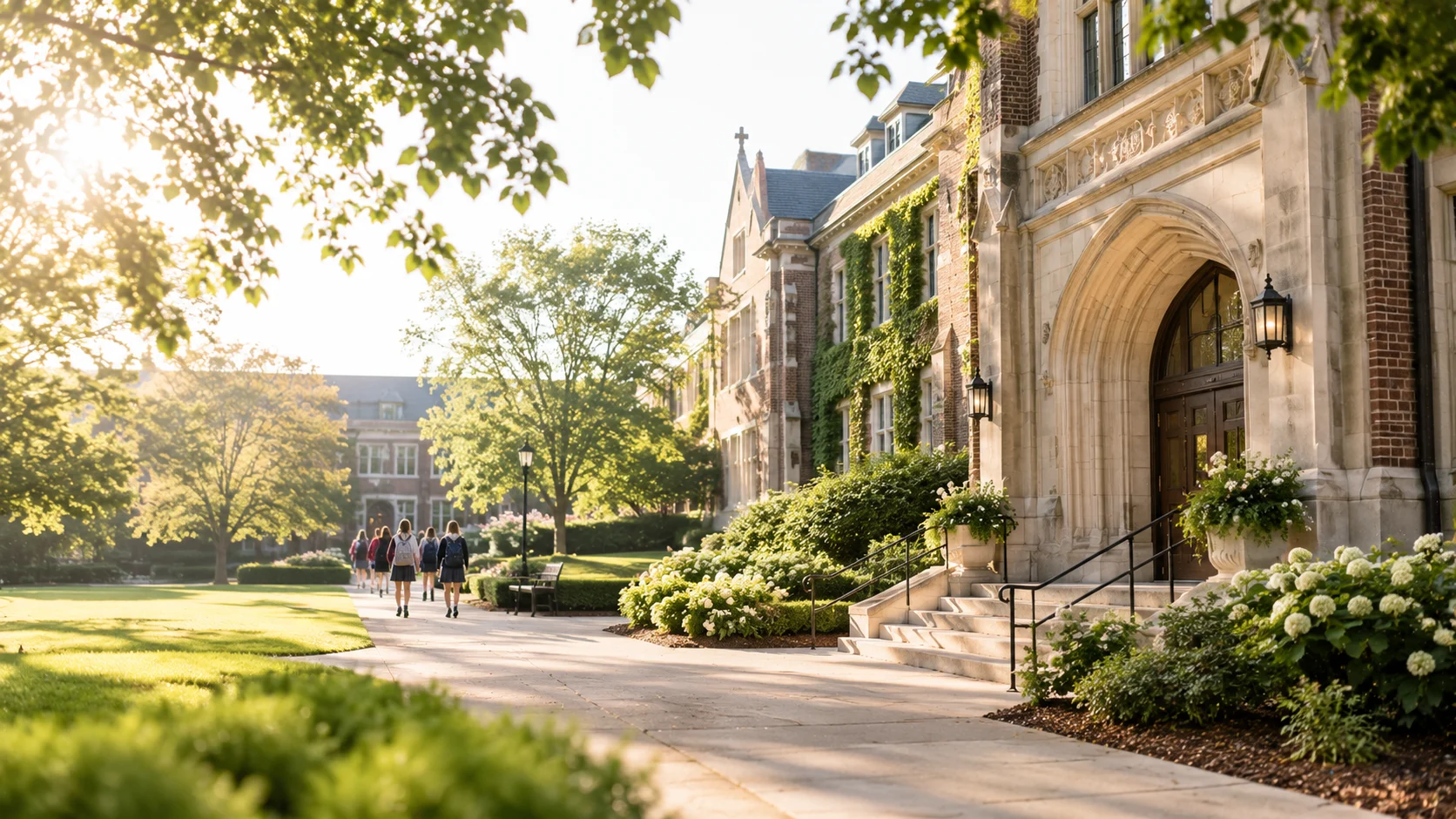
The Academy of the Holy Names is the name of Catholic educational institutions sponsored by the Sisters of the Holy Names of Jesus and Mary and associated educational ministries. The Tampa and Albany schools have distinct histories, grade levels, and admissions processes.
Choosing a school is about more than finding a classroom. Families want an environment where students can learn, build confidence, discover their interests, and develop values that guide them throughout life. That is one reason the Academy of the Holy Names attracts interest from parents, students, alumni, and people researching Catholic education.
One important detail to know before exploring the school is that the name refers to separate institutions in Tampa, Florida, and Albany, New York. Both are connected to the educational tradition of the Sisters of the Holy Names of Jesus and Mary, but they have different histories, campuses, grade levels, and admissions information.
The Tampa school, founded in 1881, serves students from pre-kindergarten through high school. Its younger grades are coeducational, while its college-preparatory high school is for young women. The Albany school, founded in 1884, serves students in grades 6 through 12. These distinctions matter when comparing programs or planning an application.
This guide explores the schools’ origins, missions, academics, student life, and admissions considerations. you are a prospective parent, a student, an alum, or simply curious about their legacy, you will find a practical starting point for further research.
What Is the Academy of the Holy Names?
The Academy of the Holy Names is a name shared by Catholic educational institutions rooted in the tradition of the Sisters of the Holy Names of Jesus and Mary. The schools combine academic learning with an emphasis on personal development, service, and values-informed education.
The name can refer to different campuses, so location matters when searching for tuition, admissions deadlines, grade offerings, and school events.
The two institutions covered in this guide are:
- Tampa, Florida: An independent Catholic school offering pre-kindergarten through grade 12, with coeducational education through grade 8 and an all-girls college-preparatory high school.
- Albany, New York: A Catholic school serving girls in grades 6 through 12, with a focus on individualized learning, leadership, and academic preparation.
The schools share a broader educational heritage, but their individual programs and policies should not be treated as identical. For current details, consult the official Tampa website or the official Albany website.
History of the Academy of the Holy Names
The history of these schools is connected to a religious teaching community that placed education at the center of its mission.
The Sisters of the Holy Names of Jesus and Mary were founded in Quebec in 1843 by Eulalie Durocher, who became known as Mother Marie Rose. The congregation developed an educational tradition that emphasized faith, care for others, and the development of each person’s abilities.
Over time, the Sisters established educational communities in Canada and the United States. The Academy of the Holy Names in Tampa traces its founding to 1881, while the Albany institution opened its doors in 1884 under the name Academy of Notre Dame before becoming known as the Academy of the Holy Names. These histories are documented by the schools themselves. Tampa history | Albany history.
The schools have continued to adapt their programs while maintaining connections to their Catholic educational heritage. Their histories reflect the broader role of religious teaching communities in establishing schools and expanding educational opportunities for young people.
For alumni and current families, that legacy can be part of what makes a school community meaningful. It connects present-day classrooms with generations of students, teachers, families, and community supporters.
Academy of the Holy Names in Tampa, Florida
The Tampa campus is located at 3319 Bayshore Boulevard in Tampa, Florida. Founded in 1881, it occupies a scenic site along Bayshore Boulevard and serves students across several stages of education.
According to the school’s official website, the academic structure includes three divisions:
- Pre-kindergarten: An early educational experience designed to encourage curiosity and help children develop foundational skills.
- Lower and middle school: Coeducational programs that support academic growth, character development, and preparation for more advanced study.
- High school: An all-girls college-preparatory program for grades 9 through 12.
The school describes its mission as helping students pursue their academic potential while developing critical thinking, creativity, cultural awareness, and spiritual growth. Its motto is Esse Quam Videri, translated as “To Be, Rather Than To Seem.” The phrase emphasizes authenticity and integrity rather than appearance alone.
Families considering the Tampa campus should review its official program descriptions, admissions requirements, tuition information, and school calendar. These details can change by academic year, so the school’s website is the best source for current information.
Official source: Academy of the Holy Names, Tampa.
Academy of the Holy Names in Albany, New York
The Albany campus has its own history and educational structure. Located at 1075 New Scotland Road in Albany, New York, the school was established in 1884 and serves students in grades 6 through 12.
The school describes its educational approach as personalized and student-focused. Its programs aim to develop knowledge, skills, values, confidence, and a sense of responsibility. Students can explore academic interests and take part in activities beyond their regular classroom studies.
The Albany school’s mission emphasizes helping young women become thoughtful learners, innovative thinkers, and active contributors to their communities. Its stated values include justice, hospitality, service, faith, and the full development of the individual.
The campus offers a range of learning and activity spaces, including science facilities, arts spaces, a library, athletic facilities, and areas for student gatherings. Families should check the school’s current materials for updated information about available courses, facilities, transportation, and extracurricular opportunities.
Because the Albany and Tampa schools have different grade structures and admissions procedures, families should not use information from one campus to make assumptions about the other.
Official source: Academy of the Holy Names, Albany.
Mission, Values, and Educational Philosophy
A school’s mission helps explain what it hopes students will learn beyond subject knowledge. At the Academy of the Holy Names institutions, that philosophy is connected to the educational tradition of the Sisters of the Holy Names of Jesus and Mary.
The specific language differs by school, but several themes are central to this tradition.
Faith and personal growth: Catholic education can connect academic learning with reflection, ethical decisions, and spiritual development. Families can review each school’s approach to religious education to determine it aligns with their expectations.
Academic curiosity: Students are encouraged to ask questions, examine ideas, develop reasoning skills, and work toward their individual potential.
Respect and hospitality: A supportive school community depends on respectful relationships among students, educators, and families.
Service and justice: Students are encouraged to recognize the needs of others and consider how their skills can contribute to their communities.
Authenticity and leadership: The schools emphasize developing individuals who act with integrity, take responsibility, and use their abilities constructively.
These principles are not a substitute for examining classroom teaching, student support, or academic outcomes. They provide a framework for understanding the schools’ stated aims. Prospective families should ask how these values appear in daily lessons, student activities, and community programs.
Academic Programs and Learning Opportunities
Academic offerings are one of the most important factors to examine when choosing a school. The available courses, teaching methods, support services, and graduation requirements can shape a student’s experience.
At Tampa, students progress through early education, elementary and middle school, and college-preparatory high school. The school highlights academic development, critical thinking, creativity, and preparation for future study. Its official materials also describe Advanced Placement courses and a range of fine arts opportunities.
At Albany, students enter at the middle-school or high-school level. The school describes an academic program that includes interdisciplinary learning, flexible scheduling, technology, and opportunities to explore interests beyond core classroom subjects. Its published information also identifies Advanced Placement and college-credit opportunities, although the exact courses available should be confirmed for the relevant school year.
When evaluating either campus, ask questions such as:
- Which core subjects and electives are available for the student’s grade?
- What advanced courses or college-credit options can students take?
- How does the school support students who need extra academic help?
- What resources are available for students with different learning needs?
- How are progress, achievement, and readiness for the next stage measured?
Course catalogs and admissions staff can provide more useful answers than a general description of a school’s academic philosophy.
Campus Life, Athletics, Arts, and Student Activities
A student’s school experience extends beyond lessons and examinations. Clubs, athletics, creative activities, leadership opportunities, and community events can help students discover interests and form friendships.
The Tampa school highlights athletics and fine arts alongside its academic and faith programs. Its published information describes sports teams and courses across different artistic disciplines. Families can use the school’s current activities listings to determine which options are available for a particular grade.
The Albany school also describes extracurricular opportunities, including student government, publications, and interscholastic sports. Its athletic history includes traditional school sports as well as additional activities introduced over time.
Participation can help students develop teamwork, discipline, creativity, communication, and time-management skills. However, not every activity is available to every student in every year, and participation may depend on age, eligibility, schedules, or available places.
During a campus visit, ask students and staff what activities are most active, how new students can join, and academic commitments can be balanced with extracurricular interests. These conversations can reveal details that a course catalog alone may not show.
Admissions: How to Explore Your Options
The admissions process depends on which Academy of the Holy Names campus you are considering and the grade your child hopes to enter.
For Tampa, the school publishes separate information for pre-kindergarten, lower school, middle school, and high school. Its admissions guidance explains that applications are considered in light of the student’s needs and the school’s ability to provide an appropriate educational experience. Availability may differ by grade.
For Albany, the official admissions website provides information about applying, scheduling a shadow visit, and scholarship examinations. Families should confirm the current process, application requirements, and any relevant dates directly with the school.
A practical admissions checklist includes:
- Confirm the campus and grade. Make sure you are viewing the correct institution.
- Review entry requirements. Check age, grade placement, required records, and any assessment procedures.
- Contact admissions. Ask about availability, deadlines, and the documents needed.
- Arrange a visit. A campus tour or shadow day can help a student understand the learning environment.
- Review the full cost. Request current tuition, fees, payment options, and financial aid details.
- Ask about student support. Discuss academic guidance, counseling, learning support, and extracurricular access.
Admissions policies, tuition, scholarships, and available places can change. Treat official school communications as the final authority rather than relying on an older article or third-party listing.
How to Compare the Tampa and Albany Schools
Although the schools share a name and educational heritage, their differences are important when researching them.
| Feature | Tampa, Florida | Albany, New York |
|---|---|---|
| Founding year | 1881 | 1884 |
| Grade levels | Pre-K–12 | Grades 6–12 |
| School structure | Coeducational through grade 8; all-girls high school | Girls’ school serving grades 6–12 |
| Location | 3319 Bayshore Boulevard, Tampa | 1075 New Scotland Road, Albany |
| Educational focus | Catholic education, academics, faith, arts, athletics | Catholic education, individualized learning, leadership, service |
| Official website | holynamestpa.org | ahns.org |
The table summarizes information published by the schools and should be used as a starting point rather than a complete comparison of quality or outcomes.
To make a fair decision, compare the specific grade level, academic courses, student support, school culture, commute, extracurricular choices, and total cost. A school that suits one student’s goals may not be the best fit for another.
Tuition, Financial Aid, and Scholarships
Cost is a key part of choosing a private school. Tuition is only one part of the total expense, so families should request a current fee schedule from the relevant admissions office.
Depending on the school and grade, additional costs may include uniforms, books, technology, meals, transportation, extracurricular activities, trips, and graduation-related expenses. The items included in tuition can differ, so it is worth requesting a written breakdown.
Families should also ask about financial aid, scholarship eligibility, application deadlines, and payment plans. At Albany, the school describes academic scholarships connected to its scholarship examination. Tampa publishes its own tuition and financial aid information.
Do not rely on tuition figures copied from an old directory or a previous academic year. Fees and aid policies may change, and individual awards can depend on eligibility and available funding.
A useful way to compare the real cost is to calculate the annual tuition plus required fees, transport, meals, and expected activity expenses. Then ask the school which forms of assistance may be available before making a final decision.
Who May Benefit From These Schools?
The right school depends on a student’s learning needs, interests, values, and long-term goals. The Academy of the Holy Names institutions may appeal to families looking for Catholic education that combines academics with personal development and community engagement.
Tampa may be relevant to families seeking a school pathway that begins in pre-kindergarten and continues through high school. Its coeducational early and middle grades and all-girls high school make its structure distinct.
Albany may be relevant to families looking for a girls’ school serving grades 6 through 12, with opportunities for academic exploration, leadership, and extracurricular participation.
Neither school should be chosen solely because of its history, mission statement, or reputation. Families should examine current academic offerings, student support, campus environment, costs, travel requirements, and admissions criteria.
Students should also have a voice in the decision. Visiting the campus, meeting teachers, asking current students about their experiences, and discussing personal goals can help families decide the environment feels like a good fit.
FAQs
What is the Academy of the Holy Names?
It is the name of Catholic educational institutions connected to the Sisters of the Holy Names of Jesus and Mary. The Tampa and Albany schools have separate campuses, histories, and admissions processes.
Where is the Academy of the Holy Names located?
There are campuses in Tampa, Florida, and Albany, New York. Check the location carefully before looking up directions, admissions, or tuition.
When was the Academy of the Holy Names founded?
The Tampa school was founded in 1881, while the Albany school opened in 1884. Each institution has its own documented history.
Is the Academy of the Holy Names a girls’ school?
Tampa is coeducational from pre-kindergarten through grade 8 and serves young women in grades 9–12. Albany serves girls in grades 6–12.
What grades does the school offer?
Tampa offers pre-kindergarten through grade 12. Albany serves grades 6 through 12, so check the campus that matches your child’s needs.
How can a student apply?
Visit the appropriate school’s official admissions page to review the application, grade requirements, deadlines, and any assessment or visit options.
Does the Academy offer financial aid?
Both schools publish information for families exploring tuition assistance or scholarships. Contact the relevant admissions office for current eligibility rules, deadlines, and available support.
What is the school’s educational philosophy?
Both schools draw on a Catholic educational tradition that values learning, personal growth, service, and respect. Their specific missions and programs are explained on their official websites.
Conclusion
The Academy of the Holy Names has a long educational heritage connected to the Sisters of the Holy Names of Jesus and Mary. Its Tampa and Albany institutions share elements of that tradition while serving different communities, grade levels, and student needs.
For families exploring a school, the most useful next step is to identify the correct campus and review its current academic programs, admissions requirements, tuition, student support, and extracurricular opportunities. A campus visit and conversation with admissions staff can provide a clearer picture than a general overview alone.
If you are researching the Academy of the Holy Names for your child, your own education, or historical interest, use the official school resources linked in this guide to verify the details that matter most. Share this article with another family comparing schools, and leave a comment about the information you would find most helpful in a school guide.
Discover More Related Articles:
- 345 Sesame Street Characters Names | A Colorful Journey Through Childhood Favorites In 2026
- 345 Sanderson Sisters Names | Meet the Three Bewitching Witches of Hocus Pocus In 2026
- 378 Hocus Pocus Witches Names | For Magical Souls In 2026