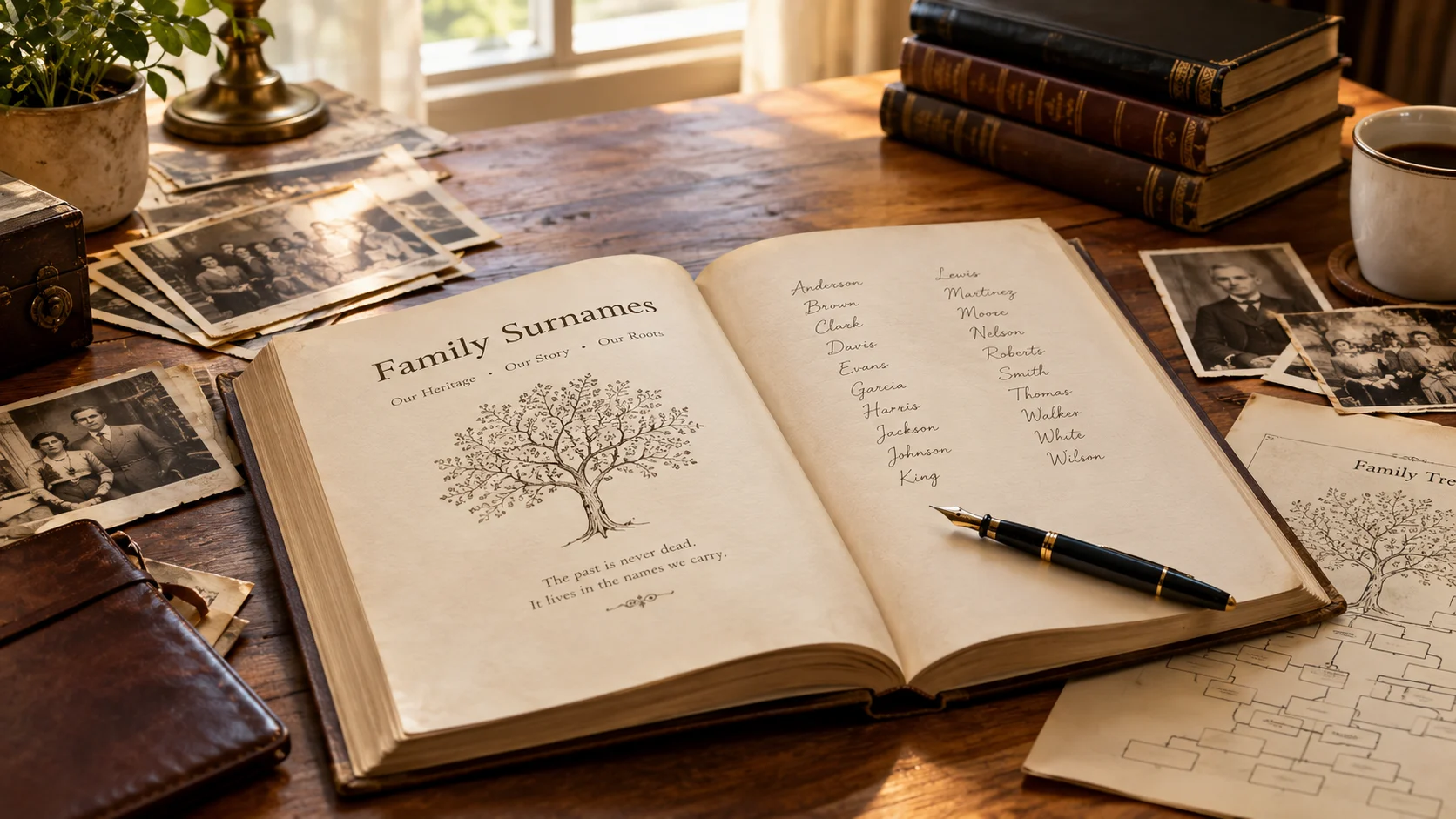
Weird last names are unusual surnames that sound funny, surprising, mysterious, or unexpected today. Many developed from occupations, places, nicknames, physical traits, or older words whose meanings changed over time.
Some last names sound so unusual that you almost want to ask, “Wait, that’s really a surname?”
That is exactly what makes weird last names so fascinating. A surname that sounds hilarious, dramatic, strange, or even slightly ridiculous today may have had a completely ordinary meaning centuries ago. Family names developed in many ways, including from occupations, places, parentage, physical characteristics, and nicknames.
Take names such as Odd, Strange, Death, Killer, Bottom, and Dangerfield. They sound like characters from a comedy, mystery novel, or fantasy series. Yet many have genuine historical explanations.
And here is the fun part: a strange-sounding surname does not necessarily have a strange history.
This guide explores unusual family names, their documented meanings, possible origins, personality vibes, and the reasons they still catch our attention today.
Weird Last Names: Weird
Meaning: Unusual or uncertain modern association
Origin: English surname
Personality: Quirky, mysterious, unforgettable
Style: Rare, eccentric, playful
Best For: Fictional characters, usernames, storytelling, genealogy research
Popularity: Very uncommon
Emotional Appeal: Few surnames are as instantly attention-grabbing as Weird. The word itself creates curiosity before you even know anything about the family behind it.
Ancestry documents Weird as a genuine surname and lists historical records for families using it in the United States and Scotland. However, its surname entry does not establish a definitive etymology, so it is better not to invent a meaning simply from the modern English word.
Pop Culture Reference: The name feels naturally suited to comedy, fantasy, and mystery characters.
Similar Names: Strange, Odd, Wild, Wilding, Strangefield
Why It Still Works Today: In modern English, “weird” immediately communicates something unusual. That makes the surname memorable even when its original history remains uncertain.
Weird Last Names: Strange
Meaning: Originally associated with a stranger or newcomer
Origin: English and Irish usage
Personality: Mysterious, independent, unconventional
Style: Gothic, vintage, dramatic
Best For: Writers, fictional characters, genealogy enthusiasts, distinctive usernames
Popularity: Established but uncommon
Emotional Appeal: Strange sounds mysterious today, but its historical story is more practical than spooky.
Ancestry traces the English surname Strange to Middle English strange, meaning “foreign,” describing a newcomer to a district. The source also notes an Irish history involving names containing the element associated with a stranger.
Pop Culture Reference: “Strange” has an obvious connection with mysterious characters, making it especially memorable in fiction.
Similar Names: Stranger, Strang, Strong, Strangefield, Stanger
Why It Still Works Today: The modern word gives the surname a mysterious edge. It sounds unusual without being difficult to spell or pronounce.
Weird Last Names: Odd
Meaning: Possibly outstanding, brave, or derived from an older personal name
Origin: English and Scandinavian influences
Personality: Bold, witty, unconventional
Style: Quirky, short, memorable
Best For: Fictional characters, usernames, creative projects, genealogy
Popularity: Uncommon
Emotional Appeal: Odd is one of those surnames that seems to tell a joke before the person has even introduced themselves.
Ancestry traces Odd to Middle English personal names connected with Anglo-Norman French and Old English or Old Scandinavian forms. It also notes a possible connection with Middle English odde, associated with something outstanding or brave.
Pop Culture Reference: The word “odd” naturally fits quirky or eccentric characters.
Similar Names: Oddy, Ode, Ord, Dodd, Todd
Why It Still Works Today: Its short length makes it incredibly memorable. The modern English meaning also gives it an instant playful quality.
Weird Last Names: Death
Meaning: Death
Origin: Middle English and Old English
Personality: Dark, serious, mysterious
Style: Gothic, dramatic, historical
Best For: Fiction writers, fantasy characters, genealogy research, dark-themed projects
Popularity: Rare but historically documented
Emotional Appeal: Few surnames create such an immediate reaction. Death sounds dramatic today, but its documented history is even more interesting.
Ancestry explains that Death apparently developed from Middle English and Old English words for death. One possible explanation is that it described someone who played the role of Death in a local pageant. The source also documents historical spelling variations such as De’Ath and D’Eath.
Pop Culture Reference: The surname naturally fits gothic fiction and mystery stories.
Similar Names: De’Ath, Heath, Dearth, Deats, Meath
Why It Still Works Today: Its modern meaning is powerful and unmistakable. That makes it one of the most memorable unusual surnames on this list.
Weird Last Names: Killer
Meaning: One who kills or slaughters
Origin: Middle English
Personality: Tough, intimidating, bold
Style: Dark, edgy, dramatic
Best For: Fictional villains, gaming characters, creative writing
Popularity: Uncommon
Emotional Appeal: Killer sounds almost too dramatic to be a real family name, which is exactly why it stands out.
Ancestry traces Killer to Middle English killer, meaning someone who kills or slaughters. It suggests the name may have been connected with a butcher and also notes a possible relationship with the surname Kilner.
Pop Culture Reference: The modern word “killer” is common in entertainment, gaming, and action stories.
Similar Names: Kilner, Keller, Miller, Koller, Killerby
Why It Still Works Today: The surname has a strong modern association with danger and toughness, even though its historical use may have been occupational rather than criminal.
Weird Last Names: Bottom
Meaning: Valley floor or bottom of a valley
Origin: English
Personality: Humorous, grounded, down-to-earth
Style: Traditional, quirky, geographical
Best For: Genealogy research, fictional characters, memorable examples
Popularity: Established but uncommon
Emotional Appeal: “Bottom” sounds funny in modern English, but its surname origin is surprisingly ordinary.
Ancestry explains that the English surname Bottom was a topographic name for someone who lived in a dell, hollow, or valley floor. It comes from Middle English and Old English terms associated with the bottom of a valley.
Pop Culture Reference: The modern word naturally creates humorous possibilities.
Similar Names: Botham, Bottoms, Bolton, Button, Bott
Why It Still Works Today: It demonstrates how modern meanings can make an old geographical surname sound unintentionally funny.
Weird Last Names: Dangerfield
Meaning: A historical place-based surname
Origin: English, Norman origin
Personality: Adventurous, dramatic, confident
Style: Vintage, bold, theatrical
Best For: Fictional characters, writers, genealogy enthusiasts
Popularity: Established but relatively uncommon
Emotional Appeal: Dangerfield sounds like a surname invented for an action movie. Its actual history, however, is considerably more geographical.
Ancestry identifies Dangerfield as an English surname of Norman origin and describes it as a habitational name connected with places in northern France. The source connects the underlying place name with the Old Norse personal name Ásgeirr and Old French ville, meaning settlement or village.
Pop Culture Reference: The surname has a naturally theatrical sound and has been used by notable entertainers.
Similar Names: Fairfield, Waterfield, Mansfield, Canfield, Butterfield
Why It Still Works Today: The modern word “danger” gives this traditional surname an adventurous personality.
Weird Last Names: Savage
Meaning: Wild or untamed
Origin: English, Norman origin
Personality: Fierce, confident, fearless
Style: Bold, edgy, classic
Best For: Fictional characters, social usernames, strong character names
Popularity: Established and recognizable
Emotional Appeal: Savage sounds powerful because the modern word carries a strong emotional punch.
Ancestry traces the English surname Savage to a nickname for a wild or uncouth person. Its history includes Middle English and Old French forms related to “wild” or “untamed.” The source also documents Irish usage with additional historical connections.
Pop Culture Reference: “Savage” is widely used in modern entertainment and internet culture to describe someone fierce or brutally confident.
Similar Names: Sauvage, Sage, Salvage, Savin, Ramage
Why It Still Works Today: The surname already sounds bold in modern English, making it easy to remember.
Weird Last Names: Small
Meaning: Small, slender, or little
Origin: English and Scottish
Personality: Gentle, humble, understated
Style: Simple, traditional, descriptive
Best For: Genealogy research, character writing, family history
Popularity: Well established
Emotional Appeal: Small may not sound strange at first, but using an everyday adjective as a surname gives it an amusing modern quality.
Ancestry explains that Small developed as a nickname for someone of slender build or small stature. It traces the English and Scottish form to Middle English and Old English words meaning small, slender, or thin.
Pop Culture Reference: The word can create playful contrasts when paired with a large or powerful first name.
Similar Names: Little, Short, Smallwood, Smalley, Smail
Why It Still Works Today: Its simplicity is its strength. The surname is easy to recognize, spell, and remember.
Weird Last Names: Best
Meaning: Best or finest, with another historical interpretation connected to animals
Origin: English and northern Irish
Personality: Confident, competitive, proud
Style: Classic, positive, traditional
Best For: Character names, family history, memorable surnames
Popularity: Established and widely documented
Emotional Appeal: Best sounds like a compliment built directly into a family name.
Ancestry gives several possible histories for Best. One English and northern Irish explanation connects it with Middle English best(e) meaning “best” or “finest.” Another connects it with Middle English and Old French beste, meaning beast or animal, potentially referring to an animal keeper or someone compared with an animal.
Pop Culture Reference: The surname is particularly recognizable because of famous bearers such as footballer George Best.
Similar Names: Bester, Beston, West, Bost, Bast
Why It Still Works Today: Its positive modern meaning makes it sound confident, even when its historical roots may have been more varied.
Quick Comparison Table
| Last Name | Meaning | Style | Best For |
|---|---|---|---|
| Weird | Uncertain | Quirky | Creative characters |
| Strange | Stranger or newcomer | Mysterious | Fiction |
| Odd | Outstanding or personal-name origin | Playful | Characters |
| Death | Death | Gothic | Dark fiction |
| Killer | One who kills or slaughters | Edgy | Action characters |
| Bottom | Valley floor | Humorous | Genealogy |
| Dangerfield | Place-based origin | Dramatic | Fiction |
| Savage | Wild or untamed | Fierce | Strong characters |
| Small | Small or slender | Classic | Family history |
| Best | Best or finest | Confident | Character names |
Why Do Some Last Names Sound Weird?
The main reason is simple: language changes.
A surname may have started with an occupation, location, physical feature, nickname, or family connection. Over hundreds of years, the original word can disappear from everyday speech while the surname survives. FamilySearch groups surname origins into categories such as patronymic, matronymic, occupational, geographical, descriptive, and natural names.
That creates some hilarious modern combinations.
A name that once described where someone lived may now sound like a joke. A nickname that once made perfect sense may become confusing after its original language disappears.
Even spelling played a role. FamilySearch notes that surnames were historically written phonetically, meaning the same name could appear with different spellings in records.
How to Find the Real Meaning of a Weird Last Name
Start with the spelling you actually have, but do not assume the modern English meaning is the original meaning.
Check several historical spellings because surnames often changed over time. Then identify the likely country or region associated with the family.
Reliable surname research can involve dictionaries of family names, historical records, genealogy databases, and established etymological references.
Behind the Name also cautions that surname entries can have uncertain etymologies, and its database distinguishes between known meanings, possible origins, and uncertain explanations.
The most important rule is simple: never force a funny modern meaning onto an old surname without evidence.
100+ Weird Last Names to Explore
Here is a broader inspiration list for readers looking for unusual or memorable surnames:
Weird, Strange, Odd, Death, Killer, Bottom, Dangerfield, Savage, Small, Best, Butt, Pugh, Wild, Smart, Little, Young, Fox, Bean, Stone, Bird, Beard, Strong, Short, Long, Strange, Oddy, Heath, Dearth, Bost, Boss, Bolt, Button, Baker, Potter, Cooper, Miller, Smith, Carver, Rivers, Hill, Wood, Green, Black, White, Brown, Gold, Frost, Snow, Wolf, Bear, Lamb, Fish, Duck, Fox, Crow, Swan, Hart, Hawk, King, Queen, Prince, Noble, Good, Love, Joy, Hope, Faith, Friend, Sweet, Merry, Lucky, Chance, Fortune, Danger, Fear, Brave, Savage, Hunter, Archer, Shepherd, Farmer, Cook, Butler, Barber, Fisher, Baker, Mason, Carpenter, Potter, Weaver, Tanner, Walker, Porter, Carter, Turner, Fletcher, Wright, Knight, Page, Judge, Bishop, Bishop, Abbott, Priest, Young, Little, Long, Short, Strong, Wise, Wiseheart, Goodwin, Goodrich, Blackwood, Greenwood, Whitehead, Redman, Brown, Stone, Rivers, Hill, Woodruff, Winter, Summer, Spring, Moon, Star, Cloud, Storm, Rain.
Not every name in this inspiration list is historically “weird” in its original context. Some simply sound unusual to modern English speakers.
How to Choose a Weird Last Name
If you are choosing a surname for a character, username, story, game, or creative project, think about the feeling you want first.
For comedy: Try names such as Odd, Bottom, Best, Small, or Strange.
For mystery: Strange, Death, Black, Frost, or Storm can create a darker atmosphere.
For action: Killer, Savage, Dangerfield, Hunter, or Strong sound energetic.
For fantasy: Wolf, Stone, Storm, Moon, Fox, or Winter can create a dramatic effect.
For realistic characters: Choose a surname with a documented regional or occupational history.
Most importantly, avoid choosing a surname simply because its modern English meaning sounds funny. A real family name can have a long and meaningful history behind it.
Most Popular Types of Unusual Surnames
Some categories appear again and again when people search for unusual family names.
Descriptive surnames: Names connected with appearance or personality.
Occupational surnames: Names based on work or trades.
Geographical surnames: Names connected with places or landscape features.
Animal surnames: Names connected with animals, birds, or natural elements.
Nickname-based surnames: Names that began as descriptions of individuals.
FamilySearch identifies occupational, geographical, descriptive, natural, patronymic, and matronymic origins among the major surname categories.
Weird Last Name Trends Today
Modern readers often find surnames interesting because they can work almost like ready-made character names.
Short surnames are memorable. Strong nouns create instant imagery. Dark words can make a fictional character feel mysterious, while cheerful words can make a name feel playful.
There is also growing curiosity around surname meanings because genealogy websites make historical information easier to explore.
One important distinction remains: a surname’s meaning does not determine the personality of everyone who carries it. The personality descriptions in this article are creative impressions based on how the names sound today, not claims about real families.
Vintage Weird Last Names Making a Comeback
Old surnames can feel surprisingly modern when they have a strong sound or clear imagery.
Names such as Fox, Stone, Hunter, Archer, Wolf, Winter, Savage, and Best can work well in contemporary fiction and branding because they are short and visually memorable.
Vintage surnames also have an advantage: they often carry historical depth. Their original meanings may tell you something about a person’s occupation, location, family connection, or nickname.
What Makes a Last Name Weird?
A last name may seem weird because it has an unexpected meaning, unusual spelling, funny sound, dramatic association, or a meaning that has changed over time.
For example, Death sounds dark today, while Bottom sounds humorous. Historically, however, both have documented explanations that are much more ordinary than their modern impressions suggest.
The idea of “weird” is therefore subjective. A surname that sounds strange in modern American English may be completely ordinary in another language or culture.
FAQs
What are weird last names?
Weird last names are unusual surnames that sound funny, strange, rare, dramatic, or unexpected to modern readers.
What is the weirdest last name?
There is no official “weirdest” surname, but names such as Death, Killer, Odd, Strange, and Bottom often attract attention.
Are weird last names real?
Yes. Many unusual surnames are historically documented and have genuine family records and etymological explanations.
Why do some last names sound funny?
Language changes over time, so an old surname can develop a very different modern association from its original meaning.
Can a last name really be Death?
Yes. Death is a documented surname with historical English origins connected with the word for death.
Is Killer a real surname?
Yes. Killer is a documented surname, and historical sources connect it with Middle English terminology for someone who kills or slaughters.
Does Strange really exist as a surname?
Yes. Strange is a documented English and Irish surname with historical connections to the idea of a stranger or newcomer.
Can I use a weird last name for a character?
Absolutely. Unusual surnames can make fictional characters easier to remember, especially when the name matches the character’s setting or personality.
Conclusion
Weird last names are a reminder that language has a long memory. A surname that sounds hilarious, mysterious, or dramatic today may have started as a simple description of a person’s home, job, appearance, nickname, or family connection.
Names such as Odd, Strange, Death, Killer, Bottom, Dangerfield, Small, and Best show just how surprising surname history can become. Some meanings are well documented, while others remain uncertain, so good research matters.
you are exploring family history, creating a fictional character, choosing a memorable username, or simply looking for unusual names, these surnames offer plenty of inspiration.
Pick your favorite, share this article with someone who loves unusual names, and let us know which weird last name surprised you most.
Discover More Related Articles:
- 300 Scandinavian Girl Names | Beautiful Nordic Ideas In 2026
- 200 Welsh Girl Names | Inspired by Nature, Mythology & Culture In 2026
- 200 Polish Boy Names | Strong & Charming Choices In 2026