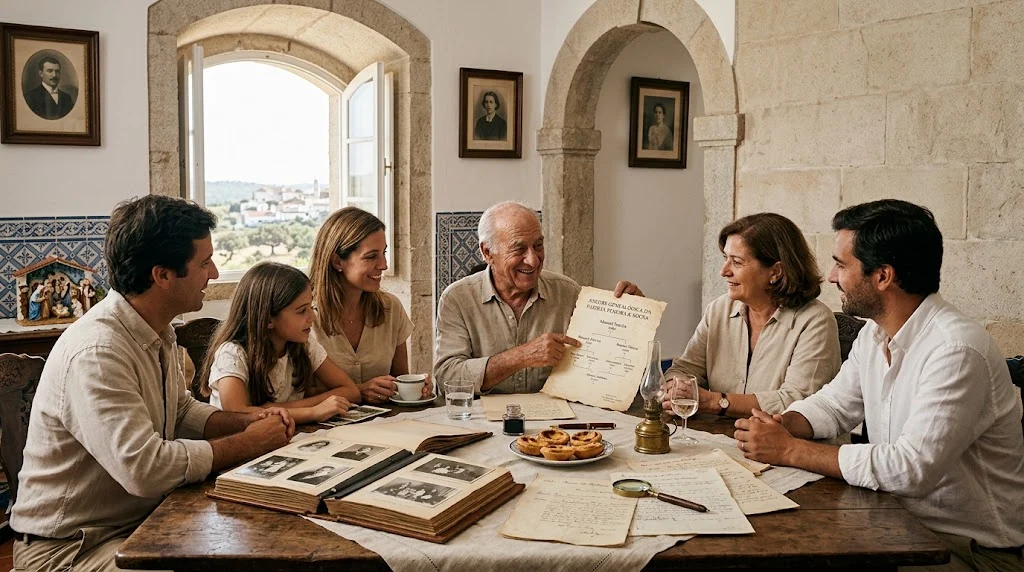
Portuguese last names often come from occupations, places, nature, religious traditions, or ancestral first names. Common examples include Silva, Santos, Oliveira, Pereira, Costa, Rodrigues, Fernandes, Martins, Sousa and Gomes.
A family name can carry a little piece of history. It may point to an ancestor, a village, a landscape, a profession, or an old religious tradition. That is one reason Portuguese last names are so interesting to explore.
Portuguese surnames also reflect the long history of Portugal and the wider Portuguese-speaking world. Some sound familiar across generations, while others have unusual meanings or strong regional connections. Below, we explore ten well-known Portuguese family names, their possible origins, personality associations, style, and why they continue to work beautifully today.
Silva
Meaning: Woodland, forest, or wooded place
Origin: Portuguese and Galician
Personality: Natural, grounded, strong, and timeless
Style: Classic, elegant, simple, traditional
Best For: Family histories, baby names, fictional characters, genealogy, and heritage research
Popularity: Long-established and widely encountered
Silva is one of the most recognizable Portuguese surnames. It is generally associated with the Latin word silva, meaning “forest” or “woodland.” The name is therefore connected with nature and landscapes rather than a particular occupation.
Among Portuguese last names, Silva has a wonderfully simple sound. It is short, easy to pronounce, and works across generations. Its natural meaning also gives it a calm, earthy quality.
Emotional Appeal: Silva feels both familiar and strong. Its connection with forests can suggest growth, resilience, roots, and family.
Pop Culture Reference: The surname appears frequently among Portuguese- and Brazilian-speaking public figures, athletes, artists, and fictional characters.
Similar Surnames: Oliveira, Pereira, Costa, Carvalho, Ribeiro
Why It Still Works Today: Silva is easy to recognize without feeling overly complicated. Its nature-based meaning also fits modern interest in names connected with the natural world.
Santos
Meaning: Saints or holy ones
Origin: Portuguese, Spanish, and broader Iberian tradition
Personality: Warm, respectful, traditional, and dignified
Style: Religious, classic, familiar, formal
Best For: Family heritage, traditional characters, genealogy, and historical naming
Popularity: Traditional and enduring
Santos comes from the Portuguese word santos, meaning “saints.” It has a clear connection to Christian religious vocabulary and reflects the strong historical influence of Christianity in Portuguese culture.
The surname can sometimes have connections with religious naming traditions, although the exact story behind an individual family’s surname cannot always be determined from the surname alone.
Emotional Appeal: Santos carries a sense of tradition and reverence. For families with Portuguese heritage, it may feel especially connected to older generations.
Pop Culture Reference: Santos is a widely recognizable surname throughout Portuguese- and Spanish-speaking communities.
Similar Surnames: Cruz, Reis, Jesus, Ferreira, Martins
Why It Still Works Today: Its short form and clear pronunciation make Santos easy to use internationally. It also retains a strong traditional identity without sounding outdated.
Oliveira
Meaning: Olive tree
Origin: Portuguese
Personality: Peaceful, warm, natural, and resilient
Style: Elegant, botanical, classic, sophisticated
Best For: Families, baby-name inspiration, literary characters, genealogy, and Portuguese heritage
Popularity: Established and enduring
Oliveira is derived from the Portuguese word associated with the olive tree. Olive trees have deep cultural and historical importance across the Mediterranean and Iberian Peninsula, making this surname strongly connected with landscape and agriculture.
Like other Portuguese last names based on nature, Oliveira may originally have helped identify someone who lived near olive trees or an olive-growing area. However, the precise origin of a particular family line requires genealogical evidence.
Emotional Appeal: Oliveira has a peaceful quality. The olive tree can symbolize endurance, longevity, nourishment, and connection to the land.
Pop Culture Reference: Oliveira is common enough to appear among Portuguese and Brazilian public figures and fictional characters.
Similar Surnames: Silva, Pereira, Carvalho, Ribeiro, Pinheiro
Why It Still Works Today: Nature-inspired names remain attractive because they feel timeless. Oliveira combines that natural quality with a distinctly Portuguese identity.
Pereira
Meaning: Pear tree
Origin: Portuguese and Galician
Personality: Gentle, traditional, family-oriented, and dependable
Style: Classic, natural, warm, refined
Best For: Family histories, fictional families, genealogy, baby-name inspiration
Popularity: Traditional and well established
Pereira is connected with the Portuguese word for a pear tree. Like Oliveira, it belongs to a group of surnames associated with plants and landscapes.
The name gives us an interesting glimpse into how family names developed. A surname could identify a person by the land around them, a property, or a notable natural feature. The exact reason a particular Pereira family adopted the name, however, may vary.
Emotional Appeal: Pereira feels gentle and welcoming. Its connection with fruit-bearing trees gives it a sense of abundance and family roots.
Pop Culture Reference: Pereira is widely found in Portuguese-speaking communities and appears in sports, literature, entertainment, and public life.
Similar Surnames: Oliveira, Silva, Carvalho, Ribeiro, Pinheiro
Why It Still Works Today: Pereira has a traditional sound but remains easy to recognize. It also offers a beautiful nature connection without sounding overly unusual.
Costa
Meaning: Coast, shoreline, or coastal place
Origin: Portuguese, Galician, and Romance-language tradition
Personality: Adventurous, open, confident, and independent
Style: Short, modern, classic, geographical
Best For: Characters, family histories, genealogy, and Portuguese heritage
Popularity: Long-established
Costa is related to the Portuguese word costa, commonly meaning “coast” or “shore.” It belongs to the geographical type of surname, where a name could identify someone in relation to a particular landscape or location.
The coastal meaning feels especially fitting for Portuguese heritage because Portugal has a long and important relationship with the Atlantic Ocean.
Emotional Appeal: Costa suggests movement, freedom, travel, and the sea. It has a crisp sound that makes it memorable.
Pop Culture Reference: Costa is familiar across Portuguese-speaking communities and can be found among athletes, artists, writers, and public figures.
Similar Surnames: Ribeiro, Monteiro, Rocha, Castro, Silva
Why It Still Works Today: Costa is short, stylish, and internationally easy to pronounce. Its connection to the coast also gives it a natural storytelling quality.
Rodrigues
Meaning: Descendant or family of Rodrigo
Origin: Portuguese and Iberian
Personality: Strong, traditional, confident, and established
Style: Classic, historical, formal, family-oriented
Best For: Genealogy, historical characters, family names, and Portuguese heritage
Popularity: Traditional and widely recognized
Rodrigues is a patronymic surname. That means it developed from a personal name and originally indicated a family connection to someone named Rodrigo. The ending “-es” in Portuguese surnames can carry the sense of descent or relationship.
This makes Rodrigues different from nature-based names such as Silva or Oliveira. Instead of describing a landscape, it points toward ancestry.
Emotional Appeal: Rodrigues feels deeply connected to family history. It naturally evokes ideas of lineage, inheritance, and generations.
Pop Culture Reference: Rodrigues appears frequently across Portuguese-speaking communities and among international public figures.
Similar Surnames: Fernandes, Martins, Gonçalves, Nunes, Lopes
Why It Still Works Today: Patronymic surnames remain common because family names naturally preserve links to earlier generations. Rodrigues sounds traditional while still fitting modern life.
Fernandes
Meaning: Descendant or family of Fernando
Origin: Portuguese and Iberian
Personality: Reliable, confident, classic, and strong
Style: Traditional, formal, timeless
Best For: Genealogy, historical stories, fictional characters, and family heritage
Popularity: Long-established
Fernandes is another Portuguese patronymic surname. It developed from the personal name Fernando, creating a surname that originally identified a family connection to an ancestor with that given name.
Patronymic surnames are especially useful when exploring the history of Portuguese naming because they show how personal names gradually became inherited family names.
Emotional Appeal: Fernandes has a strong sense of continuity. It sounds like a name that belongs naturally to several generations of one family.
Pop Culture Reference: Fernandes is well known internationally through Portuguese- and Brazilian-speaking communities, including sports and entertainment.
Similar Surnames: Rodrigues, Martins, Gonçalves, Lopes, Nunes
Why It Still Works Today: Fernandes combines history with familiarity. It has enough character to stand out while remaining a recognizable Portuguese surname.
Martins
Meaning: Descendant or family of Martin
Origin: Portuguese and European Christian tradition
Personality: Dependable, calm, traditional, and approachable
Style: Classic, simple, understated
Best For: Families, fictional characters, genealogy, historical research
Popularity: Established and enduring
Martins is generally understood as a patronymic surname derived from Martin. The personal name Martin has a long history across Europe and is associated with the Christian tradition surrounding Saint Martin.
As a surname, Martins demonstrates how an individual’s first name could eventually become a hereditary family name.
Emotional Appeal: Martins has a familiar and friendly sound. It feels traditional without being heavy or overly formal.
Pop Culture Reference: Martins appears widely in Portuguese-speaking communities and among people involved in sports, arts, business, and public life.
Similar Surnames: Fernandes, Rodrigues, Santos, Gomes, Lopes
Why It Still Works Today: Its simplicity gives Martins lasting appeal. It is easy to pronounce, easy to spell, and strongly connected with European family-name traditions.
Sousa
Meaning: Place-based surname associated with the Sousa region and river
Origin: Portuguese
Personality: Historical, distinctive, confident, and refined
Style: Classic, geographical, traditional, elegant
Best For: Portuguese heritage, genealogy, historical fiction, family research
Popularity: Established and recognizable
Sousa is a well-known Portuguese surname with geographical associations. It is traditionally connected with the Sousa area and the Sousa River in northern Portugal.
The surname is particularly interesting for genealogy because place-based surnames can sometimes provide clues about where an ancestral family lived or held land. Still, a surname alone cannot prove a person’s exact geographic origin.
Emotional Appeal: Sousa has a distinctly Portuguese identity. Its connection with northern Portugal gives it a strong historical atmosphere.
Pop Culture Reference: Sousa is widely recognized in Portuguese-speaking communities and appears among numerous public figures.
Similar Surnames: Costa, Castro, Ribeiro, Rocha, Silva
Why It Still Works Today: Sousa has a polished, memorable sound. It also feels unmistakably connected to Portuguese heritage.
Gomes
Meaning: Patronymic surname derived from the personal name Gomes
Origin: Portuguese and Iberian
Personality: Friendly, strong, traditional, and approachable
Style: Short, classic, familiar, modern-friendly
Best For: Family histories, fictional characters, genealogy, baby-name inspiration
Popularity: Established and enduring
Gomes is another traditional Portuguese surname with a patronymic background. It developed from the personal name Gomes, reflecting the common historical process in which personal names became inherited family names.
Unlike surnames with obvious meanings such as “olive tree” or “coast,” Gomes illustrates why surname etymology can sometimes be more complicated. The historical development of older personal names may involve linguistic changes across centuries.
Emotional Appeal: Gomes feels warm and approachable. Its short form gives it a modern quality while its history keeps it firmly rooted in tradition.
Pop Culture Reference: Gomes is widely recognizable in Portuguese-speaking countries and communities around the world.
Similar Surnames: Martins, Fernandes, Rodrigues, Lopes, Nunes
Why It Still Works Today: Gomes is concise, memorable, and easy to use internationally. It balances heritage with a clean modern sound.
Quick Comparison Table
| Portuguese Last Name | Meaning | Style | Best For |
|---|---|---|---|
| Silva | Woodland or forest | Natural, classic | Heritage, families |
| Santos | Saints | Traditional, religious | Heritage, genealogy |
| Oliveira | Olive tree | Elegant, natural | Families, characters |
| Pereira | Pear tree | Warm, classic | Heritage, genealogy |
| Costa | Coast or shoreline | Short, adventurous | Characters, families |
| Rodrigues | Descendant of Rodrigo | Strong, traditional | Genealogy, history |
| Fernandes | Descendant of Fernando | Classic, formal | Heritage, genealogy |
| Martins | Descendant of Martin | Simple, timeless | Families, characters |
| Sousa | Place-based surname | Historical, refined | Genealogy, heritage |
| Gomes | Patronymic surname | Short, classic | Families, characters |
How to Choose the Perfect Portuguese Last Name
Choosing a Portuguese surname depends on what you want the name to communicate.
Start with meaning. If you love nature, Silva, Oliveira, and Pereira offer beautiful connections to forests, olive trees, and pear trees. If you prefer a geographical feeling, Costa and Sousa are interesting choices.
Consider the sound. Short surnames such as Costa, Silva, and Gomes pair easily with many first names. Longer names such as Rodrigues and Fernandes can create a more formal and traditional impression.
Think about authenticity. If you are researching your own family history, do not choose a surname solely because its meaning sounds attractive. Genealogical records are needed to establish a particular surname belongs to your family line.
Match the style. For a historical character, Rodrigues or Sousa may feel appropriate. For a modern fictional character, Costa, Silva, or Gomes may sound natural and memorable.
Check pronunciation. Portuguese pronunciation can differ from English pronunciation. If the surname will be used internationally, consider how easily readers or listeners will recognize it.
Look beyond the meaning. A surname can have several historical explanations, and the same surname may have developed independently in different families. Meaning is a clue, not always a complete family history.
Most Popular Portuguese Last Names Today
Some Portuguese surnames are especially familiar because they have been used across many generations and throughout Portuguese-speaking communities.
A commonly recognized group includes:
- Silva
- Santos
- Oliveira
- Pereira
- Costa
- Rodrigues
- Fernandes
- Martins
- Sousa
- Gomes
- Carvalho
- Ribeiro
- Ferreira
- Alves
- Lopes
Popularity can vary by country, region, historical period, and dataset. A surname that is common in Portugal may also be widespread in Brazil or other Portuguese-speaking communities for different historical reasons.
Vintage Portuguese Last Names Making a Comeback
Traditional surnames rarely disappear completely. Many continue to feel fresh because classic family names can work well with modern first names.
Names such as Silva, Costa, Oliveira, Pereira, Martins, Sousa, and Gomes have an enduring quality. Their connection with Portuguese history makes them particularly appealing for people interested in heritage-inspired naming.
Vintage does not necessarily mean old-fashioned. A traditional surname can sound surprisingly modern when paired with a contemporary first name.
Modern Portuguese Last Name Trends
Modern naming choices increasingly balance heritage with simplicity. Short surnames are particularly easy to use internationally because they tend to be straightforward to spell and pronounce.
Nature-related surnames also have lasting appeal. Silva, Oliveira, and Pereira connect family identity with the natural world, while Costa provides a strong geographical association.
Another important trend is renewed interest in family history. Genealogy websites, historical records, and DNA ancestry services have encouraged many people to explore the stories behind their surnames.
However, it is important to separate surname meaning from personal ancestry. Knowing that Silva can be associated with woodland does not automatically tell you where a specific Silva family originated.
What Makes Portuguese Last Names Special?
Portuguese surnames tell different kinds of stories.
Some point toward nature, such as Silva, Oliveira, and Pereira. Others reflect geography, such as Costa and Sousa. Patronymic surnames such as Rodrigues, Fernandes, and Martins preserve connections with earlier personal names.
This variety makes Portuguese surname traditions especially interesting for genealogy and storytelling. A family name can offer a starting point for research, even when it cannot provide the complete answer by itself.
FAQs
What does the surname Silva mean?
Silva is generally associated with the Latin word silva, meaning forest or woodland. It is a traditional surname found throughout Portuguese-speaking communities and also has connections with Galician naming traditions.
What are some common Portuguese last names?
Silva, Santos, Oliveira, Pereira, Costa, Rodrigues, Fernandes, Martins, Sousa, and Gomes are among the widely recognized Portuguese surnames. Exact rankings can vary according to country and source.
Are Portuguese surnames usually based on family names?
Some are patronymic, meaning they developed from an ancestor’s personal name. Rodrigues, Fernandes, and Martins are examples of surnames traditionally connected with earlier given names.
Do Portuguese last names have meanings?
Many do, although the meaning may not always reveal the complete history of a family. Surnames can originate from places, nature, occupations, religion, or personal names.
Is Oliveira a Portuguese surname?
Yes. Oliveira is a well-established Portuguese surname associated with the olive tree. It belongs to a broader group of surnames connected with plants, landscapes, and natural features.
What does Costa mean as a Portuguese surname?
Costa is associated with the Portuguese word for coast or shoreline. It is generally considered a geographical surname, although the exact origin of an individual Costa family requires historical records.
Are Portuguese and Brazilian surnames the same?
There is considerable overlap because Brazil inherited Portuguese naming traditions. However, Brazilian surname patterns have also developed through immigration, local history, and cultural influences.
Can a surname prove Portuguese ancestry?
A surname can provide a useful clue, but it cannot prove ancestry by itself. Genealogical records such as birth, marriage, death, immigration, and civil-registration documents provide stronger evidence of a family’s origins.
Conclusion
Portuguese last names carry stories of family, nature, places, religion, and ancestry. Names like Silva, Oliveira, Costa, and Rodrigues show how Portuguese naming traditions have preserved history across generations.
You are researching your family tree, creating a character, or simply exploring Portuguese heritage, there is plenty to discover. Pick the surname that speaks to you, share this guide with others, and leave a comment with your favorite!
Discover More Related Articles:
- 345 Arch Angels Names | Beautiful Heavenly Names & Meanings In 2026
- 200 Archangels Names | Beautiful Heavenly Names In 2026
- 150 Irish Baby Names | Beautiful Picks For 2026