The five oceans of the world are the Pacific Ocean, Atlantic Ocean, Indian Ocean, Southern Ocean, and Arctic Ocean. They are connected as one global ocean and differ in size, location, climate, depth, and marine life.
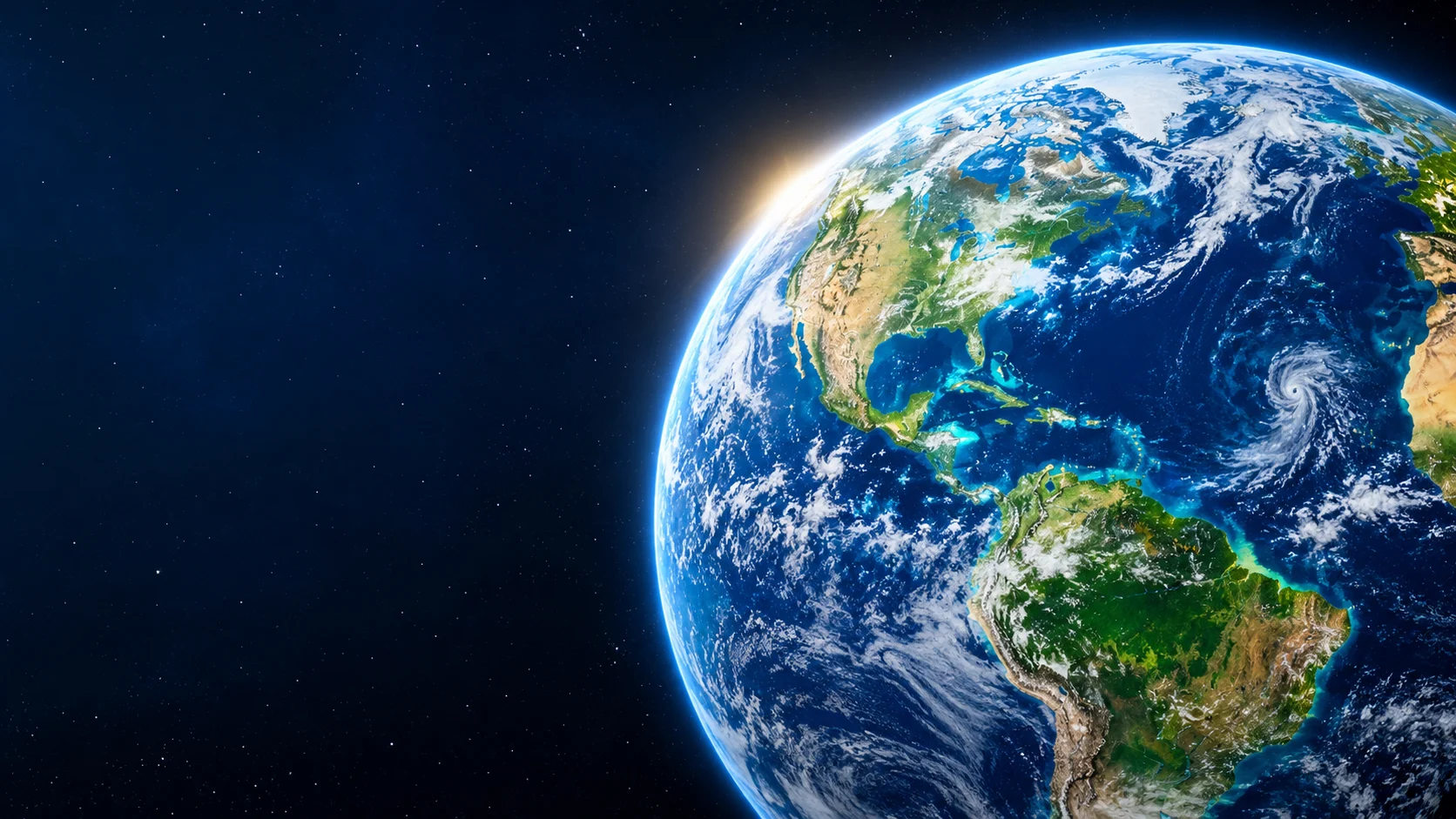
Imagine looking at Earth from space. Blue water stretches across the planet, surrounding continents, connecting countries, and providing a home for countless living things. This vast blue world is one of Earth’s most amazing features.
If you are learning the 5 oceans names, you have come to the right place. The five recognized oceans are the Pacific, Atlantic, Indian, Southern, and Arctic Oceans. Each has its own location, environment, and fascinating features.
Some oceans are warm and filled with tropical marine life. Others contain powerful currents, deep underwater trenches, floating sea ice, and animals adapted to freezing temperatures. Together, they influence weather, support food chains, and help regulate Earth’s climate.
Learning their names is also an important first step in understanding world geography. Once you know where each ocean lies, it becomes easier to read a world map, understand the positions of continents, and explore how water connects distant places.
In this guide, you will discover all five ocean names, their locations, important facts, and simple ways to remember them. You are preparing for a school test, helping a child with homework, or simply curious about our planet, this guide makes ocean geography easy to understand.
The 5 Oceans Names at a Glance
There are five commonly recognized oceans. They are different regions of one connected global ocean, rather than five completely separate bodies of water. <Cite refs={[“turn838241search0″,”turn838241search6”]}/>
- Pacific Ocean — The largest ocean, between Asia and Australia and the Americas.
- Atlantic Ocean — Between the Americas and Europe and Africa.
- Indian Ocean — Between Africa, Asia, Australia, and the Southern Ocean.
- Southern Ocean — The ocean surrounding Antarctica.
- Arctic Ocean — The smallest ocean, around the Arctic region near the North Pole.
The names are often listed in order of size, from largest to smallest. The exact measurements of ocean areas can vary between sources because researchers may use different boundary definitions.
1. Pacific Ocean | The Largest Ocean on Earth
Meaning and name origin: The name Pacific comes from the Latin word pacificus, meaning peaceful. Explorer Ferdinand Magellan used the name after encountering relatively calm waters during part of his voyage in 1520. <Cite refs={[“turn838241search18”]}/>
Location: The Pacific Ocean lies between Asia and Australia to the west and North and South America to the east. It extends from the Arctic region in the north toward the Southern Ocean in the south.
Size and depth: The Pacific is the world’s largest and deepest ocean basin. It covers more area than any other ocean and contains the Mariana Trench, including Challenger Deep, the deepest known part of the ocean. <Cite refs={[“turn838241search18”]}/>
Climate and marine life: Its waters range from warm tropical seas to cold polar regions. Coral reefs, tuna, sea turtles, whales, sharks, and countless other marine organisms live in the Pacific.
Why it matters: The Pacific influences global weather patterns, supports major fisheries, and connects many island nations and coastal communities.
Quick fact: The Pacific is so large that it spans a huge range of climates and time zones.
Best way to remember it: Think of the Pacific as the giant blue ocean between Asia and the Americas.
2. Atlantic Ocean | The Ocean Between Continents
Meaning and name origin: The name Atlantic comes from the ancient Greek name Atlantikos, associated with Atlas in Greek mythology.
Location: The Atlantic Ocean separates North and South America from Europe and Africa. It connects with the Arctic Ocean in the north and the Southern Ocean in the south.
Size and depth: The Atlantic is generally recognized as the world’s second-largest ocean. Its underwater landscape includes broad plains, deep trenches, and the Mid-Atlantic Ridge, an enormous underwater mountain system.
Climate and marine life: The Atlantic includes warm tropical waters, temperate regions, and colder waters near the poles. Dolphins, whales, sea turtles, seals, and many fish species inhabit its waters.
Why it matters: The Atlantic has played a major role in trade, travel, migration, and cultural connections between continents. Its currents also help move heat around the planet.
Quick fact: The Mid-Atlantic Ridge runs through much of the ocean and forms part of a global network of underwater mountain ridges.
Best way to remember it: Picture the Atlantic between the Americas on one side and Europe and Africa on the other.
3. Indian Ocean | The Warm Ocean of the Tropics
Meaning and name origin: The Indian Ocean takes its name from the region of India, which lies along its northern side. Its surrounding countries have long histories of seafaring and ocean trade.
Location: The Indian Ocean lies between Africa to the west, Asia to the north, and Australia to the east. It extends south toward the Southern Ocean.
Size and depth: It is the third-largest of the five oceans. Its underwater features include the Java, also called Sunda, Trench, as well as large underwater plateaus and ridges. <Cite refs={[“turn838241search16″,”turn838241search2”]}/>
Climate and marine life: Much of the Indian Ocean is tropical or subtropical. Its waters support coral reefs, sea turtles, dolphins, whales, and diverse fish populations.
Why it matters: The Indian Ocean is an important route for international shipping and trade. Seasonal monsoon winds have also shaped fishing, travel, and coastal life around the region for centuries.
Quick fact: Seasonal wind changes strongly influence currents and weather in parts of the northern Indian Ocean.
Best way to remember it: Look south of India on a world map to find this ocean between Africa and Australia.
4. Southern Ocean | The Icy Waters Around Antarctica
Meaning and name origin: The word southern describes its position around the southernmost continent, Antarctica. It is also sometimes called the Antarctic Ocean.
Location: The Southern Ocean surrounds Antarctica. Many modern geographic references use approximately 60 degrees south latitude as its northern boundary, although boundary conventions can vary. <Cite refs={[“turn838241search0″,”turn838241search1”]}/>
Size and depth: The Southern Ocean is generally listed as the fourth-largest ocean. Its waters are shaped by strong winds, cold temperatures, and the Antarctic Circumpolar Current, which flows around Antarctica.
Climate and marine life: The region is cold, but it supports remarkable wildlife. Krill are a key part of its food web, providing food for whales, seals, penguins, and other animals.
Why it matters: The Southern Ocean plays an important role in Earth’s climate system. It exchanges heat and carbon with the atmosphere and connects waters from the Atlantic, Indian, and Pacific Oceans.
Quick fact: The Southern Ocean is distinguished by the circulation of water around Antarctica rather than by a coastline enclosing it.
Best way to remember it: Find Antarctica at the bottom of a conventional world map; the waters around it are the Southern Ocean.
5. Arctic Ocean | The Smallest Ocean in the World
Meaning and name origin: The name Arctic comes from the Greek word arktikos, associated with the northern region and the constellation of the Bear.
Location: The Arctic Ocean lies around the North Pole. It is bordered by northern parts of North America, Greenland, Europe, and Asia.
Size and depth: The Arctic is the smallest of the five recognized oceans. Much of it is relatively shallow compared with the Pacific, although it contains deep basins and underwater ridges.
Climate and marine life: The Arctic has extremely cold conditions, seasonal sea ice, and long periods of daylight or darkness depending on the time of year. Its wildlife includes polar bears, walruses, seals, whales, and fish adapted to cold water.
Why it matters: Arctic sea ice, ocean circulation, and changing temperatures influence the wider climate system. The region is also important to Indigenous communities and northern ecosystems.
Quick fact: Sea ice in the Arctic grows and shrinks with the seasons, and its extent has been changing as the climate warms.
Best way to remember it: Look at the top of a world map around the North Pole to locate the Arctic Ocean.
Quick Comparison Table of the Five Oceans
| Ocean Name | Relative Size | Location | Key Feature |
|---|---|---|---|
| Pacific Ocean | 1st largest | Between Asia, Australia, and the Americas | Contains the deepest known ocean point |
| Atlantic Ocean | 2nd | Between the Americas and Europe and Africa | Mid-Atlantic Ridge |
| Indian Ocean | 3rd | Between Africa, Asia, and Australia | Strong monsoon influence in the north |
| Southern Ocean | 4th | Around Antarctica | Antarctic Circumpolar Current |
| Arctic Ocean | 5th smallest | Around the North Pole | Extensive seasonal sea ice |
These rankings reflect the commonly used five-ocean model. Measurements and boundaries may differ slightly across maps and reference sources. <Cite refs={[“turn838241search2″,”turn838241search9”]}/>
Why Does Earth Have Five Oceans?
Earth’s ocean is one connected body of salt water. Geographers divide it into five named regions to make it easier to describe locations, study ocean systems, and teach world geography.
The boundaries are based on geography, circulation, climate, and established naming conventions. Water can move between these regions through currents, so the oceans should not be understood as completely isolated bodies.
The Southern Ocean is a useful example of how geographic classification can change. It has been recognized separately by many geographic authorities, including National Geographic, while the details of its boundary have not been universally agreed upon by every international body. <Cite refs={[“turn838241search0″,”turn838241search6”]}/>
Knowing the five names helps us talk clearly about the planet’s major ocean regions while remembering that they form a single global system.
How to Remember the 5 Oceans Names Easily
Remembering five names becomes much easier when you connect each ocean to its location on a world map.
Use this simple memory trick:
P – A – I – S – A
- P — Pacific
- A — Atlantic
- I — Indian
- S — Southern
- A — Arctic
You can also remember them from largest to smallest: Pacific, Atlantic, Indian, Southern, Arctic.
Try this quick learning activity:
- Find a world map.
- Locate the Pacific Ocean between Asia and the Americas.
- Find the Atlantic Ocean between the Americas and Europe and Africa.
- Look below India for the Indian Ocean.
- Find Antarctica at the bottom for the Southern Ocean.
- Locate the Arctic Ocean around the North Pole.
Repeat the names while pointing to each location. This simple method helps children and adults connect ocean names with geography instead of memorizing a list without context.
Seven Continents and Five Oceans: What Is the Difference?
Continents and oceans are two major features of Earth’s geography, but they describe different things.
Continents are large landmasses. In the commonly taught seven-continent model, they are Asia, Africa, North America, South America, Antarctica, Europe, and Australia.
Oceans are vast regions of salt water. The five recognized oceans are the Pacific, Atlantic, Indian, Southern, and Arctic.
Here is a simple comparison:
| Feature | Continents | Oceans |
|---|---|---|
| What they are | Large landmasses | Large regions of salt water |
| Number commonly taught | 7 | 5 |
| Examples | Asia, Africa | Pacific, Indian |
| What you find there | Cities, mountains, forests | Currents, reefs, marine animals |
| Main role | Provide land habitats | Support marine life and influence climate |
Earth’s surface is covered by approximately 71% water, with the global ocean holding about 97% of Earth’s water. This makes oceans essential to the planet’s climate and living systems. <Cite refs={[“turn838241search2″,”turn838241search6”]}/>
Amazing Facts About the World’s Five Oceans
The five oceans are full of surprising features. These facts can help you remember what makes each one special.
- The Pacific is the largest. Its enormous basin contains the Mariana Trench and Challenger Deep, the deepest known point in the ocean.
- The Atlantic separates major continental regions. It has helped shape global trade, travel, and cultural connections.
- The Indian Ocean is strongly influenced by monsoons. Seasonal winds affect weather, currents, and navigation in its northern waters.
- The Southern Ocean surrounds Antarctica. Its powerful circumpolar current links the waters of the world’s major ocean regions.
- The Arctic Ocean is the smallest. Its seasonal sea ice provides habitat for many animals and influences the polar climate.
- All five oceans are connected. Ocean currents move heat, nutrients, and water around the planet.
- Oceans help shape weather. They absorb and release heat, provide moisture for rainfall, and influence storms and climate patterns. <Cite refs={[“turn838241search17″,”turn838241search18″,”turn838241search2”]}/>
These facts show that oceans are not just large bodies of water. They are active parts of Earth’s natural systems.
Why Are Oceans Important to Life on Earth?
Oceans do much more than fill the spaces between continents. They support ecosystems, help regulate temperatures, and provide resources that people depend on.
They influence climate. Ocean water absorbs heat from the Sun and redistributes it through currents. This affects temperatures and weather in coastal regions and far inland.
They support marine life. Coral reefs, deep-sea habitats, open waters, and polar environments provide homes for a wide range of species.
They support food supplies. Fish and other marine foods are important sources of nutrition for many communities around the world.
They connect countries. Ships carry goods across oceans, linking ports, industries, and markets on different continents.
They contribute to the water cycle. Water evaporates from the ocean, enters the atmosphere, forms clouds, and eventually returns as rain or snow.
They help scientists understand the planet. Studying ocean temperatures, currents, sea ice, and marine ecosystems helps researchers understand climate change and environmental health.
Protecting oceans from plastic pollution, overfishing, habitat destruction, and excessive greenhouse gas emissions is therefore important for wildlife and human communities alike. <Cite refs={[“turn838241search5″,”turn838241search11”]}/>
Ocean Names for Kids: A Simple Learning Activity
Teaching ocean names can be fun when children use pictures, maps, and short questions instead of memorizing facts alone.
Try these activities at home or in the classroom.
Activity 1: Label a world map. Give children a blank map and ask them to write the five ocean names in the correct places.
Activity 2: Match each ocean to a clue.
- Pacific — largest ocean.
- Atlantic — between the Americas and Europe and Africa.
- Indian — named after India.
- Southern — surrounds Antarctica.
- Arctic — surrounds the North Pole region.
Activity 3: Draw an ocean animal. Ask children to choose a whale, penguin, sea turtle, polar bear, or dolphin and learn about its habitat. Explain that some animals live in several ocean regions, while others depend on specific environments.
Activity 4: Take a five-question quiz. Read the questions below and let learners answer without looking at the list.
- Which ocean is the largest?
- Which ocean surrounds Antarctica?
- Which ocean is the smallest?
- Which ocean lies between Africa and Australia?
- Which ocean is found around the North Pole?
Answers: Pacific, Southern, Arctic, Indian, and Arctic, respectively.
FAQs
Q1. What are the five oceans called?
The five oceans are the Pacific, Atlantic, Indian, Southern, and Arctic Oceans. They are connected parts of Earth’s global ocean.
Q2. Which is the largest ocean?
The Pacific Ocean is the largest and deepest ocean basin on Earth. It stretches between Asia, Australia, and the Americas.
Q3. Which is the smallest ocean?
The Arctic Ocean is the smallest of the five recognized oceans. It lies around the North Pole and has extensive seasonal sea ice.
Q4. Which ocean surrounds Antarctica?
The Southern Ocean surrounds Antarctica. Its strong circumpolar current flows around the continent and helps connect the world’s major ocean systems.
Q5. Why are there five oceans instead of one?
The ocean is one connected body of water, but geographers divide it into five major regions. This makes it easier to describe locations, currents, and ocean environments.
Q6. Is the Southern Ocean the same as the Antarctic Ocean?
Yes, Southern Ocean and Antarctic Ocean are alternative names for the ocean surrounding Antarctica. Southern Ocean is the more widely used name in many modern geographic references.
Q7. Which ocean lies between Africa and Australia?
The Indian Ocean lies between Africa and Australia, with Asia along its northern side. It is the third-largest of the five oceans.
Q8. How can children memorize the ocean names?
Children can remember Pacific, Atlantic, Indian, Southern, and Arctic by repeating the names and locating each on a map. Matching each ocean to a simple fact also helps.
Conclusion
Learning the 5 oceans names is a simple but important step toward understanding our planet. The Pacific, Atlantic, Indian, Southern, and Arctic Oceans each have unique locations, environments, and natural features, yet all belong to one connected global ocean.
From the vast Pacific to the icy Arctic, these waters influence weather, support marine life, connect countries, and help maintain Earth’s natural balance. Knowing their locations also makes it easier to understand continents, read maps, and explore geography with confidence.
You are a student preparing for a test, a parent helping with homework, or a curious learner, use the comparison table and memory tricks in this guide to practice the names.
Which ocean interests you most? Share this article with a student, teacher, or geography enthusiast, and leave a comment with your favorite ocean fact.
Discover More Related Articles:
- 345 Sesame Street Characters Names | A Colorful Journey Through Childhood Favorites In 2026
- 345 Sanderson Sisters Names | Meet the Three Bewitching Witches of Hocus Pocus In 2026
- 378 Hocus Pocus Witches Names | For Magical Souls In 2026