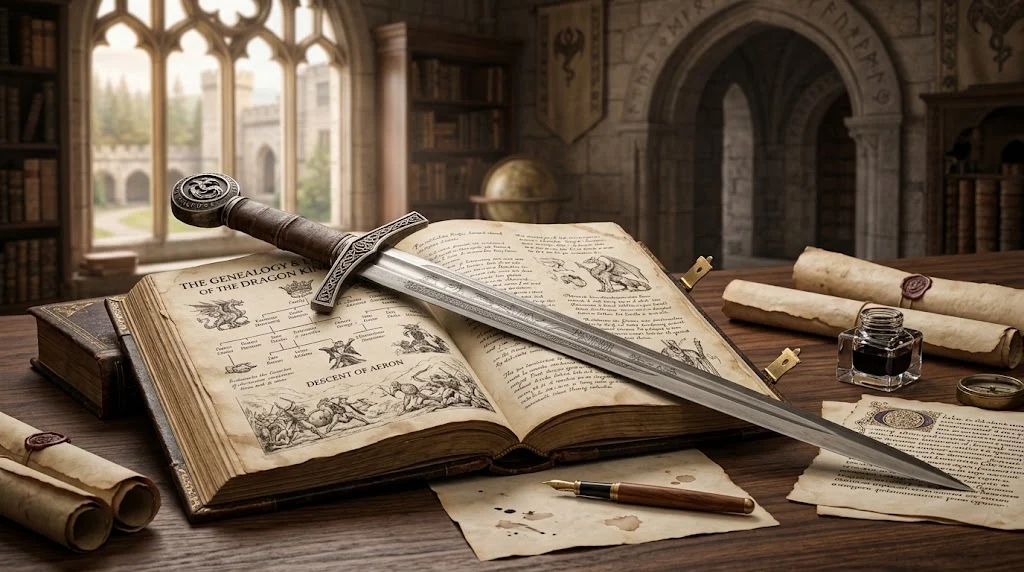
Sword names are memorable names given to legendary, historical, mythological, or fictional blades. Popular examples include Excalibur, Gram, Durandal, Joyeuse, Narsil, and Kusanagi-no-Tsurugi.
A sword can be more than a weapon. In legends, it can represent courage, honor, destiny, power, revenge, or even the fate of an entire kingdom. That is why choosing the right sword names matters when you are creating a fantasy character, writing a novel, naming a game weapon, or building your own fictional world.
Some blades are remembered because of the heroes who carried them. Others became famous because of ancient myths, epic poems, folklore, or modern fantasy. A strong name can make a fictional sword feel as though it has a history of its own.
From elegant and heroic choices to dark and mysterious ones, there are countless directions to explore. In this guide, we look at ten famous or legendary sword names, their origins, meanings, personalities, and the kinds of characters they suit best.
If you are searching for a blade name that feels powerful but still has personality, these ideas can give you a strong starting point.
Excalibur | One of the Most Legendary Sword Names
Meaning
Excalibur is the legendary sword associated with King Arthur.
Origin
The name comes from Arthurian legend. Its exact linguistic history is complex, with connections to medieval forms of the name found in Arthurian literature.
Personality
Excalibur feels regal, noble, powerful, and destined for greatness. It works particularly well for a sword carried by a king, chosen hero, or protector.
Style
Royal, legendary, heroic, classic
Best For
- Fantasy kings
- Chosen heroes
- Noble warriors
- RPG characters
- Legendary weapons
Popularity
Excalibur is one of the best-known sword names in Western legend. Its connection with King Arthur has helped it remain recognizable for centuries.
Emotional Appeal
The name carries a sense of destiny. It does not sound like an ordinary weapon. It suggests that the sword and its owner have a special purpose.
Pop Culture Reference
Excalibur has appeared in countless books, films, television shows, games, and adaptations of Arthurian stories.
Similar Names
- Caliburn
- Avalon
- Arthur’s Blade
- Pendragon
- Galatine
Why It Still Works Today
Excalibur has a timeless heroic quality. Even readers who know little about Arthurian legend often recognize the name immediately, making it a strong choice for a legendary fictional weapon.
Gram | A Powerful Sword Name from Norse Legend
Meaning
Gram is the name of the famous sword associated with the hero Sigurd in Norse mythology.
Origin
Gram appears in the Völsunga saga and related Germanic heroic traditions.
Personality
Gram feels fierce, ancient, and battle-ready. It suits a warrior who faces monsters, impossible challenges, and dangerous enemies.
Style
Ancient, bold, heroic, mythological
Best For
- Viking-inspired characters
- Monster hunters
- Norse fantasy
- Brave warriors
- Epic adventure stories
Popularity
Gram is less familiar to general audiences than Excalibur, which gives it a more distinctive quality while retaining genuine mythological roots.
Emotional Appeal
The name is short and forceful. It feels like something that could have been carried by a warrior whose story became legend.
Pop Culture Reference
Gram has influenced many modern adaptations of Norse and Germanic mythology.
Similar Names
- Balmung
- Nothung
- Sigurd’s Sword
- Tyrfing
- Hrunting
Why It Still Works Today
Short names often make memorable fictional weapons. Gram is easy to pronounce, visually strong, and connected to one of the great heroic traditions of Northern Europe.
Durandal | A Classic Sword Name of French Legend
Meaning
Durandal is the legendary sword of Roland.
Origin
Durandal appears in medieval French epic tradition, especially The Song of Roland.
Personality
Durandal feels noble, powerful, loyal, and almost indestructible. It is a fitting name for a weapon carried by a heroic knight.
Style
Medieval, noble, classic, heroic
Best For
- Knights
- Paladins
- Medieval fantasy characters
- Noble warriors
- Historical-inspired fiction
Popularity
Durandal has remained an important name in European legendary traditions and continues to appear in fantasy media and games.
Emotional Appeal
The name has a refined medieval sound. It feels old enough to belong to an epic tale but distinctive enough for modern fantasy.
Pop Culture Reference
Durandal has been referenced and adapted in various games, novels, anime, and fantasy settings.
Similar Names
- Joyeuse
- Hauteclere
- Clarent
- Roland’s Blade
- Galatine
Why It Still Works Today
Durandal has a strong balance between elegance and strength. It is particularly useful when you want a sword name that sounds historically inspired rather than invented at random.
Joyeuse | An Elegant Sword Name with Royal Roots
Meaning
Joyeuse is traditionally associated with the sword of Charlemagne.
Origin
The name comes from French tradition and means approximately “joyful” or “joyous.”
Personality
Joyeuse feels elegant and royal rather than dark or aggressive. It could belong to a ruler whose strength comes from wisdom and leadership.
Style
Elegant, royal, classic, refined
Best For
- Kings
- Queens
- Royal warriors
- Noble characters
- High-fantasy settings
Popularity
Joyeuse is a famous legendary sword name but is less commonly used than Excalibur. That gives it a distinctive feel.
Emotional Appeal
Its meaning creates an interesting contrast. A powerful weapon with a name associated with joy can suggest hope, peace, or a kingdom worth protecting.
Pop Culture Reference
Joyeuse appears in stories and fictional works inspired by Charlemagne and medieval legend.
Similar Names
- Durandal
- Excalibur
- Avalon
- Clarent
- Galatine
Why It Still Works Today
Joyeuse is a great choice if you want a sword name that feels sophisticated rather than brutal. It can also add emotional depth to a fantasy character.
Kusanagi-no-Tsurugi | A Mythical Japanese Sword Name
Meaning
The name is commonly translated as “Grass-Cutting Sword.”
Origin
Kusanagi-no-Tsurugi is a legendary sword from Japanese mythology and is traditionally associated with the Imperial Regalia of Japan.
Personality
This name feels ancient, mysterious, ceremonial, and powerful.
Style
Mythical, Japanese, ancient, sacred
Best For
- Mythological characters
- Japanese-inspired fantasy
- Divine warriors
- Historical fantasy
- Legendary artifacts
Popularity
Kusanagi-no-Tsurugi is widely recognized among people interested in Japanese mythology and has also influenced modern popular culture.
Emotional Appeal
Unlike a simple battle name, it feels like the name of an artifact with a deep cultural and mythological history.
Pop Culture Reference
The Kusanagi name has been used in various anime, manga, games, and other fictional works, although those uses do not always represent the original mythology.
Similar Names
- Kusanagi
- Ame-no-Murakumo
- Totsuka-no-Tsurugi
- Muramasa
- Masamune
Why It Still Works Today
It provides a strong choice for creators who want a sword name inspired by Japanese mythology rather than generic fantasy naming.
Narsil | A Famous Fantasy Sword Name
Meaning
Narsil is a fictional sword created by J. R. R. Tolkien.
Origin
Narsil belongs to Tolkien’s legendarium and was associated with Elendil. After it was broken, its shards remained important to the story.
Personality
Narsil feels ancient, noble, tragic, and heroic.
Style
Epic, classic, mysterious, heroic
Best For
- High-fantasy heroes
- Ancient weapons
- Royal characters
- Legendary artifacts
- Fantasy novels
Popularity
Narsil became particularly recognizable through Tolkien’s works and later screen adaptations of Middle-earth.
Emotional Appeal
Its story is about more than strength. The broken sword represents loss, history, inheritance, and the possibility of restoration.
Pop Culture Reference
Narsil is central to the mythology surrounding Aragorn and the history of Gondor and Númenor in Tolkien’s world.
Similar Names
- Andúril
- Glamdring
- Sting
- Orcrist
- Anglachel
Why It Still Works Today
Narsil demonstrates how a sword name can become part of a character’s emotional journey. It feels meaningful because the weapon has a history, not simply because it sounds powerful.
Tizona | A Legendary Sword Name from Spanish Tradition
Meaning
Tizona is traditionally identified as one of the swords associated with El Cid.
Origin
The sword appears in Spanish medieval tradition surrounding Rodrigo Díaz de Vivar, known as El Cid.
Personality
Tizona feels proud, martial, historic, and commanding.
Style
Medieval, warrior-like, traditional, powerful
Best For
- Medieval warriors
- Historical fantasy
- Spanish-inspired characters
- Knights
- Epic adventures
Popularity
Tizona remains associated with the legendary image of El Cid and the medieval Spanish heroic tradition.
Emotional Appeal
The name carries the weight of an established warrior legend. It works well when a fictional sword needs to feel connected to a famous champion.
Pop Culture Reference
Tizona has appeared in adaptations and fictional works inspired by El Cid.
Similar Names
- Colada
- Durandal
- Joyeuse
- Colada
- Rebellion
Why It Still Works Today
Tizona is useful for writers who want something with a European medieval atmosphere without choosing the most familiar Arthurian name.
Hrunting | A Sword Name from Beowulf
Meaning
Hrunting is the name of a sword given to Beowulf in the Old English epic Beowulf.
Origin
The name comes from Old English literary tradition.
Personality
Hrunting feels ancient, serious, warrior-like, and battle-tested.
Style
Ancient, epic, medieval, heroic
Best For
- Anglo-Saxon-inspired fantasy
- Monster hunters
- Medieval warriors
- Epic poems
- Dark fantasy
Popularity
Hrunting is well known among readers familiar with Beowulf, although it is less common in mainstream naming.
Emotional Appeal
The name instantly suggests an old heroic world filled with warriors, monsters, loyalty, and danger.
Pop Culture Reference
Hrunting remains primarily associated with Beowulf and its many literary, cinematic, and educational adaptations.
Similar Names
- Naegling
- Gram
- Hrunting
- Nægling
- Balmung
Why It Still Works Today
Hrunting is an excellent choice when you want an authentic literary reference that feels much less predictable than a name like Excalibur.
Glamdring | A Legendary Fantasy Sword Name
Meaning
Glamdring is a fictional sword created by J. R. R. Tolkien.
Origin
It belongs to Tolkien’s Middle-earth and was forged by the Elves of Gondolin.
Personality
Glamdring feels ancient, majestic, mysterious, and battle-hardened.
Style
Fantasy, ancient, elven, legendary
Best For
- Fantasy heroes
- Elven worlds
- Wizards
- Adventure games
- High-fantasy stories
Popularity
Glamdring is a well-known fictional sword among Tolkien fans.
Emotional Appeal
Its unusual sound makes it instantly feel like something from another world. It has a distinctive fantasy identity without needing a complicated description.
Pop Culture Reference
Glamdring is associated with Gandalf in Tolkien’s works and their screen adaptations.
Similar Names
- Orcrist
- Sting
- Narsil
- Andúril
- Anglachel
Why It Still Works Today
Glamdring shows how an invented word can become memorable when it is supported by strong world-building and history.
Tizona | A Strong Choice for Historical Fantasy
Meaning
Tizona is traditionally associated with the legendary sword of El Cid.
Origin
It comes from medieval Spanish heroic tradition.
Personality
Tizona suggests courage, military strength, loyalty, and reputation.
Style
Historic, bold, medieval, warrior
Best For
- Knights
- Historical fantasy
- Warrior characters
- Epic storytelling
- Medieval campaigns
Popularity
It is recognizable among readers familiar with Spanish medieval history and legend but remains relatively distinctive for modern fictional naming.
Emotional Appeal
Tizona feels like a weapon that has traveled through battles and generations. That makes it useful when your fictional sword needs an established legacy.
Similar Names
- Colada
- Durandal
- Joyeuse
- Gram
- Narsil
Why It Still Works Today
A historically inspired sword name can give a fantasy world a more grounded atmosphere. Tizona is especially useful for stories influenced by medieval Europe.
Masamune | A Sword Name Inspired by Japanese Sword Tradition
Meaning
Masamune is primarily a famous Japanese surname and the name associated with the renowned swordsmith Goro Nyudo Masamune.
Origin
Masamune refers to a celebrated Japanese swordsmith traditionally dated to the Kamakura period.
Personality
The name feels refined, disciplined, artistic, and powerful.
Style
Japanese-inspired, elegant, traditional, refined
Best For
- Samurai-inspired characters
- Historical fantasy
- Video games
- Japanese-inspired worlds
- Master swordsmen
Popularity
Masamune is highly recognizable in gaming and popular culture, where it is often used for powerful sword characters or weapons.
Emotional Appeal
Unlike a name built only around destruction, Masamune can suggest craftsmanship and mastery.
Pop Culture Reference
The name appears frequently in games, anime, manga, and fantasy fiction, though fictional uses vary widely from the historical swordsmith.
Similar Names
- Muramasa
- Kusanagi
- Tsurumaru
- Ame-no-Murakumo
- Murakumo
Why It Still Works Today
Masamune works particularly well when the weapon’s craftsmanship matters as much as its combat ability.
Quick Comparison Table
| Sword Name | Meaning / Association | Style | Best For |
|---|---|---|---|
| Excalibur | Arthurian legendary sword | Royal | Chosen heroes |
| Gram | Sword of Sigurd | Norse | Warriors |
| Durandal | Sword of Roland | Medieval | Knights |
| Joyeuse | Charlemagne’s legendary sword | Elegant | Royal characters |
| Kusanagi-no-Tsurugi | Grass-Cutting Sword | Mythical | Divine heroes |
| Narsil | Tolkien’s legendary blade | Epic | Fantasy heroes |
| Tizona | Sword associated with El Cid | Historic | Warriors |
| Hrunting | Sword in Beowulf | Ancient | Monster hunters |
| Glamdring | Tolkien’s fictional blade | Fantasy | Wizards and heroes |
| Masamune | Associated with Japanese swordsmithing | Refined | Samurai-inspired characters |
How to Choose the Perfect Sword Name
The best sword name should match the identity of the weapon and the character who carries it.
Start with the character. A noble king may need a different name from a mysterious assassin. Think about personality before choosing the blade.
Consider the setting. A Norse-inspired world may suit names influenced by Old Norse tradition, while a medieval European setting may work better with Arthurian or French legendary names.
Think about the sword’s history. Is it newly forged, inherited from a royal family, discovered in an ancient tomb, or created by a legendary blacksmith?
Choose the sound carefully. Short names such as Gram feel sharp and direct. Longer names such as Kusanagi-no-Tsurugi can create a more ceremonial feeling.
Give the sword a reason to be remembered. The strongest fictional weapons often have a story attached to them. A name becomes more powerful when readers understand why the blade matters.
Most Popular Sword Names Today
Some names continue to stand out because of their strong connections to mythology, literature, and popular culture.
- Excalibur
- Narsil
- Andúril
- Gram
- Durandal
- Joyeuse
- Kusanagi
- Glamdring
- Masamune
- Muramasa
These names cover different traditions, from European legend and Norse mythology to Japanese history and modern fantasy.
Vintage Sword Names Making a Comeback
Older legendary names can feel fresh when used in modern fantasy.
Consider:
- Gram
- Durandal
- Joyeuse
- Hrunting
- Tizona
- Balmung
- Clarent
- Galatine
- Naegling
- Hauteclere
Vintage sword names are especially effective for historical fantasy because they immediately create an older, more legendary atmosphere.
Modern Sword Naming Trends
Modern fantasy creators often combine traditional mythology with original world-building.
One popular approach is to create a name based on meaning. A sword representing fire might have a name related to flame, while a blade associated with winter could use imagery connected to frost, snow, or darkness.
Another approach is contrast. A gentle-sounding name for a terrifying weapon can create mystery.
Creators also use short names because they are easy for readers and players to remember. Names such as Ash, Dawn, Vow, Thorn, Storm, Eclipse, Ember, Frost, and Ruin can work well as original fictional concepts.
The most effective modern names usually feel connected to the weapon’s story rather than being powerful words chosen at random.
FAQs
What are good sword names?
Good sword names include Excalibur, Gram, Durandal, Narsil, and Kusanagi.
For original ideas, choose a name that reflects the sword’s power, history, or purpose.
What is the most famous sword name?
Excalibur is one of the most famous sword names in Western legend.
It is traditionally associated with King Arthur and represents power, royalty, and destiny.
What are powerful sword names?
Gram, Excalibur, Durandal, Narsil, and Tizona have strong legendary associations.
They work especially well for warriors, heroes, kings, and fantasy characters.
What are unique sword names?
Hrunting, Joyeuse, Tizona, Glamdring, and Kusanagi-no-Tsurugi offer distinctive choices.
You can also create an original name based on mythology, nature, or the sword’s abilities.
What are good fantasy sword names?
Narsil, Glamdring, Excalibur, and Gram are memorable fantasy-inspired choices.
For an original weapon, combine a strong image with a meaningful story or origin.
What are ancient sword names?
Gram, Hrunting, Kusanagi-no-Tsurugi, and Durandal have connections to older traditions or legendary literature.
Their names can give fantasy stories an ancient and historical atmosphere.
How do I choose a good sword name?
Think about the sword’s owner, origin, appearance, powers, and role in the story.
A memorable name should match the weapon’s personality and feel natural in its setting.
Can I create my own sword name?
Yes, creating an original sword name can make your fictional weapon more distinctive.
Try combining meaningful words related to fire, darkness, honor, storms, magic, or destiny.
Conclusion
The best sword names do more than make a weapon sound powerful. They give the blade an identity, history, and emotional purpose. A name such as Excalibur suggests kingship and destiny, while Gram evokes Norse heroism and Narsil carries the weight of an epic fantasy legacy.
When creating your own sword, think about the story behind it. Ask who forged it, who carried it, what it represents, and why people remember it. Those details can turn a simple weapon into a legendary part of your world.
Choose a name that feels right for your character and setting, then build a story around it. If you found a favorite, share this guide with another fantasy fan or leave a comment with the sword name you would choose.
Discover More Related Articles:
- 129 Werewolf Names | Dark, Mystical & Powerful Ideas for Your Wolf Character in 2026
- 100 Monk Names | Ancient, Peaceful, Wise & Meaningful Names In 2026
- 500 Half Elf Names | For Fantasy Characters, D&D & Magical Stories In 2026