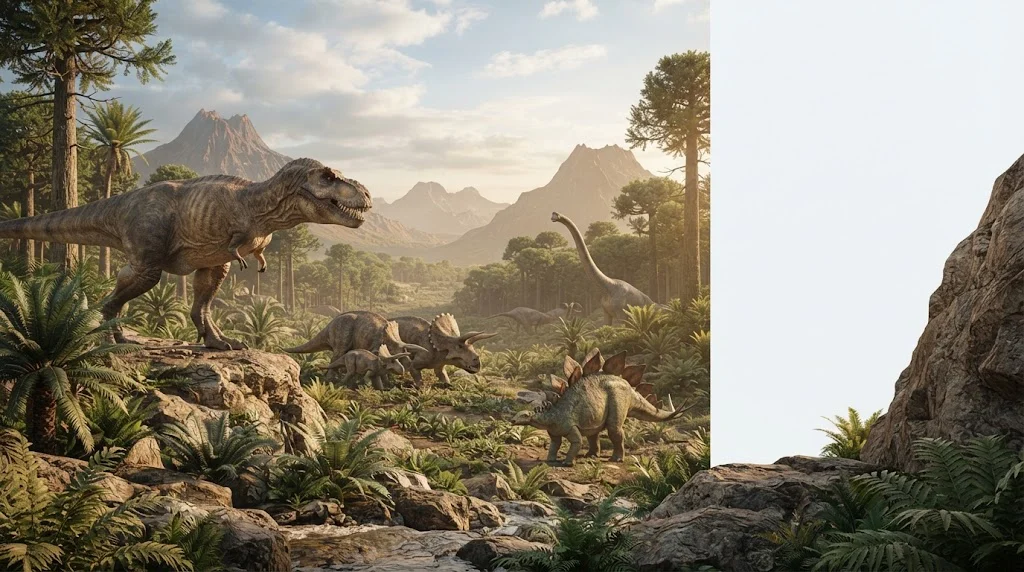
Dinosaur names with pictures help readers identify prehistoric animals by appearance, name, diet, and distinctive features. Famous examples include Tyrannosaurus rex, Triceratops, Stegosaurus, Velociraptor, Spinosaurus, and Diplodocus.
Dinosaurs have a special way of turning curiosity into wonder. A child sees a picture of a dinosaur and immediately wants to know its name. Was it a fierce hunter? Did it eat plants? How big was it? And why did it have horns, plates, spikes, or such a long neck?
That is why dinosaur names with pictures are so useful. A visual guide makes unfamiliar names easier to remember and helps readers connect a dinosaur’s name with its shape and features.
Dinosaur names can also tell us something about the animals themselves. Many scientific names were built from Greek or Latin words describing an animal’s appearance, behavior, location, or other characteristics. For example, Tyrannosaurus rex means “tyrant lizard king,” while Triceratops combines roots meaning “three-horned face.”
From enormous long-necked giants to armored plant-eaters and powerful predators, this guide explores some of the most recognizable dinosaurs and explains what makes each one memorable.
Tyrannosaurus Rex
Meaning
Tyrannosaurus rex means “tyrant lizard king.”
Origin
The name comes from Greek and Latin roots. “Tyranno” relates to tyrant, “saurus” means lizard, and “rex” means king.
Personality
If dinosaurs had personalities, T. rex would be the bold, powerful, confident character. Its enormous jaws, strong legs, and famous teeth have made it one of the most recognizable dinosaurs ever.
Style
Powerful, dramatic, classic, iconic, fierce
Best For
- Dinosaur books
- Kids’ learning projects
- Museum displays
- Prehistoric stories
- Dinosaur-themed parties
- Educational posters
Popularity
T. rex remains one of the best-known dinosaurs in popular culture. The American Museum of Natural History describes it as one of the largest carnivorous dinosaurs and notes its enormous jaw and teeth.
Emotional Appeal
T. rex feels larger than life. Its name is short, memorable, and instantly recognizable, making it a natural starting point for anyone learning dinosaur names.
Pop Culture Reference
T. rex has appeared in countless dinosaur films, books, toys, museum exhibits, and educational programs.
Similar Dinosaurs
- Allosaurus
- Spinosaurus
- Giganotosaurus
- Carnotaurus
- Tyrannotitan
Why It Still Works Today
Few prehistoric names are as instantly memorable as Tyrannosaurus rex. Its combination of a dramatic name and striking appearance makes it ideal for dinosaur learning and visual guides.
Triceratops
Meaning
Triceratops means “three-horned face.”
Origin
The name comes from Greek roots. “Tri” means three, “cerat” refers to horn, and “ops” means face.
Personality
Triceratops gives the impression of a sturdy, determined defender. Its large skull, horns, and bony frill make it one of the easiest dinosaurs to recognize.
Style
Strong, classic, protective, bold, distinctive
Best For
- Children’s dinosaur books
- School projects
- Dinosaur flashcards
- Educational posters
- Prehistoric artwork
Popularity
Triceratops has remained one of the most familiar horned dinosaurs. The American Museum of Natural History notes that its skull could reach about 8 feet in length and that it had three prominent horns.
Emotional Appeal
The combination of horns and a huge frill gives Triceratops a powerful silhouette. Even young children can often recognize it from a single picture.
Pop Culture Reference
Triceratops regularly appears in dinosaur films, children’s books, toys, museum exhibits, and animated stories.
Similar Dinosaurs
- Styracosaurus
- Centrosaurus
- Protoceratops
- Pachyrhinosaurus
Why It Still Works Today
Triceratops is a perfect example of how a dinosaur name can describe a visible feature. Its meaning also makes the name easier for beginners to remember.
Stegosaurus
Meaning
Stegosaurus is commonly translated as “roofed lizard.”
Origin
The name comes from Greek roots associated with a roof or covering and lizard. The name reflects an early interpretation of its distinctive plates.
Personality
Stegosaurus feels calm and unusual rather than frightening. Its small head, large body, back plates, and spiked tail create a memorable appearance.
Style
Gentle, unusual, classic, armored, prehistoric
Best For
- Dinosaur coloring books
- Kids’ activities
- Museum learning
- Dinosaur illustrations
- Educational worksheets
Popularity
Stegosaurus is one of the classic dinosaurs that most people recognize immediately from its plates.
Emotional Appeal
Its unusual body shape makes it fun to draw, color, collect, and learn about. It also looks very different from the stereotypical giant meat-eating dinosaur.
Pop Culture Reference
Stegosaurus appears frequently in children’s media, toys, books, games, and museum exhibits.
Similar Dinosaurs
- Kentrosaurus
- Huayangosaurus
- Tuojiangosaurus
- Dacentrurus
Why It Still Works Today
The visual identity of Stegosaurus is incredibly strong. Even without reading the name, many people can identify it from its row of plates and tail spikes. Scientists are still discussing exactly how its plates were used.
Velociraptor
Meaning
Velociraptor can be understood as “swift robber” or “speedy thief.”
Origin
Its name combines Latin roots associated with speed and a robber or thief.
Personality
Velociraptor sounds quick, clever, and energetic. Its name has become especially famous because of popular dinosaur media.
Style
Fast, clever, adventurous, dramatic, energetic
Best For
- Dinosaur games
- Adventure stories
- Kids’ books
- Dinosaur posters
- Character inspiration
Popularity
Velociraptor is among the most recognizable theropod dinosaur names. Its scientific name is Velociraptor mongoliensis.
Emotional Appeal
The name itself feels exciting. “Veloci” suggests speed, while “raptor” sounds powerful and mysterious.
Pop Culture Reference
Velociraptors became especially famous through dinosaur movies and popular entertainment, although movie portrayals do not always accurately represent the real animal.
Similar Dinosaurs
- Deinonychus
- Dromaeosaurus
- Utahraptor
- Microraptor
Why It Still Works Today
Velociraptor combines an exciting name with a fascinating fossil history. It is an excellent dinosaur for readers who enjoy fast-moving predators and prehistoric adventure.
Spinosaurus
Meaning
Spinosaurus means “spine lizard.”
Origin
The name refers to the prominent spines associated with its back.
Personality
Spinosaurus feels mysterious and dramatic. Its unusual body shape and large back structure make it stand apart from many other famous dinosaurs.
Style
Dramatic, mysterious, powerful, unusual, adventurous
Best For
- Dinosaur posters
- Prehistoric artwork
- Children’s books
- Dinosaur comparisons
- Educational displays
Popularity
Spinosaurus has become a major favorite among dinosaur fans. The Natural History Museum lists it among the diverse dinosaurs that lived across prehistoric ecosystems.
Emotional Appeal
Its unusual appearance creates instant curiosity. It does not look exactly like the classic dinosaur image many people imagine.
Pop Culture Reference
Spinosaurus has appeared in dinosaur games, films, documentaries, toys, and educational media.
Similar Dinosaurs
- Baryonyx
- Suchomimus
- Irritator
- Carcharodontosaurus
Why It Still Works Today
Spinosaurus demonstrates how dinosaur discoveries continue to expand our picture of prehistoric life. Its name is simple enough to remember while its appearance is hard to forget.
Diplodocus
Meaning
Diplodocus is derived from Greek roots referring to a “double beam,” associated with features of its tail bones.
Origin
The name was inspired by anatomical features found in the fossilized vertebrae.
Personality
Diplodocus represents the gentle giant image of prehistoric life. Its long neck and exceptionally long tail give it an elegant appearance.
Style
Gentle, gigantic, graceful, classic, peaceful
Best For
- Dinosaur picture books
- Educational charts
- Museum displays
- Prehistoric landscapes
- Children’s learning materials
Popularity
Diplodocus is one of the familiar long-necked dinosaur names featured in museum collections and dinosaur guides.
Emotional Appeal
There is something fascinating about a dinosaur that looks enormous yet visually calm. Diplodocus makes prehistoric landscapes feel almost dreamlike.
Pop Culture Reference
It frequently appears in dinosaur books, museum models, illustrations, toys, and educational materials.
Similar Dinosaurs
- Apatosaurus
- Brachiosaurus
- Brontosaurus
- Camarasaurus
Why It Still Works Today
Long-necked dinosaurs remain popular because they show just how diverse dinosaur body shapes were. Diplodocus is especially memorable because of its remarkable proportions.
Ankylosaurus
Meaning
Ankylosaurus is associated with the idea of a fused or stiffened lizard.
Origin
Its name refers to its heavily built, armored body.
Personality
Ankylosaurus feels like the tank of the dinosaur world. Its armor and tail club give it a powerful defensive appearance.
Style
Armored, sturdy, defensive, tough, unique
Best For
- Dinosaur identification charts
- Kids’ science projects
- Dinosaur toys
- Educational illustrations
- Prehistoric adventure stories
Popularity
Ankylosaurus is widely recognized as an armored dinosaur and appears in museum collections and dinosaur reference materials. The Natural History Museum includes ankylosaurs among its dinosaur collections.
Emotional Appeal
Unlike a predator, Ankylosaurus looks built for protection. Its armor gives it a distinctive personality that children often find fascinating.
Pop Culture Reference
It appears regularly in dinosaur games, toys, animated programs, and prehistoric adventure stories.
Similar Dinosaurs
- Euoplocephalus
- Gastonia
- Polacanthus
- Scolosaurus
Why It Still Works Today
Ankylosaurus is easy to recognize because of its armored appearance. It is an excellent example of how dinosaur body design could serve different survival strategies.
Apatosaurus
Meaning
Apatosaurus is associated with the idea of a “deceptive lizard.”
Origin
The name comes from Greek roots. The word “apato” relates to deception, while “saurus” means lizard.
Personality
Apatosaurus has the classic image of a huge long-necked herbivore. It feels peaceful, enormous, and majestic.
Style
Gentle, giant, classic, graceful, peaceful
Best For
- Dinosaur learning
- Children’s books
- Museum projects
- Prehistoric landscape art
- Educational posters
Popularity
Apatosaurus is a well-known sauropod and appears in major museum dinosaur resources.
Emotional Appeal
Its enormous size creates a sense of wonder. It helps children imagine just how different Earth’s landscapes were millions of years ago.
Pop Culture Reference
Apatosaurus has appeared in books, documentaries, educational programs, museum displays, and dinosaur toys.
Similar Dinosaurs
- Diplodocus
- Brontosaurus
- Camarasaurus
- Brachiosaurus
Why It Still Works Today
Apatosaurus offers an easy introduction to sauropods. Its long neck and massive body make it visually impressive without needing a complicated explanation.
Parasaurolophus
Meaning
Parasaurolophus is commonly interpreted in relation to the idea of being “near” or “beside” Saurolophus.
Origin
Its name connects the dinosaur with another hadrosaur genus, reflecting similarities noticed by scientists.
Personality
Parasaurolophus feels artistic and unusual. Its long backward-pointing crest is its most memorable feature.
Style
Elegant, unusual, musical-looking, playful, distinctive
Best For
- Dinosaur art
- Children’s books
- School projects
- Dinosaur identification
- Creative prehistoric stories
Popularity
Its unusual crest has made Parasaurolophus a favorite in dinosaur illustrations and popular educational media.
Emotional Appeal
The crest makes it look almost like a prehistoric musical instrument. That unusual feature gives this dinosaur a personality all its own.
Pop Culture Reference
Parasaurolophus frequently appears in dinosaur toys, games, books, documentaries, and animated media.
Similar Dinosaurs
- Corythosaurus
- Lambeosaurus
- Saurolophus
- Edmontosaurus
Why It Still Works Today
Parasaurolophus shows that dinosaurs were not all about teeth and claws. Their diversity included striking crests and other specialized features.
Iguanodon
Meaning
Iguanodon means “iguana tooth.”
Origin
The name was created from Greek roots referring to an iguana and tooth. It was one of the early dinosaur names that helped establish the study of dinosaurs.
Personality
Iguanodon feels like a classic explorer’s dinosaur. Its story is closely connected with the early development of dinosaur science.
Style
Classic, educational, historic, curious, distinctive
Best For
- Dinosaur history lessons
- School projects
- Paleontology topics
- Educational posters
- Dinosaur timelines
Popularity
Iguanodon is an important name in the history of paleontology and remains represented in major natural history collections.
Emotional Appeal
Learning about Iguanodon gives readers a glimpse into the early days of dinosaur discovery, when scientists were beginning to understand what these fossils represented.
Pop Culture Reference
Iguanodon appears less often than T. rex or Triceratops, but it remains important in dinosaur books and museum collections.
Similar Dinosaurs
- Mantellisaurus
- Tenontosaurus
- Ouranosaurus
- Hadrosaurus
Why It Still Works Today
Iguanodon is a reminder that dinosaur science has a long history. Its name is also easy to remember because its meaning connects directly to a familiar animal feature.
Quick Comparison Table
| Dinosaur | Meaning | Style | Best For |
|---|---|---|---|
| Tyrannosaurus rex | Tyrant lizard king | Powerful | Dinosaur fans |
| Triceratops | Three-horned face | Strong | Kids and students |
| Stegosaurus | Roofed lizard | Armored | Beginners |
| Velociraptor | Swift robber | Fast | Adventure lovers |
| Spinosaurus | Spine lizard | Dramatic | Dinosaur fans |
| Diplodocus | Double beam | Gentle giant | Young learners |
| Ankylosaurus | Fused/stiffened lizard | Armored | Kids |
| Apatosaurus | Deceptive lizard | Gentle giant | Students |
| Parasaurolophus | Near Saurolophus | Distinctive | Dinosaur artists |
| Iguanodon | Iguana tooth | Classic | History learners |
Why Do Dinosaur Names Sound So Interesting?
Dinosaur names often sound complicated because scientists frequently use Greek and Latin roots when naming prehistoric animals.
Many names describe an animal’s body, behavior, location, or another feature. The American Museum of Natural History lists roots such as cerat for horned, rex for king, stego for roof, tri for three, and saur for lizard.
This makes dinosaur names more than labels. They can provide clues about why scientists chose a particular name.
How to Choose the Perfect Dinosaur Name
If you are choosing a dinosaur name for a project, story, toy, character, or educational activity, start with appearance.
A dinosaur with horns might inspire a name such as Triceratops. A dinosaur with impressive armor may remind you of Ankylosaurus. A long-necked dinosaur may suggest Diplodocus or Apatosaurus.
Think About the Personality
Ask what your dinosaur feels like.
Is it:
- Fierce?
- Gentle?
- Fast?
- Funny?
- Huge?
- Strange?
- Protective?
- Curious?
Matching personality with appearance makes the name easier to remember.
Use the Picture as a Memory Tool
Pictures are especially helpful for young learners. Pairing a dinosaur’s name with its distinctive body shape can make identification easier.
For example:
Three horns + large frill = Triceratops
Back plates + tail spikes = Stegosaurus
Huge jaws + powerful teeth = Tyrannosaurus rex
Long neck + enormous body = Diplodocus or Apatosaurus
Most Popular Dinosaur Names Today
Some dinosaur names have become cultural icons because they are frequently used in museums, books, films, toys, games, and educational resources.
A popular starter list includes:
- Tyrannosaurus rex
- Triceratops
- Stegosaurus
- Velociraptor
- Spinosaurus
- Diplodocus
- Ankylosaurus
- Apatosaurus
- Parasaurolophus
- Iguanodon
T. rex in particular has extraordinary name recognition. The American Museum of Natural History notes that “Tyrannosaurus” has been used in print far more frequently than other dinosaur names in its historical analysis.
Dinosaur Names That Are Great for Kids
Children often enjoy dinosaur names that are easy to connect with a strong visual feature.
Easy Favorites
- T. rex
- Triceratops
- Stegosaurus
- Velociraptor
- Ankylosaurus
- Diplodocus
- Spinosaurus
- Apatosaurus
These names also work well for flashcards, coloring sheets, classroom displays, and simple science activities.
Famous Herbivore Dinosaur Names
Not every dinosaur was a meat-eater. Many famous dinosaurs were plant-eaters.
Examples include:
- Triceratops
- Stegosaurus
- Diplodocus
- Apatosaurus
- Iguanodon
- Parasaurolophus
The Natural History Museum notes that dinosaurs occupied a huge variety of forms and ecosystems, ranging from very large animals such as Spinosaurus to much smaller dinosaurs.
Famous Carnivore Dinosaur Names
Some of the most famous dinosaur names belong to theropods and other meat-eating dinosaurs.
Examples include:
- Tyrannosaurus rex
- Velociraptor
- Spinosaurus
- Allosaurus
- Deinonychus
- Carnotaurus
It is important to remember that popular culture sometimes changes dinosaur behavior or appearance for entertainment. Scientific evidence is the better guide when describing the real animals.
What Do Dinosaur Names Tell Us?
Dinosaur names can reveal clues about how scientists understood a fossil when it was named.
For example, Triceratops describes its three-horned face, while Tyrannosaurus rex means “tyrant lizard king.” Some names refer to anatomy, while others can honor people or indicate where fossils were discovered.
Scientific naming follows formal rules. A scientific dinosaur name generally has a genus and species component, with the genus capitalized and the species epithet written in lowercase.
Dinosaur Names With Pictures: A Simple Learning Guide
When teaching dinosaur names, combine three things:
Picture + Name + One memorable fact
For example:
Tyrannosaurus rex — giant predator with powerful jaws.
Triceratops — three-horned dinosaur with a large frill.
Stegosaurus — dinosaur famous for back plates and tail spikes.
Velociraptor — small theropod known from fossils in Mongolia.
Diplodocus — long-necked sauropod with a very long tail.
This simple approach turns a long list of names into something much easier to remember.
FAQs
What are the most famous dinosaur names?
Tyrannosaurus rex, Triceratops, Stegosaurus, Velociraptor, Spinosaurus, Diplodocus, and Ankylosaurus are among the most recognizable dinosaur names.
What dinosaur name means three-horned face?
Triceratops means “three-horned face,” using Greek roots related to three, horn, and face.
What does Tyrannosaurus rex mean?
Tyrannosaurus rex means “tyrant lizard king.” The name combines Greek and Latin roots describing a tyrant, lizard, and king.
Which dinosaur has three horns?
Triceratops is famous for its three-horned skull and large bony frill, making it one of the easiest dinosaurs to recognize in pictures.
Which dinosaur had plates on its back?
Stegosaurus is famous for its large plates along its back and spikes near the end of its tail. The exact function of its plates remains an area of scientific discussion.
What is the easiest dinosaur name to remember?
T. rex is probably one of the easiest dinosaur names for beginners because its short form is widely recognized and its full name has a memorable meaning.
Are dinosaur names based on Greek and Latin?
Yes. Many dinosaur names use Greek or Latin roots that describe anatomy, behavior, location, or other characteristics.
Why are dinosaur names so long?
Scientific names can be long because they combine several descriptive roots or include a genus and species name. The result can provide useful information about the animal.
Conclusion
Learning dinosaur names with pictures is a fun way to explore the prehistoric world without getting overwhelmed by complicated scientific terms. A good picture can help you recognize a dinosaur, while its name can reveal something about its appearance, history, or scientific discovery.
Start with the classics such as Tyrannosaurus rex, Triceratops, Stegosaurus, and Velociraptor. Then explore unusual favorites such as Spinosaurus, Parasaurolophus, and Ankylosaurus.
The more dinosaurs you discover, the more fascinating their names become. Some describe horns or plates. Others point to anatomy, geography, or ideas from ancient languages.
Pick your favorite dinosaur, learn one memorable fact about it, and share this guide with another dinosaur fan. If you have a favorite prehistoric giant, leave a comment and tell us which one deserves a place on the list.
Discover More Related Articles:
- 278 Old Names for Girls | Traditional Baby Names In 2026
- 245 Old Money Girl Names | Classy Baby Name Ideas In 2026
- 345 Long Girl Names | Stylish & Graceful Baby Names In 2026