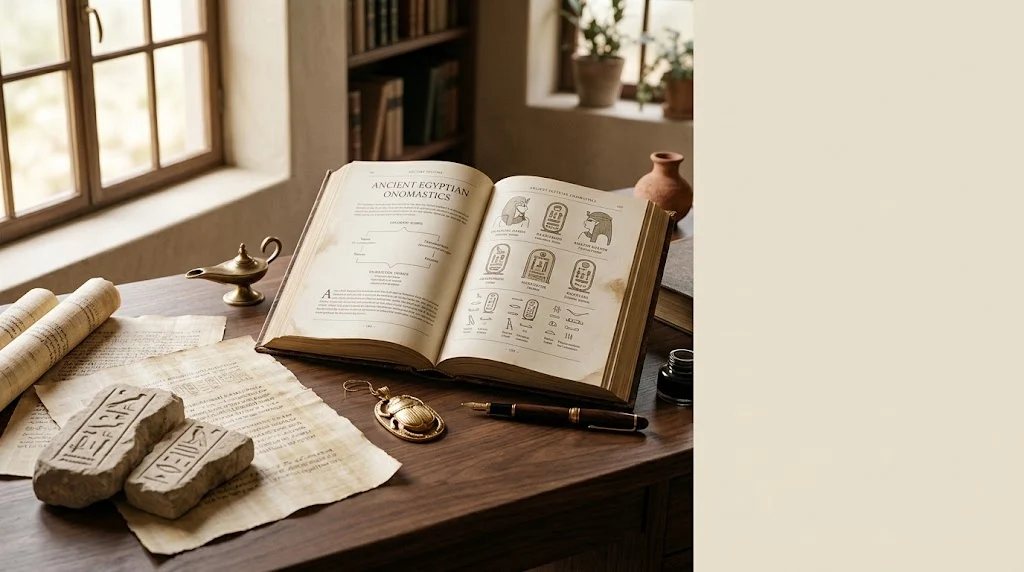
Ancient Egyptian names often reflected religion, family, nature, royalty, and personal qualities. Names connected with gods such as Amun, Ra, Thoth, Isis, and Osiris were especially meaningful in ancient Egyptian society.
Few ancient cultures have left behind a naming tradition as fascinating as Egypt. Written on temple walls, papyri, statues, jewelry, coffins, and small everyday objects, ancient Egyptian names give us tiny windows into the lives and beliefs of people who lived thousands of years ago.
Some names honored gods. Others expressed ideas such as beauty, protection, life, or divine favor. Royal names could carry even deeper political and religious meaning. Ancient Egyptian kings, for example, had several formal names as part of their royal titulary, including a personal name given at birth.
Today, these names still appeal to parents, writers, historians, gamers, and anyone who loves names with an old-world atmosphere.
The list below focuses on historically attested Egyptian names and names closely connected with ancient Egyptian language, religion, and royalty. Because Egyptian words were written without vowels in many periods and modern Egyptologists use different transliteration systems, spellings and translations can sometimes vary.
Amunhotep | A Name Connected With Amun
Meaning: “Amun is satisfied” or “Amun is content,” depending on transliteration and interpretation.
Origin: Ancient Egyptian.
Personality: Amunhotep has a dignified, thoughtful, and deeply historical character. It feels suitable for someone associated with wisdom, tradition, faith, and leadership.
Style: Royal, ancient, powerful, traditional.
Best For: Baby boys, historical characters, fantasy characters, Egyptian-history projects, and distinctive usernames.
Popularity: Amunhotep is far less common in modern naming than familiar Egyptian-inspired names such as Ramses. Its historical connection gives it a strong sense of authenticity.
Emotional Appeal: The name connects a person with Amun, one of ancient Egypt’s most important deities. Amun’s religious importance grew considerably over Egyptian history, particularly around Thebes. UCL’s Digital Egypt project notes that personal names often incorporated local gods, showing how closely religion and everyday naming could be connected.
Pop Culture Reference: The name is primarily associated with ancient Egyptian history rather than modern popular culture.
Similar Names: Thutmose, Ramesses, Amun, Minhotep, Mentuhotep.
Why It Still Works Today: Amunhotep offers something many modern names lack: a strong historical identity. It sounds formal, distinctive, and unmistakably connected with ancient Egypt.
Thutmose | A Powerful Ancient Egyptian Royal Name
Meaning: Commonly understood as “born of Thoth.”
Origin: Ancient Egyptian.
Personality: Thutmose suggests intelligence, learning, creativity, and authority. It has a scholarly quality because Thoth was associated with writing, knowledge, and intellectual traditions.
Style: Regal, scholarly, classic, powerful.
Best For: Baby boys, historical characters, writers, researchers, and people looking for a rare royal-inspired name.
Popularity: Thutmose remains uncommon as a modern personal name, but it is highly recognizable in Egyptology because several pharaohs used it.
Emotional Appeal: Thutmose feels like a bridge between knowledge and kingship. It also has a strong historical foundation. The Metropolitan Museum identifies Thutmose I as a New Kingdom ruler and records his name in an ancient Egyptian inscription.
Pop Culture Reference: Thutmose is best known through historical references to Egyptian pharaohs.
Similar Names: Thoth, Amunhotep, Ramesses, Mentuhotep, Seti.
Why It Still Works Today: For anyone seeking an unusual name with a scholarly and royal atmosphere, Thutmose has an impressive historical depth without relying on a modern invention.
Ramesses | One of the Most Famous Ancient Egyptian Names
Meaning: Commonly interpreted as something like “Ra has fashioned” or “born of Ra,” with exact translation depending on the linguistic analysis.
Origin: Ancient Egyptian.
Personality: Ramesses feels bold, commanding, confident, and memorable.
Style: Royal, powerful, classic, masculine.
Best For: Baby boys, historical characters, kings in fiction, strong usernames, and people inspired by pharaonic Egypt.
Popularity: Among ancient Egyptian names, Ramesses is one of the most recognizable because multiple Egyptian kings carried the name.
Emotional Appeal: The name immediately evokes monumental temples, royal inscriptions, and the grandeur of the New Kingdom.
The British Museum explains that Champollion identified phonetic elements in the cartouches of New Kingdom pharaohs including Ramesses and Thutmose while working out the Egyptian writing system.
Pop Culture Reference: Ramesses appears frequently in books, documentaries, films, and popular discussions of ancient Egypt.
Similar Names: Ramses, Ramose, Thutmose, Seti, Amunhotep.
Why It Still Works Today: Ramesses has survived because it is both historically important and easy for modern audiences to recognize. It combines ancient identity with a strong, memorable sound.
Nefertari | A Beautiful Name With Royal History
Meaning: Commonly translated as “beautiful companion” or interpreted in connection with beauty and companionship.
Origin: Ancient Egyptian.
Personality: Nefertari feels graceful, warm, elegant, and sophisticated.
Style: Elegant, royal, feminine, classic, timeless.
Best For: Baby girls, historical characters, romantic fiction, creative projects, and anyone seeking an elegant Egyptian-inspired name.
Popularity: Nefertari remains relatively uncommon outside Egyptology, which gives it a distinctive quality.
Emotional Appeal: The name is strongly associated with Queen Nefertari, the famous royal wife of Ramesses II. Her beautifully decorated tomb in the Valley of the Queens has helped make her name one of the best-known female names from ancient Egypt.
Pop Culture Reference: Nefertari frequently appears in documentaries and historical works about Ramesses II and ancient Egyptian queens.
Similar Names: Nefertiti, Merit, Isis, Neith, Mut.
Why It Still Works Today: Nefertari sounds elegant without feeling overly modern. It is an excellent choice for someone who wants a name that feels both feminine and historically significant.
Nefertiti | The Beautiful One Has Come
Meaning: Commonly translated as “the beautiful one has come.”
Origin: Ancient Egyptian.
Personality: Nefertiti suggests beauty, confidence, elegance, and individuality.
Style: Elegant, artistic, royal, sophisticated.
Best For: Baby girls, historical characters, art projects, usernames, and creative writing.
Popularity: Nefertiti is one of the most recognizable female names associated with ancient Egypt.
Emotional Appeal: The name has a particularly strong visual identity because Queen Nefertiti is associated with the famous painted limestone bust now held by the Egyptian Museum in Berlin.
Pop Culture Reference: Nefertiti has become a major cultural symbol of ancient Egyptian art and royal history.
Similar Names: Nefertari, Merit, Neith, Isis, Hathor.
Why It Still Works Today: Nefertiti combines beauty with historical power. It is recognizable, distinctive, and closely linked with one of the most famous royal figures of ancient Egypt.
Merit | A Short and Gentle Ancient Egyptian Name
Meaning: Often translated in relation to being “beloved” or “loved,” although exact interpretation depends on the Egyptian form and context.
Origin: Ancient Egyptian.
Personality: Merit feels gentle, affectionate, calm, and graceful.
Style: Soft, classic, vintage, feminine.
Best For: Baby girls, daughters, fictional characters, historical stories, and people who prefer short names.
Popularity: Merit is uncommon today, especially compared with modern names that happen to have similar sounds.
Emotional Appeal: Its short form makes it approachable, while its ancient origin gives it depth.
Ancient Egyptian personal names could express religious devotion, family relationships, and positive qualities. The surviving written evidence includes lists of ordinary workers as well as royal names, showing that naming was not limited to kings and queens.
Pop Culture Reference: Merit is more closely connected with historical and Egyptological material than mainstream popular culture.
Similar Names: Meritaten, Nefertari, Neith, Mut, Isis.
Why It Still Works Today: Merit is easy to pronounce, visually simple, and meaningful. It offers a subtle way to draw inspiration from ancient Egypt without choosing a very elaborate royal name.
Hatshepsut | A Name of Royal Strength
Meaning: Commonly interpreted as “foremost of noble women.”
Origin: Ancient Egyptian.
Personality: Hatshepsut feels strong, intelligent, ambitious, and regal.
Style: Royal, powerful, historic, feminine.
Best For: Baby girls, historical characters, leaders in fiction, educational projects, and strong female characters.
Popularity: Hatshepsut is uncommon as a modern first name but remains one of the most recognizable names in Egyptian history.
Emotional Appeal: Hatshepsut is associated with one of ancient Egypt’s most notable female rulers. Her reign is remembered for major building projects, trade, and an extensive royal visual program.
Pop Culture Reference: Her story is regularly explored in museums, documentaries, history books, and educational materials.
Similar Names: Nefertari, Nefertiti, Merit, Neith, Sobekneferu.
Why It Still Works Today: Hatshepsut has a powerful historical identity. It is especially appealing for anyone looking for a name associated with female leadership and ancient royalty.
Ankhesenamun | A Name Connected With Amun
Meaning: Often interpreted as “she lives through Amun” or “her life is of Amun,” with variations in modern transliteration and translation.
Origin: Ancient Egyptian.
Personality: Ankhesenamun feels graceful, spiritual, mysterious, and royal.
Style: Ancient, feminine, royal, elaborate.
Best For: Baby girls, historical fiction, Egyptian-themed characters, creative writing, and mythology-inspired projects.
Popularity: The name is rare in modern everyday naming, which makes it distinctive.
Emotional Appeal: Ankhesenamun is remembered as a queen of the late Eighteenth Dynasty and wife of Tutankhamun. Her name also illustrates how religious devotion could be built directly into Egyptian personal names.
Pop Culture Reference: Her name is often mentioned alongside Tutankhamun in popular discussions of the late Eighteenth Dynasty.
Similar Names: Nefertiti, Nefertari, Merit, Isis, Mut.
Why It Still Works Today: Although long, Ankhesenamun has an unmistakable ancient character. It works particularly well when historical atmosphere matters as much as everyday simplicity.
Seshat | The Ancient Egyptian Name Linked With Writing
Meaning: “The female scribe” is a common translation.
Origin: Ancient Egyptian.
Personality: Seshat suggests intelligence, creativity, organization, learning, and wisdom.
Style: Elegant, scholarly, mysterious, feminine.
Best For: Baby girls, writers, artists, scholars, fictional characters, and creative usernames.
Popularity: Seshat is rare in modern naming but has growing appeal among people interested in mythology and ancient cultures.
Emotional Appeal: Seshat has a particularly strong connection with knowledge. The British Museum describes Seshat as a goddess associated with writing, accounting, record keeping, mathematics, censuses, and building planning.
Pop Culture Reference: Seshat appears in mythology books, historical games, fantasy writing, and modern discussions of Egyptian religion.
Similar Names: Neith, Isis, Hathor, Merit, Mut.
Why It Still Works Today: Seshat is short, distinctive, and meaningful. It is especially attractive to anyone who wants an ancient name connected with intelligence and creativity.
Khepri | A Name of Transformation and Rebirth
Meaning: Connected with the scarab and the concept of coming into being or transformation.
Origin: Ancient Egyptian.
Personality: Khepri feels energetic, imaginative, resilient, and transformative.
Style: Mythological, mysterious, powerful, unusual.
Best For: Baby boys, fictional heroes, fantasy characters, usernames, and mythology enthusiasts.
Popularity: Khepri is uncommon as a personal name, making it an unusual choice.
Emotional Appeal: Khepri was associated with the rising sun and transformation. The British Museum notes that the scarab was linked with rebirth and renewal, making Khepri particularly meaningful for themes of new beginnings.
Pop Culture Reference: Khepri appears in modern mythology books, games, fantasy settings, and educational material about ancient Egyptian religion.
Similar Names: Ra, Horus, Thoth, Osiris, Khonsu.
Why It Still Works Today: Khepri has a strong symbolic quality. If you want a name connected with change, renewal, and the rising sun, it has an unusually rich background.
Quick Comparison Table
| Name | Meaning / Association | Style | Best For |
|---|---|---|---|
| Amunhotep | Amun is satisfied/content | Royal, traditional | Boys |
| Thutmose | Born of Thoth | Scholarly, royal | Boys |
| Ramesses | Connected with Ra | Powerful, royal | Boys |
| Nefertari | Beautiful companion | Elegant, feminine | Girls |
| Nefertiti | The beautiful one has come | Royal, artistic | Girls |
| Merit | Beloved/loved | Soft, classic | Girls |
| Hatshepsut | Foremost of noble women | Powerful, royal | Girls |
| Ankhesenamun | Life through Amun | Ancient, royal | Girls |
| Seshat | Female scribe | Scholarly, elegant | Girls |
| Khepri | Transformation/rebirth | Mythological, unusual | Boys |
How Ancient Egyptian Names Were Chosen
Ancient Egyptian naming was closely connected with language, religion, family, and society. Names could refer to gods, desired qualities, relationships, or religious ideas.
UCL’s Digital Egypt project notes that personal names could incorporate the main deity worshipped in a person’s local community. For example, the name Minhotep included Min, a major deity associated with Koptos.
Royal names followed an even more elaborate system. The Metropolitan Museum explains that an Egyptian king had five names as part of his royal titulary. His birth or personal name was the “Son of Re” name, while the throne name and personal name were written inside cartouches in inscriptions.
This makes ancient Egyptian names more than simple labels. Many were compact statements about faith, identity, kingship, or family.
Why Ancient Egyptian Names Still Feel Powerful
Ancient Egyptian names remain popular because they carry strong stories.
A name such as Ramesses suggests kingship and monumental architecture. Nefertiti evokes beauty and royal art. Seshat brings ideas of writing and knowledge. Khepri suggests renewal and transformation.
Another reason these names stand out is their connection to surviving physical evidence. Egyptian names appear on statues, jewelry, scarabs, papyri, ostraca, temple inscriptions, tombs, and royal monuments.
The Metropolitan Museum, for example, holds objects containing personal names such as Pedubaste, Pediastwsir, and Wenenefer. These objects demonstrate that personal names were recorded across different periods and social contexts.
Most Popular Ancient Egyptian Names Today
Some names are much more recognizable to modern readers than others.
- Ramesses
- Nefertiti
- Nefertari
- Hatshepsut
- Thutmose
- Tutankhamun
- Cleopatra
- Isis
- Osiris
- Horus
- Anubis
- Ra
One important distinction is worth remembering: not every famous “Egyptian” name has the same linguistic history. Cleopatra, for example, is a Greek name associated with the Ptolemaic dynasty rather than an originally Egyptian personal name.
Likewise, familiar English forms of Egyptian divine names can come through Greek or later transliterations. The modern spelling therefore does not always reproduce exactly how an ancient Egyptian speaker would have pronounced the name.
Ancient Egyptian Names for Girls
If you want a feminine name with an ancient Egyptian connection, consider:
- Nefertari — royal and elegant
- Nefertiti — beautiful and iconic
- Hatshepsut — strong and regal
- Merit — soft and affectionate
- Seshat — scholarly and distinctive
- Neith — associated with an important goddess
- Mut — connected with an ancient mother goddess
- Isis — the familiar Greek form of the Egyptian goddess’s name
- Nephthys — protective and mythological
- Ankhesenamun — elaborate and royal
These names have very different histories. Some are personal names, while others are divine names or names strongly associated with royalty. That distinction is useful when choosing a historically inspired name.
Ancient Egyptian Names for Boys
For boys, ancient Egyptian history provides many distinctive choices:
- Ramesses — royal and commanding
- Thutmose — associated with Thoth
- Amunhotep — connected with Amun
- Seti — associated with the god Set
- Mentuhotep — connected with the god Montu
- Minhotep — associated with Min
- Khepri — linked with transformation and the rising sun
- Horus — famous divine name
- Osiris — major mythological figure
- Khonsu — associated with the moon and travel
The British Museum describes Khonsu as a moon god whose name is associated with the idea of a “traveller” or “pathfinder.”
How to Choose the Perfect Ancient Egyptian Name
Start with meaning rather than sound. Decide you want a name connected with beauty, strength, knowledge, protection, royalty, religion, or transformation.
Next, check the historical context. A pharaoh’s personal name, a goddess’s name, and an ordinary person’s name are not necessarily interchangeable.
Pay attention to pronunciation, too. Some Egyptian names look unfamiliar because modern Egyptologists use transliteration systems designed to represent ancient sounds that do not map neatly onto English spelling.
Finally, decide how historically precise you want to be. If you are naming a baby, you may prefer a short and easy name. If you are naming a historical character, accuracy to a particular dynasty or period may matter much more.
Vintage Ancient Egyptian Names Making a Comeback
Ancient-inspired names naturally fit the renewed interest in vintage and historical naming.
Names such as Nefertari, Merit, Neith, Seshat, and Thutmose can feel fresh precisely because they are not common in everyday modern naming.
The appeal is similar to vintage European names: an old name can feel distinctive when surrounded by contemporary choices.
However, historical names deserve careful treatment. It is better to explain what is actually known about a name than to attach an attractive but unsupported meaning to it.
Modern Ancient Egyptian Naming Trends
Modern interest in Egyptian names often comes from mythology, archaeology, historical fiction, games, films, and genealogy.
There is also growing interest in names that communicate a particular theme. OR For example:
For strength: Ramesses, Hatshepsut, Horus
For beauty: Nefertiti, Nefertari
And for knowledge: Seshat, Thoth-related names
For renewal: Khepri
And for divine connection: Amunhotep, Ankhesenamun
This thematic approach can make choosing a name easier while keeping the historical background visible.
FAQs
What are some famous ancient Egyptian names?
Ramesses, Nefertiti, Nefertari, Hatshepsut, Thutmose, Amunhotep, and Ankhesenamun are among the best-known names associated with ancient Egyptian history.
What is a beautiful ancient Egyptian name for a girl?
Nefertari and Nefertiti are especially recognizable choices, while Merit and Seshat offer shorter alternatives with historical and cultural connections.
What is a powerful ancient Egyptian name for a boy?
Ramesses is one of the strongest recognizable choices because several Egyptian kings carried the name and it remains closely associated with royal history.
Are ancient Egyptian names still used today?
Some ancient names and divine names remain familiar today, although many are much less common as everyday personal names than modern Egyptian Arabic names.
What does Nefertiti mean?
Nefertiti is commonly translated as “the beautiful one has come.” Modern translations can vary because ancient Egyptian words and names are represented through scholarly transliteration.
What does Thutmose mean?
Thutmose is generally understood as a name meaning “born of Thoth,” linking the bearer with the Egyptian god associated with knowledge and writing.
Are all Egyptian mythology names ancient Egyptian names?
No. Some familiar forms came through Greek or later languages, and some famous names belong to later periods of Egyptian history rather than pharaonic Egypt.
How can I choose an authentic ancient Egyptian name?
Check the name’s historical period, original Egyptian form, meaning, and it was actually used as a personal name rather than being only the name of a deity.
Conclusion
Ancient Egyptian names carry stories that reach far beyond simple definitions. They can reflect gods, royalty, beauty, knowledge, protection, life, and transformation. Names such as Ramesses and Thutmose feel powerful, while Nefertari and Nefertiti offer an elegant royal character. Seshat brings a connection with writing and knowledge, while Khepri represents renewal.
When choosing ancient Egyptian names, look beyond how a name sounds. Check its historical period, original context, meaning, and it was genuinely used as a personal name. That extra step makes the choice more respectful and much more interesting.
Pick the name that best fits your purpose, it is for a baby, character, story, username, or research project. If you enjoyed this guide, share it with someone who loves ancient history and tell us which Egyptian name is your favorite.
Discover More Related Articles:
- 300 Scandinavian Girl Names | Beautiful Nordic Ideas In 2026
- 200 Welsh Girl Names | Inspired by Nature, Mythology & Culture In 2026
- 200 Polish Boy Names | Strong & Charming Choices In 2026